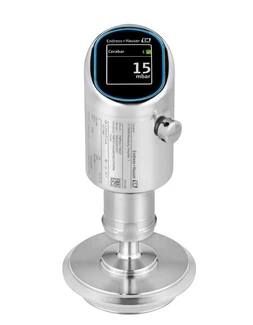
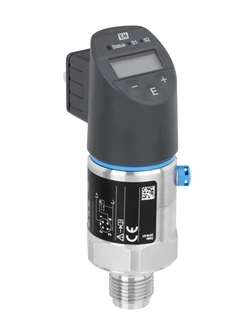
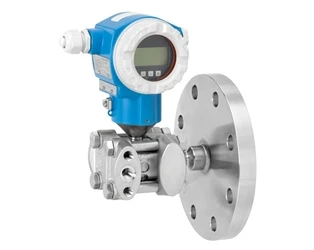
What is a pressure transmitter?

A pressure transmitter is a measuring device that measure the expansive force of liquid or gas. The common type of pressure transmitter is the piezoelectric transmitter, which converts physical pressure into an electrical signal. The electrical signal can be used to display the measurement on a display, or sent to a controller, PLC for processing.
The type of transmitter is composed of a pressure sensitive surface made of steel, silicon, or other materials. There are electronic components capable of converting the force of liquid or gas upon the pressure sensor into an electrical signal. Various units are used to quantify pressure, including: Pa; 1N/m2; psi.
Why do we use pressure transmitters?

The pressure transmitters can be used to measure and monitor pressure, to control and adjust pressure, and provide alarms of pressure changes. The pressure transmitters can be used to solve problems in the industrial measurement.
What are the different pressure transmitters technologies?
Among the common technologies are piezoresistive pressure transmitters, capacitive pressure transmitters, resistive pressure transmitters.
Piezoresistive pressure sensor
The most common type of pressure transmitter is the piezoresistive pressure transmitter. The pressure transmitters are constructed from a resistive material which changes resistance in response to applied pressure. This change in resistance can be measured and converted into a digital signal.
Capacitive pressure transmitter
Capacitive pressure transmitters use the capacitance principle to measure applied pressure. In a capacitive pressure transmitter, the receiver of the pressure measurement is the diaphragm. When pressure is applied to the surface of the diaphragm, the deformation changes the distance between two capacitancs, via a filling liquid. This change in capacitance can be measured and converted into a digital signal.
Resistive pressure transmitter
Resistive pressure transmitters use a very thin layer of resistive material to measure the applied pressure. This layer is usually only a few hundred nanometers thick, making it sensitive to changes in pressure.

What are the applications of pressure transmitters?
Offshore drilling and oil exploration always utilize pressure sensors to measure differential values between the interior and exterior of pressure sensitive equipment. Distinct parameters must be maintained to ensure drilling and acquisition processes are carried out to an efficient standard. This is also true of on-shore petrochemical, gas and chemical facilities.
How to choose your industrial pressure transmitter?
Density measurement
Density measurement by differential pressure transmitter is an effective method for measuring the density of liquids.
Nature of the fluid
The nature of the fluid, such as gas, liquid or vapour, is an important factor to take into consideration when measuring processes. Knowing the critical properties of the fluid is the key to choosing the right transmitter for your industrial process.
Type of pressure
The type of pressure to be measured: Differential/Gauge/Absolute/Vacuum is an important consideration when choosing the right pressure transmitter.
Pressure transmitters are suitable for measuring pressure differentials and low pressures. They are particularly useful for measuring filter clogging. They can also be used to measure fluid flow rates.
The gauge pressure transmitters or vacuum sensors are more suitable for measuring static pressure or negative gauge pressure.
The absolute pressure transmitters are used for applications where pressure is measured relative to perfect vacuum.
Fluid temperature
Pressure transmitters are generally designed to operate with liquids, gases or steam within a given temperature range.
The minimum and maximum operating temperature limits of pressure transmitters are an important consideration when selecting a transmitter.
Measurement range
The zero and span must be chosen to cover the applicable range without going beyond the upper or lower limit over which you need accurate measurements.
Corrosiveness of the fluid
The corrosiveness of the fluid: contaminated, chemically aggressive.
Sensitive materials can be corroded by certain fluids under certain conditions. This corrosiveness determines the choice of material for parts in contact with the fluid.
Process connection
The type of process connection: flanged, threaded, screwed or hygienic is an important factor to consider when choosing the right pressure transmitter.
The flanged process connection can be used to achieve high pressure ratings with low pressure drops.
The threaded process connection is normally used to easily connect hoses, tubes and valves.
The hygienic process connection guarantees food safety during processing using sanitary designs.
Environmental conditions
The application's environmental conditions: temperature and humidity, explosive atmosphere, dust, EMC, vibrations, safety integrity level are also important factors to consider when choosing a pressure transmitter.
Specific requirements of application
Accuracy and response time are also the important considerations.
Sensor accuracy indicates the extent to which the sensor output corresponds to the actual value.
Response time is a crucial factor to consider for a pressure transmitter. It represents the time required for the transmitter to react to a change in pressure.