


Tank level monitoring looks simple on paper: read the level, trigger an alarm and send data to the control system. On the factory floor, however, it rarely stays that simple. Operators need a clear local display, maintenance teams want fewer devices to wire, and automation engineers expect reliable relay logic and digital communication.
That is why many industrial sites are moving away from single-function meters. A multi-signal level display controller can combine local indication, alarm output, analog transmission and digital communication in one panel-mounted unit. Instead of adding separate indicators, relay modules, signal converters and communication gateways, the system becomes easier to install, troubleshoot and maintain.
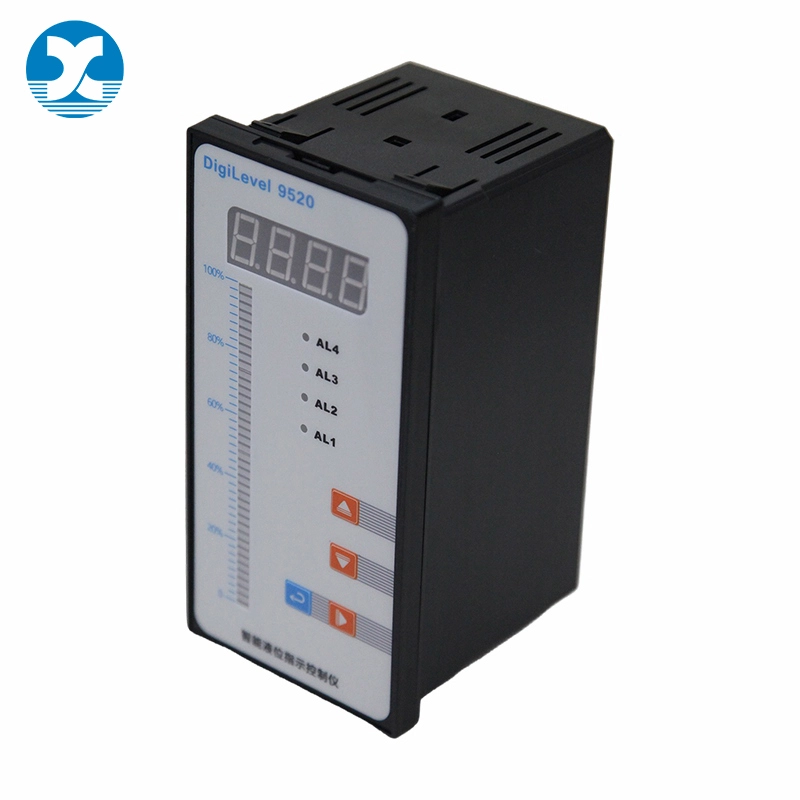
The Digilever 9520/9521 Series is a practical example of this approach. It integrates a 4-digit LED digital readout with a 40-segment analog LED light column, supports up to 22 industrial input signals, and provides programmable relay outputs, 4–20mA transmission and RS485 Modbus RTU communication.

The Real Problem on Site Is Not Just "Reading the Level"
Most level monitoring issues do not come from the sensor alone. They come from how the signal is displayed, interpreted and acted on.
Common on-site pain points include:
- Operators cannot judge tank status quickly from a distance.
- Strong ambient light makes small displays hard to read.
- Multiple devices are needed for display, alarm and transmission.
- Relay logic for pumps and valves is scattered across different instruments.
- PLC/DCS integration requires extra wiring or signal converters.
- Sensor power supply, grounding and short-circuit protection are handled separately.
A well-designed industrial level display controller can reduce these problems by bringing display, alarm, transmission and communication into one device.
What Makes a Level Display Controller Worth Specifying
Dual Visual Display for Faster Decision-Making
A digital readout gives precise values, but a segmented light column helps operators judge level status at a glance. This is especially useful in busy workshops, pump rooms and outdoor tank areas.
The Digilever 9520/9521 uses a 4-digit LED digital display together with a 40-segment LED light column. The light column brightness is adjustable, so it remains readable even under strong factory lighting.
Multi-Signal Compatibility Reduces Integration Effort
Level sensors come in many forms: radar level sensors, float transmitters, pressure level probes, resistance signals, thermocouples and thermal resistors. If a controller only accepts one signal type, additional converters are often required.
The 9520/9521 supports 22 industrial input signals, which helps it pair directly with mainstream transmitters without extra signal conversion. This reduces wiring complexity and lowers the risk of mismatched signal ranges.
Relay Outputs Enable Local Alarm and Interlock
Displaying the level is useful, but many tanks also need automatic control. Relay outputs allow the controller to trigger high-level alarms, low-level alarms, pump start/stop commands or valve interlocks.
With up to 4 programmable 5A relay contacts, the controller can handle multiple alarm points or simple local control logic. This is helpful when a PLC is not available for every small tank, or when local interlock is required as an additional safety layer.
4–20mA and Modbus RTU Keep It Connected to the Control System
Modern tank monitoring rarely stays isolated. Data usually needs to reach a PLC, DCS or SCADA system.
The 9520/9521 provides:
- 4–20mA analog transmission for standard process control loops.
- RS485 Modbus RTU communication for digital data upload.
- Built-in 24VDC sensor power feed with short-circuit protection.
This combination allows the controller to act as a local display hub while still feeding data into the wider automation system.
Measurement Stability Matters in Dynamic Tanks
Tank levels do not always change smoothly. Agitation, filling, draining and pump cycling can cause signal fluctuation.
The controller offers 0.2%FS measurement precision, 0.5%FS transmission accuracy and a 5Hz sampling rate. Faster sampling helps reduce lag during rapid level changes, while stable measurement precision supports more reliable alarm triggering.
Where This Type of Controller Fits Best
Chemical Storage Tanks
Chemical tanks often require clear local indication and reliable high/low level alarms. Relay outputs can help prevent overfilling or dry running, while Modbus communication allows centralized monitoring.
Water and Wastewater Treatment
Pump stations, raw water tanks and sewage tanks benefit from fast visual status checks. The segmented light column helps operators confirm tank status without reading exact numbers every time.
Food and Pharmaceutical Processes
Hygienic and process tanks need consistent level monitoring and traceable signals. Analog transmission and digital communication make it easier to record level data for process control.
Energy and Utility Systems
Fuel tanks, cooling water tanks and lubrication oil tanks often operate in environments with temperature variation and electrical noise. Dual power supply options and industrial-grade design help improve deployment flexibility.
Selection Checklist for Buyers
Before specifying a tank level monitoring controller, confirm these points:
- Sensor signal type. Is the transmitter 4–20mA, 0–10V, resistance, thermocouple or RTD?
- Number of relay outputs. Do you need high-level alarm only, or also low-level alarm and pump interlock?
- Communication requirement. Is RS485 Modbus RTU needed for PLC/DCS integration?
- Analog retransmission. Does the control loop require a 4–20mA output?
- Sensor power supply. Can the controller power the transmitter directly?
- Panel cutout size. Choose vertical 80×160mm or horizontal 160×80mm according to cabinet layout.
- Power supply. Use AC/DC 86–265V for wide voltage tolerance, or DC24V for low-voltage systems.
- Environment. Check ambient temperature, humidity, vibration and electrical interference.
- Display visibility. Adjustable brightness helps in brightly lit workshops.
- Future expansion. Modbus RTU makes it easier to add remote monitoring later.
FAQ
Can one controller replace several separate devices?
In many cases, yes. A multi-signal level display controller can replace separate indicators, relay modules and signal converters, provided its input range, relay capacity and communication interfaces match the application.
Does it work with radar level sensors?
Yes, as long as the sensor output signal is within the controller's supported input range. The 9520/9521 supports 22 common industrial signals.
Is Modbus RTU enough for PLC integration?
For many tank monitoring applications, RS485 Modbus RTU is a practical and widely supported choice. For larger systems, confirm address allocation, polling speed and cable routing.
When is a dual display more useful than a single digital readout?
Dual display is helpful when operators need both precise values and quick visual status. The digital readout shows exact level, while the light column shows relative tank fill at a glance.
References
- Flowline. DataLoop LI25-1 Level Indicator. 2025.
- Fluidwell. F490 Loop-Powered Multi-Purpose Indicator. 2026.
- Emerson. Rosemount 3490 Series Controller. 2025.
- Modbus Organization. Modbus Application Protocol Specification V1.1b3. 2012.
- IEC 60584-1. Thermocouples – Part 1: EMF specifications and tolerances. 2013.
- IEC 60751. Industrial platinum resistance thermometers and platinum temperature sensors. 2022.
Need Help Choosing the Right Level Display Controller?
If you are evaluating an industrial level display controller for chemical, water treatment, food, pharmaceutical or energy applications, share your sensor type, signal range, relay logic and communication requirements. We can help confirm whether the Digilever 9520/9521 Series fits your tank monitoring setup and provide technical details or a quotation.


