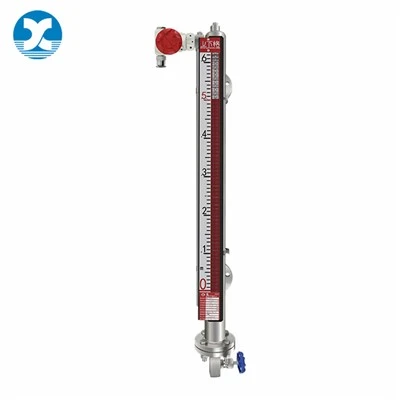
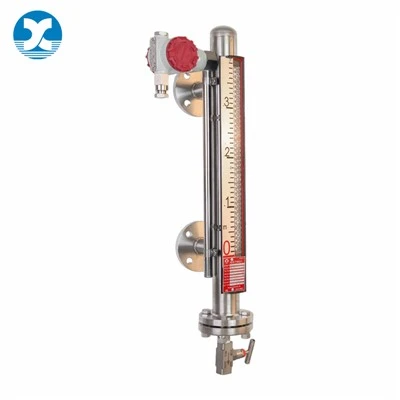
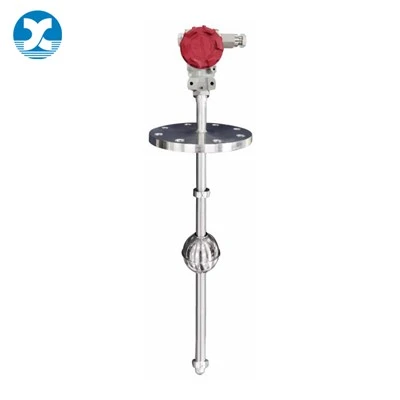
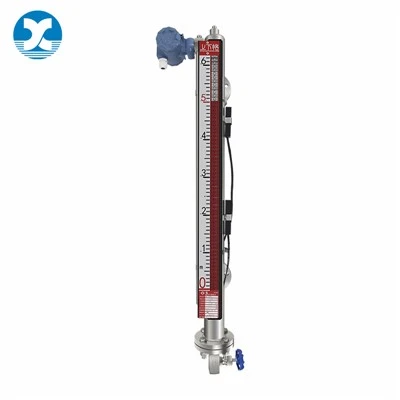
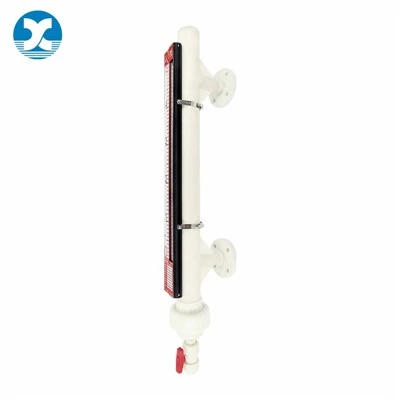
After decades of technical support for industrial instrumentation export clients, one question comes up more than almost any other when buyers source gauges for chemical or wastewater applications: Are magnetic flapper level gauges corrosion resistant?
A lot of first-time buyers assume that because the gauge has a stainless steel body, it will handle any corrosive liquid. I've seen this mistake lead to costly failures time and again. Not long ago, a chemical processing client reached out after their newly installed gauges failed in just six months. They'd ordered standard 304 stainless steel units for their sodium hypochlorite storage tanks. The chloride content in the solution caused pitting corrosion along the chamber wall, which eventually perforated and leaked process fluid. The downtime and cleanup cost them over 20 times what they would have spent on properly specified corrosion-resistant gauges.
The short answer is no - magnetic flapper level gauges are not inherently corrosion proof. Their corrosion performance depends entirely on wetted material selection, seal compatibility, and design details. In this guide, we'll break down how different materials hold up against common corrosive media, the most frequent causes of corrosion failure, and how to select the right gauge for your working conditions.

1.What "Corrosion Resistance" Actually Means for Level Gauges
To evaluate corrosion performance correctly, you first need to distinguish between wetted and non-wetted components. Wetted parts are every surface that comes into direct contact with the process medium: the measuring chamber wall, internal float assembly, process flanges, valve trim, and sealing gaskets. Non-wetted parts like the external flapper indicator rail and housing do not touch the liquid, so they rarely face corrosion issues from the process itself - though they may need protection from corrosive fumes in extreme environments.
Most procurement mistakes start here. Many buyers only check the chamber body material and assume the whole gauge is corrosion resistant. In reality, failures almost always start with the smallest wetted component: a cheap seal, a lower-grade float, or a standard valve fitting that wasn't matched to the medium. A 316L chamber means nothing if the float is made of 304 and the seals are basic nitrile rubber.
For a magnetic flapper gauge to be truly corrosion resistant, all wetted components must be specified to match the medium, temperature, and pressure of the application. There is no universal "corrosion-resistant" model.
2.Common Corrosion Threats to Magnetic Flapper Gauges
Corrosion doesn't always look the same, and different attack patterns cause failure in different ways. Based on field support records, these are the four most common corrosion failure modes for magnetic level gauges in industrial service.
2.1 General Chemical Corrosion
This is the most straightforward type: the liquid gradually eats away at the metal surface over time. It's common with strong acids, caustic solutions, and high-salinity liquids. Mild general corrosion is predictable and can be accounted for with extra wall thickness, but severe general corrosion will perforate a standard steel chamber in months or even weeks.
2.2 Pitting & Crevice Corrosion
This is the most insidious failure mode, especially with stainless steels in chloride-containing media like seawater, brine, and sodium hypochlorite. Instead of wearing evenly across the surface, corrosion creates tiny, deep holes in the metal. These pits are hard to spot during routine inspections, and they can perforate the chamber wall with almost no visible warning from the outside.
Crevice corrosion occurs in tight gaps - around flange gaskets, float guides, and valve seats - where liquid gets trapped and oxygen levels drop. It often sets in long before the main chamber wall shows any signs of wear.
2.3 Vapor Space Corrosion
This is the most commonly overlooked failure point. Many buyers specify materials for the liquid phase only, and forget that corrosive vapors and acid fumes fill the upper portion of the tank and gauge chamber. These vapors condense on the upper float surface and top flange, causing corrosion in areas that were never rated for chemical exposure. For acidic or volatile media, vapor phase corrosion is just as important to account for as liquid phase corrosion.
2.4 Stress Corrosion Cracking
Under combined mechanical stress and corrosive conditions, metal can develop cracks that spread rapidly. This is a particular risk in high-temperature, high-pressure applications with chloride or sulfide-containing media. The consequences are severe: a sudden crack in the measuring chamber can cause catastrophic leakage of pressurized process fluid.
3.Material Options & Their Corrosion Performance
Below is a breakdown of the most common wetted materials for magnetic flapper level gauges, their typical applications, and their limitations.
|
Material |
Best Suited For |
Not Recommended For |
Typical Applications |
|
Carbon Steel |
Clean water, diesel, LPG, neutral oils at ambient conditions |
Acids, alkalis, salt solutions, any corrosive media |
General industrial storage, fuel depots |
|
304 Stainless Steel |
Clean water, mild acids/alkalis, food-grade liquids |
Chloride solutions, concentrated acids, high-salinity wastewater |
Municipal water, light industrial use |
|
316L Stainless Steel |
Seawater, weak acids/alkalis, chloride solutions under low concentration |
Concentrated hydrochloric acid, high-temperature strong acids |
Chemical processing, industrial wastewater, marine applications |
|
PTFE-Lined Steel |
Most strong acids, alkalis, oxidizing agents, high-chloride liquids |
Molten alkali metals, temperatures above 200°C |
Concentrated chemical storage, highly corrosive process tanks |
|
Nickel-Based Alloys (Hastelloy, Monel) |
Extreme corrosion, high-temperature acids, sour gas environments |
Very high cost, not justified for mild conditions |
Specialty chemical, oil & gas sour service |
Seal Material Compatibility
Seal failure is often the first sign of corrosion problems, and it's almost always caused by mismatched gasket material. For corrosive service:
- NBR (Nitrile Rubber): Only for neutral oils and water; fails quickly in acids and solvents.
- FKM (Viton): Good for most acids, oils, and fuels; not recommended for strong caustics or steam.
- PTFE: Excellent chemical resistance across almost all media; the standard choice for corrosive service.
- For any corrosive application, always confirm that seal materials are specified to the same corrosion standard as the main chamber body.
4.Top 5 Causes of Premature Corrosion Failure
After years of troubleshooting corroded gauges for clients, these are the most avoidable and most common mistakes made during procurement.
4.1 Mismatched Component Materials
Suppliers will sometimes advertise a "316L gauge" but cut costs by using 304 for the float, valve fittings, or internal hardware. The lower-grade parts corrode first, causing float failure or seal leakage long before the main chamber shows damage. Always require full disclosure of all wetted part materials, not just the chamber body.
4.2 Ignoring Vapor Phase Corrosion
As noted earlier, acidic fumes and volatile vapors will corrode the upper section of the gauge just as severely as the liquid itself. This is especially true for hydrochloric acid, nitric acid, and other fuming liquids. If your medium has a high vapor pressure, the entire wetted range of the gauge must be rated for corrosion, not just the liquid-level portion.
4.3 Overestimating Stainless Steel Capabilities
304 stainless steel is a great general-purpose material, but it is not corrosion proof. Even low concentrations of chloride ions will cause pitting over time. For wastewater with even mild salt content, or any application with regular chlorine exposure, 316L is the minimum acceptable grade.
4.4 Low-Cost Suppliers Using Inferior Materials
The market is full of suppliers that offer stainless steel gauges at impossibly low prices. In many cases, they use lower-grade alloys (such as 201 stainless) marketed as 304, or use thin-gauge wall material with no corrosion allowance. These gauges may look identical on the outside, but their service life in corrosive service can be less than a quarter of a properly built unit.
4.5 Skipping Routine Inspection
Corrosion almost always starts small. A yearly visual inspection and wall thickness check can catch early pitting or seal degradation before it leads to leakage. For severe corrosion environments, bi-annual inspections are a low-cost way to extend gauge life and avoid unplanned shutdowns.
5.How to Select a Truly Corrosion-Resistant Magnetic Gauge
Follow these practical steps to make sure you get a gauge that will hold up in your specific conditions.
5.1 Start with complete medium details Don't just tell your supplier the liquid is "corrosive." Provide the exact chemical composition, concentration, operating temperature, operating pressure, and any vapor phase characteristics. The more detail you provide, the more accurate the material recommendation will be.
5.2 Specify all wetted parts, not just the chamber Your purchase specification should list material requirements for the chamber, float, flanges, valves, and gaskets. Require material mill certificates with delivery to verify compliance.
5.3 Use lined construction for strong corrosion For highly corrosive media, PTFE-lined steel gauges offer nearly the same corrosion resistance as exotic alloys at a fraction of the cost. They are the most cost-effective choice for most strong acid and strong alkali applications.
5.4 Add corrosion allowance for severe service For applications with known high corrosion rates, specify extra chamber wall thickness. A small increase in upfront cost will add years of service life.
5.5 Consult on edge cases If your application involves high temperature plus corrosion, mixed media, or unusual operating cycles, ask your supplier's technical team for a review. A few days of engineering review up front will prevent months of downtime later.
6.Frequently Asked Questions
Q: Is 304 stainless steel suitable for wastewater service?
For clean municipal wastewater with low chloride content, 304 will work reliably. For industrial wastewater with salts, acids, or bleach residuals, 316L is the minimum recommended grade to avoid pitting corrosion over time.
Q: Can magnetic flapper gauges handle concentrated hydrochloric acid?
Standard stainless steel gauges cannot - hydrochloric acid will corrode 304 and 316L rapidly. For this application, you need a PTFE-lined measuring chamber with PTFE seals and compatible float construction.
Q: How long does a PTFE-lined magnetic level gauge last?
Under normal operating conditions within temperature and pressure limits, a PTFE-lined gauge typically lasts 8–12 years in corrosive service - roughly 3–5 times the service life of a standard stainless steel gauge in the same medium. Actual lifespan depends on concentration, temperature, and maintenance practices.
Q: Can corrosion cause the magnetic float to stick?
Yes. Corrosion creates rough surfaces and rust debris that build up between the float and the chamber wall, eventually causing the float to bind and give false readings. This is one of the earliest warning signs that corrosion is progressing inside the gauge.
Conclusion
Magnetic flapper level gauges can be highly corrosion resistant - but only when they are built with the right materials for your specific medium. There is no universal corrosion-resistant gauge, and assuming one size fits all is the fastest way to end up with leaks, downtime, and unexpected costs.
Taking the time to match wetted materials, seal components, and design details to your process conditions will give you a gauge that lasts for years with minimal maintenance. For mild corrosion, 316L stainless steel is a reliable, cost-effective choice. For strong acids, alkalis, and high-chloride environments, lined construction is well worth the upfront investment.
If you're unsure which material configuration is right for your application, send our technical team your tank parameters and medium details. We'll review your conditions and recommend a custom-tailored magnetic level gauge solution, with full remote installation guidance and long-term after-sales support.
References
- AMPP (NACE International). (2021). SP0170: Protection of Austenitic Stainless Steels from Polythionic Acid Stress Corrosion Cracking. Houston, TX: Association for Materials Protection and Performance.
- International Society of Automation (ISA). (2022). Level Measurement Instruments: Material Selection & Corrosion Guide. Research Triangle Park, NC: ISA.
- WIKA Alexander Wiegand SE & Co. KG. (2025). Magnetic Level Indicators: Material Compatibility Handbook. WIKA Industrial Instrumentation.
- American Petroleum Institute (API). (2021). API Standard 2550: Installation and Maintenance of Liquid Level Gauging Systems. Washington, DC: API.
- Zero Instrument Technology. (2025). Material Selection for Instruments: Corrosion Resistance of Common Materials. Retrieved from https://zeroinstrument.com/material-selection-for-instruments-corrosion-resistance-of-common-materials/