


A tuning fork switch detects level by monitoring changes in its vibration frequency. The fork prongs are driven to vibrate at a natural resonant frequency by an internal piezoelectric or electronic circuit. When the fork is in air or gas, it vibrates freely. When the material level rises and contacts the fork, the added mass and damping change the vibration frequency. The internal circuit detects this change and switches the output signal to indicate level presence or absence.
This working principle makes the Tuning Fork Level Switch especially suitable for point level detection of liquids, powders and granular materials. It is widely used in tanks, silos, hoppers, pipes and process vessels where reliable overfill, dry-run or low-level protection is required.
How the tuning fork vibration principle works
Inside the switch, the tuning fork is continuously excited at its natural frequency. The electronics monitor both the frequency and amplitude of vibration.
- When the fork is uncovered, it vibrates at the normal resonant frequency.
- When the material touches the fork, the vibration is damped.
- The frequency and amplitude drop.
- The electronics recognise this change and trigger the output relay or transistor signal.
Because detection depends on vibration change rather than conductivity, capacitance or optical sensing, a tuning fork switch can work with many different materials. It is also relatively insensitive to foam, bubbles, vapour and moderate coating, which makes it more stable than some other point level technologies in challenging process conditions.
What a tuning fork switch can detect
A tuning fork switch can be used for many common industrial materials, including:
- Water and process liquids
- Oils and mild chemical liquids
- Powders such as cement, flour, lime and plastic granules
- Granular materials such as grains, sand and compound fertilisers
- Food and beverage liquids such as milk, juice, beer and edible oils
It is not always suitable for extremely viscous materials, heavy build-up media, or applications where solid bridging may prevent the fork from vibrating freely. In those cases, material properties and installation position should be checked before selection.
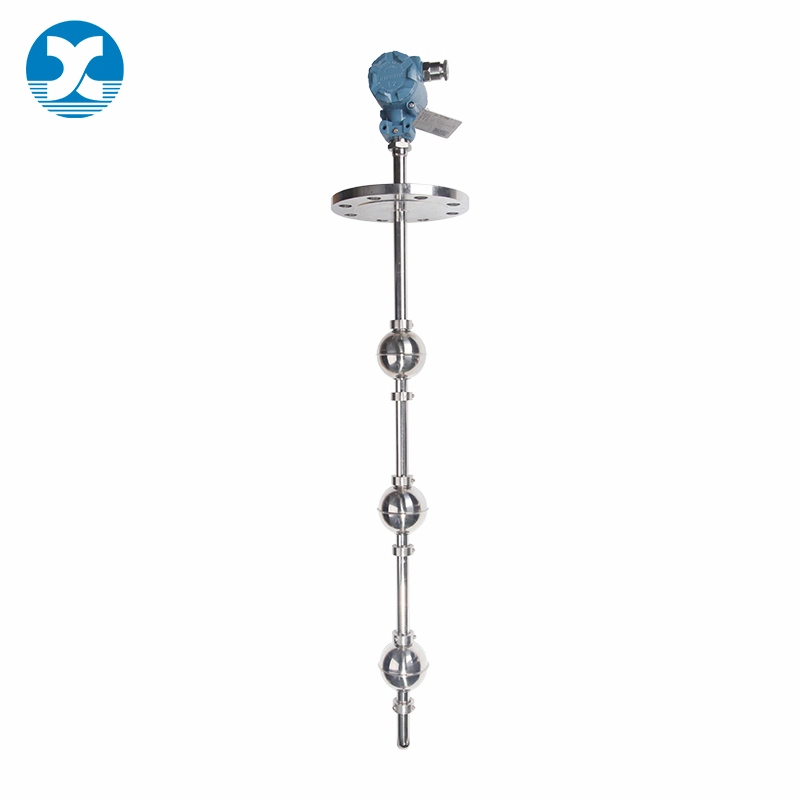

Single-point and multi-point level detection
A Single-Point Level Switch is used when only one level position needs to be monitored. Typical applications include high-level alarm, low-level alarm, pump dry-run protection and overfill prevention. It gives a simple and reliable on/off signal when the material reaches the fork position.
A Multi-Point Level Switch uses two or more sensing points in the same vessel. This allows the system to monitor high level, low level and intermediate level at the same time. Multi-point detection is useful in batching tanks, mixing vessels, storage silos and process lines where several level states must be controlled simultaneously.
Advantages of tuning fork level switches
Simple working principle with no complex calibration
No moving mechanical parts such as floats or levers
Resistant to foam, bubbles and vapour in many liquid applications
Suitable for liquids, powders and granular materials
Compact installation on tanks, pipes and silos
Stable performance in many chemical, food, pharmaceutical and water treatment applications
Limitations to consider
Tuning fork switches are reliable, but they are not universal. Important selection points include:
Very high viscosity may damp the fork even when it is not covered by material.
Heavy solid build-up or sticky powders may affect vibration.
Strong mechanical vibration from pumps or agitators may require careful mounting.
Extremely high temperature or pressure applications need a suitable process connection and housing.
The fork must be installed where material can freely contact and leave the prongs.
Installation and selection tips
Choose the correct fork length and process connection for the tank or silo.
Install the switch at the required level point, avoiding dead zones or material bridges.
Keep sufficient clearance around the fork so powder or granules can flow freely.
Avoid installing directly below filling inlets where heavy impact may occur.
Confirm material density, viscosity, temperature and pressure with the supplier.
Test the output signal after installation to confirm correct switching behaviour.
Conclusion
A tuning fork switch detects level by sensing the change in vibration frequency when material contacts the fork. This makes it a practical and reliable solution for point level detection in many industrial processes. Whether you need a Single-Point Level Switch for simple high or low level alarms, or a Multi-Point Level Switch for more complex tank control, a Tuning Fork Level Switch can provide stable performance when the application conditions are properly matched.
If you are unsure whether a tuning fork switch suits your tank, silo or pipeline, share the material type, temperature, pressure, density and installation position. We can help confirm the working principle, installation method and suitable model for your level detection requirement.


