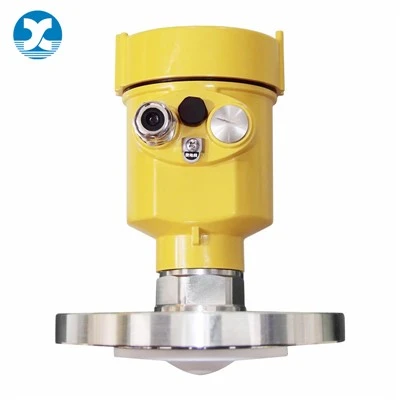
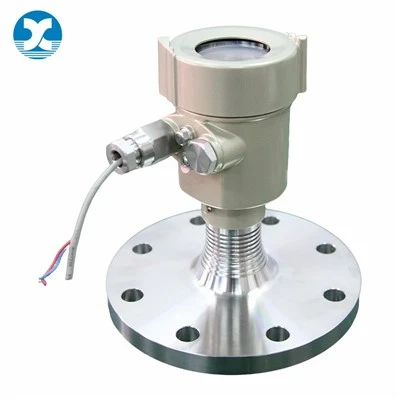
A pressure transmitter is one of those parts that nobody thinks about until it fails at the worst possible moment. It sits quietly on a pipe fitting, feeds a number into a control panel, and does its job for years - right up until a bad calibration or a corroded diaphragm throws a process into an unplanned shutdown. If you're specifying one for a new build, replacing a failed unit, or just trying to figure out why the quotes you've received range from $80 to $600 for what looks like the same device, this guide is meant to answer the questions that actually come up during that process.
What Is a Pressure Transmitter, Exactly?
A pressure transmitter measures the pressure of a liquid, gas, or steam and turns that reading into a standardized electrical signal - typically 4-20mA, 0-10V, or a digital protocol like HART or Modbus - that a PLC, DCS, or SCADA system can read directly. The signal is what makes it a "transmitter" rather than just a sensor: it's designed to travel down a cable, sometimes hundreds of meters, without degrading.
Pressure Transmitter vs. Transducer vs. Gauge
People use these three terms loosely, and on an RFQ that can cause real confusion.
- Pressure gauge: fully mechanical, local dial reading only, no electrical signal.
- Pressure transducer: converts pressure into an electrical value, but usually a raw, low-level signal (millivolts) that still needs external amplification.
- Pressure transmitter: has the amplification and signal conditioning built in, so it outputs a clean, ready-to-use signal - no extra hardware required on the customer's end.
If your control system needs to log or react to the reading, you want a transmitter. If someone just needs to glance at a number on a panel, a gauge is cheaper and simpler.

How a Pressure Transmitter Actually Works
Strip away the branding and the datasheet jargon, and every pressure transmitter is doing the same three things: sensing a tiny physical deformation, converting that deformation into an electrical value, and cleaning up that value into a usable signal.
The Sensing Stage
Process pressure pushes against a diaphragm, usually through an oil-filled isolator that keeps the actual process fluid from touching the electronics. That diaphragm flexes - often by a fraction of a millimeter - and the sensing element picks up on that flex as a change in resistance, capacitance, or resonant frequency, depending on the sensor technology.
The Conditioning Stage
The raw output from the sensor is weak, non-linear, and sensitive to temperature swings on its own. Internal electronics amplify it, correct for temperature drift, linearize the curve, and push out a standardized signal. This is also where most of the price difference between a $90 transmitter and a $400 transmitter actually lives - not in the sensor itself, but in how well the electronics compensate for temperature and long-term drift.
Why 4-20mA Became the Default
A transmitter reading 0 bar outputs 4mA, not 0mA. That's deliberate. If the loop current drops to zero, the control system knows immediately that there's a wire break or a dead transmitter, rather than mistaking it for a genuine zero-pressure condition. It's a small design choice, but it's the reason 4-20mA has stuck around in industrial settings for decades despite newer digital alternatives being available.
A Quick Example
Take a transmitter rated 0-16 bar on a pump discharge line. At rest, pressure sits at 0 bar and the loop reads 4mA. Once the pump is running and line pressure climbs to 8 bar - half the rated span - the signal rises proportionally to 12mA. At the transmitter's full-scale pressure of 16 bar, the loop hits 20mA. The PLC converts that current back into bar or psi and can trigger an alarm the moment it crosses a set threshold.
The Main Sensing Technologies
Piezoresistive (Strain Gauge)
The workhorse of the industry. Strain gauges are bonded or diffused onto a silicon or metal diaphragm in a Wheatstone bridge layout. Flexing the diaphragm changes the resistance of the gauges and unbalances the bridge, producing a voltage proportional to pressure. It's inexpensive, mechanically tough, and covers a huge range - from a few millibars up into the thousands of bar - which is why it shows up in the majority of general industrial applications.
Capacitive
The diaphragm here forms one plate of a capacitor, with pressure changing the gap to a fixed reference plate. Capacitive sensors are known for holding their calibration well over time, so they tend to show up in applications where drift is costly to correct - differential pressure flow measurement and tank level being the two most common.
Resonant Silicon
A micro-machined silicon element vibrates at a set frequency, and applied pressure shifts that frequency in a way that can be measured with very high precision. These transmitters cost more, but they're the choice when the application genuinely can't tolerate drift - custody transfer metering, for instance, where a small measurement error translates directly into money.
Piezoelectric (Dynamic Pressure Only)
Piezoelectric elements generate a charge under stress, but that charge bleeds away over time, so they can't hold a stable static reading. They're not used for everyday process monitoring - they're built for capturing fast pressure events like combustion spikes or hydraulic shock, where response speed matters more than static accuracy.
A Field Example Worth Knowing
A packaging line running a CIP (clean-in-place) loop had been experiencing intermittent pressure alarms that didn't match what operators were seeing on the mechanical gauge next to the transmitter. The transmitter itself tested fine on the bench. The actual cause turned out to be trapped air in the impulse line feeding the sensor - a common, boring problem that gets mistaken for a faulty instrument more often than it should. Once the line was bled and refilled, the readings matched and the alarms stopped. It's a reminder that a transmitter is only as accurate as its installation; the sensor rarely deserves the blame it gets.
Specifications That Actually Matter When Comparing Quotes
Two transmitters can look nearly identical on paper and still perform very differently once installed. Before signing off on a purchase order, check:
- Accuracy - given as a percentage of full scale (±0.1% FS, ±0.25% FS, etc.). Buying more accuracy than the process needs just inflates cost for no benefit.
- Range and overpressure rating - your working pressure should sit comfortably inside the rated span, with enough margin to survive occasional spikes.
- Output signal - 4-20mA remains the default; HART, Modbus RTU, or Profibus PA are worth the extra cost if you need built-in diagnostics.
- Wetted materials - 316L stainless steel covers most general use; corrosive or high-purity media may call for Hastelloy, Monel, or tantalum.
- Process connection - thread type and size need to match existing fittings exactly; this is the single most common ordering mistake.
- Ingress protection and area classification - IP65/IP67 for most industrial settings; ATEX, IECEx, or intrinsically safe ratings for hazardous zones.
Where Buyers Usually Get Tripped Up
The biggest mistake isn't picking the wrong sensor technology - it's comparing quotes purely on price without checking whether the units are actually apples-to-apples. A transmitter quoted at a fraction of a competitor's price is often missing something: no calibration certificate, no temperature compensation across the full range, or a wetted material that won't hold up against the actual process fluid. That gap usually doesn't show up until months into service, by which point the cost of a failure and a replacement swap far outweighs whatever was saved on the original order.
It's worth asking directly for a calibration certificate (ISO 17025 or equivalent traceability), the actual temperature compensation range - not just the operating range - and confirmation of wetted material compatibility with your specific media, not just a general chemical resistance chart.
Typical Applications
- Water and wastewater treatment - pump control, tank level via hydrostatic pressure
- Oil, gas, and petrochemical - pipeline monitoring, wellhead and refinery process control
- HVAC and building automation - chiller pressure, duct static pressure
- Food and beverage - hygienic transmitters for CIP systems and process vessels
- Hydraulics and pneumatics - mobile equipment, test benches, injection molding
- Power generation - boiler feedwater and steam header pressure
Installation Habits Worth Adopting
- Bleed impulse lines before commissioning to avoid trapped air throwing off liquid pressure readings
- Double-check mounting orientation on differential pressure units - it affects the offset
- Match seal and gasket materials to the process fluid, not just to what's already on the shelf
- Recalibrate on a schedule rather than waiting for a reading to look "off"
- Never let startup transients exceed the rated overpressure limit, even briefly - diaphragm damage from a spike is often permanent even if normal operation stays well within range
Frequently Asked Questions
Can a pressure transmitter measure vacuum?
Yes, if it's rated for a compound range that includes negative pressure - something like -1 to 5 bar. Not every model supports this, so it needs to be confirmed on the datasheet before ordering.
How often should a pressure transmitter be recalibrated?
Annually is the common baseline for most industrial loops, though safety-critical or custody-transfer applications may call for shorter intervals. High-stability sensor types can sometimes stretch that interval, but it should be verified against the specific process and any regulatory requirements, not assumed.
What's the difference between gauge, absolute, and differential pressure transmitters?
Gauge pressure is measured relative to atmospheric pressure and is the most common type in general use. Absolute pressure is measured relative to a full vacuum. Differential pressure measures the difference between two separate points and is widely used for flow measurement and hydrostatic tank level.
Does a higher price always mean better accuracy?
No. Price reflects certifications, build quality, brand, and lead time as much as it reflects accuracy. It's entirely possible for a mid-priced transmitter to outperform a premium-branded one on real-world stability - the datasheet accuracy figure is a better indicator than the price tag.
Final Thoughts
A pressure transmitter is a small piece of hardware doing a job that a control loop or safety interlock quietly depends on. Understanding what's actually happening inside it - the sensing element, the conditioning electronics, the standardized output - makes it much easier to read a datasheet critically and ask better questions before a purchase order goes out, rather than choosing on price alone. When in doubt, sending over the process media, pressure range, and required certifications to a supplier is usually enough to get a sensor recommendation that fits, without a lot of back-and-forth.
References
- International Society of Automation (ISA) - Process Instrumentation Terminology, ISA-51.1
- National Institute of Standards and Technology (NIST) - pressure measurement fundamentals, nist.gov
- ATEX Directive 2014/34/EU - Equipment for use in potentially explosive atmospheres
- IEC 60529 - Degrees of protection provided by enclosures (IP Code)
- ISO/IEC 17025 - General requirements for the competence of testing and calibration laboratories