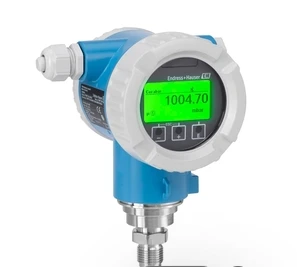
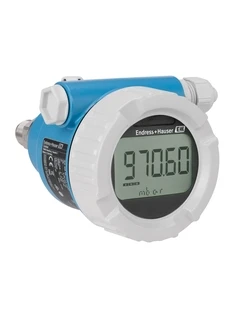
Short answer: yes, and it's one of the most under-appreciated features of these instruments. A magnetic level gauge can trip high-level and low-level alarms directly through its own reed switch modules, with no 4-20 mA transmitter, no external power supply, and no separate level switch hanging off the tank. That's not a workaround. It's how a large share of storage tanks in chemical, water, and food plants have been protected for decades.
The confusion is understandable, though. Most buyers see "transmitter" and "alarm" used interchangeably on datasheets, so they assume an alarm always needs a transmitter. It doesn't. The two serve different jobs. A transmitter gives you a continuous level value. An alarm switch gives you a discrete trip point. And a magnetic level gauge can give you the trip point on its own, using components that live right on the bypass chamber.
If you want to check our magnetic level gauge product range, visit: /magnetic-level-gauge.html
How a Magnetic Level Gauge Triggers an Alarm Without a Transmitter
The Float Magnet Is the Engine
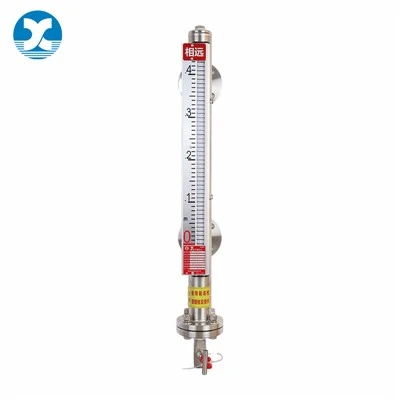
Every magnetic level gauge already carries a permanent magnet inside its float. That magnet is doing double duty. It flips the external indicator flaps so operators can read level locally, and it can just as easily actuate a reed switch clamped onto the outside of the chamber.
There's no separate power involved in the sensing itself. The float moves, the magnetic field passes through the non-magnetic chamber wall, and the reed contacts change state. It's a purely mechanical-magnetic action. No electronics, no signal conditioning, no calibration of a sensor element.
Reed Switch Modules Do the Switching
Reed switch alarm modules mount directly onto the gauge chamber at whatever trip elevation you need. Each module contains a hermetically sealed glass reed contact. When the float reaches that position, its magnet pulls the reed blades together (or pushes them apart, depending on the wiring), and the contact changes state.
That contact is a dry contact. It behaves like a relay output. Your PLC, alarm annunciator, or pump interlock simply sees an open or closed circuit. There's no analog signal to scale, no HART config to load, no transmitter loop to commission. Wire it to a digital input or a small relay, and you're done.
What You Actually Get With Switch-Only Alarms
Discrete Trip Points, Not Continuous Values
The key trade-off to understand: reed switch alarms give you a point, not a curve. You set a high-level trip at 85% and a low-level trip at 15%, and the gauge tells you when the level crosses those lines. It will not tell you that the level is currently at 63.4%. For that, you still need a transmitter.
This matters for how you frame your project requirements. Overfill prevention, pump dry-run protection, and simple tank-full warnings are point-level jobs. They don't need continuous data. If that's all you're after, adding a transmitter is money spent on capability you'll never use.
Multiple Alarms, Independent Setpoints
You're not limited to one switch. Most gauge suppliers can fit two, three, or more reed modules along the chamber. Typical layouts are:
- High level for overfill warning
- Low level for pump cut-off
- High-high for a second, independent safety layer
- Low-low for emergency shutdown
Each switch is independently adjustable and can be wired to a different circuit. That's a genuine advantage over a single transmitter, which normally gives you one output. With switches, your high alarm can go to the DCS while your high-high alarm goes straight to a hardwired relay that drops the fill valve regardless of what the control system is doing.
Zero Power Consumption for the Sensing Function
The alarm function itself draws no power. The float and reed switch work purely on magnetism. The only power in the picture is whatever your alarm circuit needs-and in many installations, that's just the 24 V DC already sitting in the control panel for the PLC input card.
This makes switch-only magnetic level gauges attractive for remote tanks, solar-powered sites, and any location where you don't want to manage another powered instrument.
Switch-Only Alarms vs. Transmitter Outputs: Which Do You Need?
When Switches Alone Are Enough
Go with switch-only alarms when your requirement is a defined trip point and nothing more. Classic cases:
- Overfill alarm on a storage tank where a human responds to the alarm
- Low-level pump protection to stop a dry run
- Empty/full indication for a batch process
- Interlock input for a valve or feeder
In these scenarios, a continuous level value adds no operational value. The plant just needs to know: is the level above this line, or below that one? A reed switch answers that question directly, with fewer components and less to fail.
When You Still Need a Transmitter
You need a transmitter when the application requires continuous level data: level trending, inventory reconciliation, proportional control, batch quantity calculation, or remote level monitoring on a SCADA screen. A transmitter also makes sense when you want the level value logged over time for process analysis.
Here's the practical middle ground that a lot of engineers land on: fit the reed switches for the safety-critical alarms, and add a transmitter only if continuous data actually earns its keep. The switches protect the tank. The transmitter informs the operator. They're not competing solutions; they cover different requirements.
The Cost Difference Is Real
Switch-only configurations cost noticeably less than transmitter-fitted gauges. You save on the transmitter module itself, on the loop wiring, on commissioning time, and on the periodic calibration that every analog transmitter needs. For a tank farm with a dozen vessels, that difference adds up to real money.
The flip side is that switches need their own wiring back to the panel, and you need one wire pair per switch. A transmitter consolidates everything into one loop. So the cost comparison isn't purely about hardware; it's about wiring architecture too. For a single tank with one alarm point, the switch is almost always the cheaper route. For a tank needing five different data points, a transmitter with a remote display might win.
Wiring a Switch-Only Alarm: The Practical Side
NO or NC-Choose Deliberately
The single biggest wiring decision is whether your circuit uses the normally open (NO) or normally closed (NC) contact. For safety-critical duties like overfill protection, use the NC contact. Here's why: under normal operation, the circuit stays closed. When the level trips, the contact opens, and your alarm or interlock activates. If the cable gets cut, the loop wire breaks, or the switch fails, the circuit opens and the alarm trips anyway.
That's fail-safe behavior. The system fails in the direction of "call for help," not "stay quiet."
With an NO contact, the circuit closes at the trip point. It's fine for non-critical warnings where you want to minimize nuisance alarms, but it fails silently on a broken wire. A cut cable looks exactly like a level below the trip point. For anything safety-related, that's the wrong behavior.
Don't Switch Heavy Loads Directly
Reed contacts are small. They're rated for low-voltage, low-current signal duty-typically well under one amp. They are not designed to switch a pump motor, a large horn, or a solenoid valve directly. Run the reed contact into an interposing relay or a PLC digital input. Let the relay handle the real load.
This is the mistake that burns contacts and creates phantom faults. The reed switch did its job; the wiring killed it.
Hazardous Area Considerations
If the tank is in a classified area, the reed switch modules need the appropriate approval: intrinsically safe, explosion-proof, or flameproof, depending on your zone and site standard. Intrinsically safe versions connect through a certified safety barrier, following the same rules as any IS instrument loop. Don't skip this. A gauge that's fine for a general-purpose water tank may not be legal in a solvent storage area.
When Does a Switch-Only Setup Fall Short?
You Need the Actual Level Value
No way around it: if your process needs to know how much liquid is in the tank at any moment-for inventory, for batch recipes, for control-a switch-only gauge won't get you there. You need continuous measurement, which means a transmitter.
You Need Diagnostics and Remote Health Monitoring
Reed switches are simple, and simple means limited. They don't tell you if the float is sticking, if the switch is getting sluggish, or if the contact resistance is creeping up. A smart transmitter can flag stuck-float conditions, report device health, and send diagnostics over HART or fieldbus. If your maintenance strategy relies on instrument diagnostics, switches alone will feel blind.
The Float Still Has to Move
Here's a point that applies to both switches and transmitters: the whole system depends on the float traveling freely. If the media is viscous, heavily fouling, or full of suspended solids, the float can stick, and the alarm won't trigger even though the level has crossed the setpoint. Switch-only or transmitter-fitted, the failure is the same. In those services, you may need a different measurement technology altogether, not just more electronics.
A Practical Way to Think About It
Ask yourself one question: does this tank need a number, or does it need a line?
If it needs a line-high level, low level, one setpoint or several-a magnetic level gauge with reed switch alarms does the job cleanly, at lower cost, with less wiring and fewer things to calibrate. It sends the alarm signal without any transmitter in the circuit.
If it needs a number-continuous level for control, logging, or inventory-then yes, you need a transmitter, and the gauge can carry one. But don't buy the transmitter by default. Buy it because the application actually requires continuous data.
Most plants end up with a mix: switches protecting the tanks, transmitters informing the systems. That mix isn't indecision. It's just matching the instrument to the job.
Conclusion
A magnetic level gauge absolutely can send an alarm signal without a separate transmitter. Reed switch modules mounted on the bypass chamber give you discrete high-level and low-level trip points, driven purely by the float magnet, with zero power consumption and no electronics in the sensing path. Wire them through an interposing relay or PLC input-using NC contacts for anything safety-related-and you have reliable, fail-safe point-level protection at a fraction of the cost of a transmitter-fitted setup.
The limit is that switches give you points, not values. If your application needs continuous level data or instrument diagnostics, add a transmitter. If it just needs to know when a level crosses a line, the switches are already enough.
When you're specifying a magnetic level gauge, tell your supplier exactly what each tank needs: trip points only, continuous output, or both. That single conversation saves money, simplifies wiring, and keeps your instrumentation honest. Our team can help you map the right switch positions and contact wiring for your process. Visit our magnetic level gauge page: /magnetic-level-gauge.html to review materials, pressure ratings, and available alarm options.
References
- IEC 62246-1, Reed switches – Generic specification for reed contact devices
- IEC 62246-4, Reed switches – Application guidance for magnet-actuated reed sensors
- IEC 61511, Functional safety – Safety instrumented systems for the process industry
- ISA-5.1, Instrumentation symbols and identification
- Manufacturer operation and maintenance manuals for magnetic level gauges and reed alarm switch assemblies