In industrial automation, accurate level measurement is crucial for process control and safety. Radar and ultrasonic level gauges are two of the most commonly used technologies.
Each technology has its unique advantages, but understanding their differences and applicable scenarios is essential for selecting the right instrument.
Working Principle
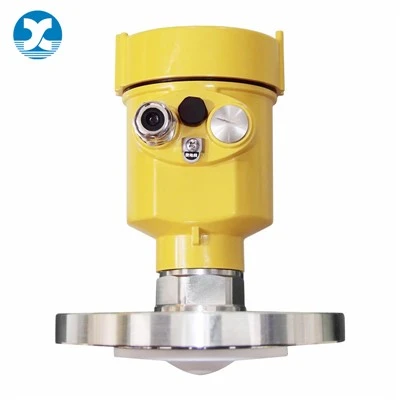
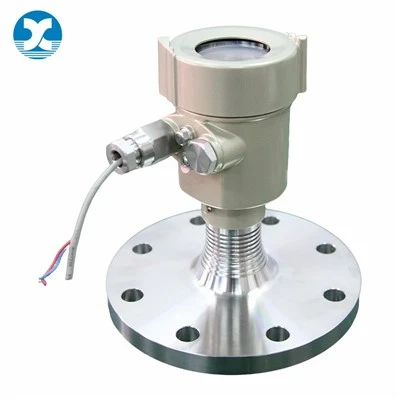
Radar level gauges emit microwave signals that travel through the air and reflect back when they encounter the material surface.
The instrument calculates the distance to the material by measuring the time difference between signal transmission and reception. Radar level gauges typically operate in a high-frequency range, specifically between 6 GHz and 80 GHz, depending on the model and application.
Ultrasonic level gauges, on the other hand, utilize sound waves, typically transmitting at frequencies between 20 and 200 kHz. Their measurement principle is similar to radar, determining distance by the time difference between the sound wave reaching the material surface and reflecting back.
Environmental Adaptability
One of the key factors in choosing a radar or ultrasonic level gauge is the environmental conditions.
Radar level gauges are unaffected by changes in temperature and pressure, or by on-site dust, steam, foam, etc. This makes them ideal for use in harsh environments with high temperatures, high pressures, and high dust levels, such as chemical plants or mining industries (Zhou et al., 2022).
While ultrasonic level gauges are less expensive, they are sensitive to environmental conditions. Temperature fluctuations affect the propagation speed of sound waves, leading to measurement errors. Furthermore, in environments with high levels of steam, foam, or dust, the propagation of ultrasonic waves can be interfered with, affecting measurement stability (Smith & Johnson, 2021).
Accuracy and Range
Radar level gauges typically offer higher accuracy, with measurement errors as low as ±1 mm, especially in high-frequency models. Additionally, radar level gauges can have a measurement range exceeding 80 meters, making them suitable for tall silos or large storage tanks (Miller, 2020).
Ultrasonic level gauges have relatively lower accuracy, with a measurement range typically within 30 meters, suitable for small to medium-sized tanks. Their measurement performance degrades in environments with strong turbulence or dust.
Cost and Complexity
Ultrasonic level gauges are favored for their simple structure and low cost. They are easy to install and maintain, and suitable for simple applications in relatively stable environments. However, in harsh environments, their long-term reliability may be affected, potentially increasing later maintenance costs.
Radar level gauges, while having a higher initial cost, offer greater application flexibility and high reliability in complex environments, resulting in lower long-term maintenance costs. They are particularly economical in scenarios where frequent maintenance and calibration are not required (Chen et al., 2021).
Industrial Applications
Radar level gauges are particularly suitable for industrial sectors such as petroleum, chemical, and mining, where accurate and reliable measurement is required. They maintain stable measurement performance even under high pressure, high temperature, and dusty conditions.
Ultrasonic level gauges are more suitable for simpler environments such as non-pressurized tanks and water treatment facilities. Due to their non-invasive measurement characteristics, ultrasonic level gauges are also widely used in the food and beverage industry.
Radar and ultrasonic level gauges each have their unique application scenarios. For harsh environments or applications requiring high precision and long-distance measurement, radar level gauges are undoubtedly a better choice.
In less demanding scenarios, ultrasonic level gauges offer a more cost-effective solution.
Ultimately, selecting the appropriate level measurement technology requires understanding the specific application requirements, as well as the advantages and limitations of each technology, to ensure optimal measurement results in industrial processes.