Engineered for Extreme Thermal Environments
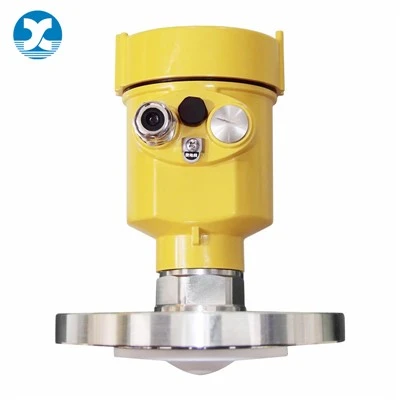
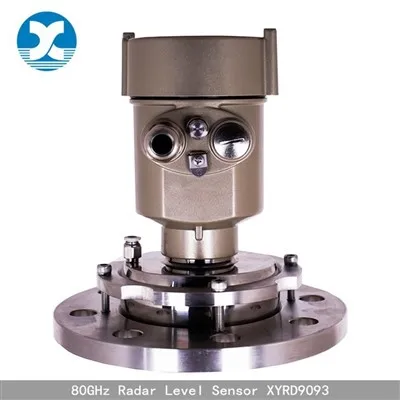
When industrial processes push beyond standard thermal limits, conventional level measurement fails. This 80GHz FMCW non-contact radar transmitter is purpose-built to conquer extreme heat, saturated steam, and severe thermal radiation. Featuring a high-purity ceramic lens and an integrated thermal isolation flange, it guarantees continuous, highly accurate level readings at standard medium temperatures up to 250℃, with custom configurations reaching 400℃.
The High-Temperature Measurement Challenge
Industrial thermal systems operate in punishing environments where standard instrumentation simply cannot survive. Heat conduction oil tanks, high-temperature synthesis reactors, and steam-heated chemical vessels are constantly subjected to intense thermal radiation and dense, saturated steam.
Traditional universal radar level transmitters rely on standard PTFE (Teflon) lens antennas, which have a hard thermal ceiling of 180℃. When exposed to prolonged high heat, these standard lenses suffer from severe aging, thermal deformation, and signal attenuation. The inevitable result is measurement drift, false echoes, and catastrophic equipment failure. This forces plant operators into a costly cycle of frequent instrument replacements, unplanned production halts, and escalating maintenance budgets. To achieve true reliability in heat-intensive applications, a fundamentally different measurement architecture is required-one that actively resists thermal degradation rather than merely tolerating it.
Engineered for Extreme Heat: Core Advantages
High-Purity Ceramic Antenna Architecture
We have completely eliminated temperature-sensitive PTFE materials from the wetted path. Instead, this transmitter utilizes a premium, high-hardness integrated ceramic lens. Specially engineered for continuous thermal exposure, this ceramic antenna maintains flawless dielectric properties without warping, aging, or experiencing signal drift. It ensures uncompromised measurement integrity in extreme heat scenarios that would instantly destroy universal radar sensors.
Advanced Thermal Isolation & Purging Systems
Protecting the sensitive electronics is just as critical as protecting the antenna. A custom-engineered, thickened thermal isolation flange acts as a robust heat barrier, effectively severing the thermal conduction path from the hot vessel to the transmitter's electronic cavity. This prevents internal component burnout. Furthermore, the system includes a dedicated gas purging interface. By allowing a continuous flow of nitrogen or air, this feature actively sweeps away condensed water droplets, oil mists, and particulate matter from the antenna face, guaranteeing ultra-stable signal transmission even in heavily saturated steam environments.
Unmatched Steam & Turbulence Penetration
Powered by mature 76–81GHz FMCW (Frequency-Modulated Continuous Wave) technology, this sensor emits a precision narrow-beam signal with a mere 3° beam angle. This high-frequency focus effortlessly pierces through dense hot steam, violent high-temperature air turbulence, and microscopic condensation droplets. It accurately isolates the true liquid level echo while aggressively filtering out false signals generated by complex thermal field fluctuations, ensuring uninterrupted monitoring.
Zero-Contact Reliability & Intelligent Compensation
By employing a fully non-contact measurement principle, the transmitter never touches the high-temperature media. This completely eliminates risks associated with thermal corrosion, material scaling, and structural fatigue. Inside the device, a proprietary high-temperature adaptive compensation algorithm actively corrects signal offsets caused by thermal expansion and hot air turbulence. The result is a steadfast measurement accuracy of ±3mm, delivering repeatable and reliable data throughout the entire lifecycle of the equipment.
Broad Pressure Tolerance & Safety Certifications
Designed for versatility, the transmitter handles working pressures ranging from full vacuum (-0.1MPa) up to 2.0MPa, making it suitable for both atmospheric and pressurized high-temperature vessels. The high-purity ceramic is inherently resistant to thermal corrosion, making it compatible with heat transfer oils, hot water, and aggressive heated chemical solvents. For hazardous areas, it carries dual explosion-proof certifications (Ex ia IIC T6 Ga) and an IP67 fully sealed housing to withstand outdoor thermal baking, dust, and moisture.
Technical Data Sheet
|
Parameter |
Specification |
|
Working Frequency |
76 ~ 81GHz FMCW |
|
Antenna Type |
High-temperature resistant ceramic lens |
|
Beam Angle |
3° Narrow Beam |
|
Measuring Range |
0 ~ 60m |
|
Measuring Accuracy |
±3mm |
|
Resolution |
±1mm |
|
Standard Process Temp |
-40℃ ~ 250℃ |
|
Custom Ultra-High Temp |
Max 400℃ (with enhanced heat dissipation & purge assembly) |
|
Process Pressure |
-0.1MPa ~ 2.0MPa |
|
Ambient Temperature |
-40℃ ~ 80℃ |
|
Wetted Material |
High-purity ceramic |
|
Process Connection |
Stainless steel flange with thermal isolation (DN50/2''+) |
|
Housing Material |
Aluminum alloy (anti-corrosion coating) / Stainless steel optional |
|
Power Supply |
2-wire / 4-wire, DC 24V |
|
Signal Output |
4~20mA+HART / RS485 Modbus (optional) |
|
Electrical Entry |
M20×1.5 / 1/2''NPT |
|
Protection Grade |
IP67 |
|
Explosion-Proof Standard |
Ex iaⅡC T6 Ga |
|
Operation & Debugging |
Local LCD & keys, Bluetooth wireless, remote PC configuration |
|
Optional Accessories |
Thermal isolation flange, air/nitrogen purge assembly, high-temp gasket |
Ideal Application Scenarios
Thermal Oil & Heat Transfer Fluid Storage
Provides unwavering 24/7 level detection for industrial heat conduction oil tanks and thermal buffer vessels. It reliably adapts to continuous operating environments that routinely exceed 200℃ without signal degradation.
High-Temperature Chemical Reactors
Perfectly suited for batch and continuous high-temperature synthesis reactors in fine chemicals, pharmaceuticals, and new energy materials. It effortlessly overcomes signal interference caused by internal steam evaporation and violent hot air turbulence.
Steam-Rich Processing Vessels
The ultimate solution for evaporation tanks, distillation columns, and steam-heated intermediate tanks. It maintains flawless signal penetration and precise level identification even when the vessel headspace is completely saturated with dense steam.
Power Generation & Boiler Auxiliary Tanks
Delivers dependable level monitoring for power plant boiler buffer tanks, industrial hot water storage, and thermal circulating water systems, thriving in long-term thermal cycling conditions.
Heated Corrosive Chemical Storage
Leveraging the exceptional thermal and chemical resistance of the high-purity ceramic antenna, this transmitter safely monitors heated acid and alkaline corrosive solvent tanks and aggressive chemical reaction vessels.
Installation & Maintenance Best Practices
To maximize the lifespan and accuracy of your high-temperature radar transmitter, adhere to the following field guidelines:
- Optimal Purge Flow Rates: When utilizing the optional air/nitrogen purge assembly in saturated steam environments, maintain a consistent, low-pressure flow. Excessive purge pressure can create acoustic noise that interferes with the 80GHz signal, while insufficient flow will fail to prevent condensation buildup.
- Thermal Flange Orientation: Always ensure the integrated thermal isolation flange is installed exactly as designed. Do not add external insulation directly over the electronic housing cavity, as this traps heat and defeats the purpose of the isolation barrier.
- Beam Path Clearance: Due to the 3° narrow beam angle, ensure there are no internal tank obstructions (like heating coils or agitators) within the direct beam path. If obstructions are unavoidable, utilize the Bluetooth or PC configuration software to map and suppress false echoes.
- Gasket Selection: Always use the specified high-temperature sealing gasket during installation. Standard elastomer gaskets will rapidly degrade at 250℃, leading to steam leaks that can compromise both the measurement and the thermal isolation flange.
- Routine Visual Inspections: While the non-contact design requires minimal maintenance, schedule periodic visual inspections of the ceramic lens face. In heavy oil mist applications without active purging, a quick wipe with a soft cloth during planned shutdowns ensures optimal signal strength.
Common Questions
How does this sensor overcome the limitations of standard PTFE radar lenses?
Standard PTFE lenses physically degrade and lose their dielectric consistency once temperatures surpass 180℃. Our transmitter replaces PTFE entirely with a high-purity ceramic lens that is structurally and thermally stable up to 250℃ (400℃ with custom upgrades). Combined with a thermal isolation flange, it prevents the heat transfer that destroys conventional sensors.
Is the gas purging system always required for high-temperature applications?
It is highly recommended for any vessel containing saturated steam or prone to condensation. The purge system keeps the ceramic lens completely clear of moisture and oil mist, preventing signal attenuation. However, if you are measuring a completely dry, pure high-temperature medium with zero vapor generation, the purging assembly can be safely omitted.
Will extreme heat cause the radar's accuracy to drift over time?
No. The transmitter features a dedicated high-temperature compensation algorithm that actively identifies and corrects signal shifts caused by thermal field changes. Furthermore, the ceramic antenna does not deform, age, or lose its properties at rated temperatures, ensuring that the ±3mm accuracy remains constant throughout the sensor's operational life.
Can this non-contact radar replace guided wave radar in high-heat processes?
In most high-temperature scenarios, yes. Because it is non-contact, it avoids the scaling, adhesion, and mechanical fatigue issues inherent to guided wave radar's intrusive probes. Guided wave radar is generally only preferred in high-temperature applications involving very low-dielectric media or specific oil-water interface measurements.
What communication options are available for integrating this sensor into existing control systems?
The transmitter natively supports standard 4-20mA with HART protocol for seamless integration into legacy and modern DCS/PLC systems. For advanced digital networking, an optional RS485 Modbus output is available. Additionally, commissioning and troubleshooting can be performed wirelessly via Bluetooth or remotely via PC, eliminating the need for physical access to the hot vessel.
Do not let extreme heat and saturated steam compromise your process safety and efficiency. If your thermal reactors, heat transfer tanks, or steam vessels demand a level measurement solution that will not fail, our High Temperature Radar Level Transmitter is engineered for your exact challenges.
To receive a precise, factory-direct quotation and a tailored configuration recommendation, please provide your specific medium temperature, operating pressure, steam concentration, flange dimensions, and purging requirements. Our specialized engineering team is ready to design a robust, maintenance-free level monitoring system that keeps your high-temperature processes running safely and continuously.
Hot Tags: high temperature radar level transmitter | 80ghz fmcw non-contact level sensor, China high temperature radar level transmitter | 80ghz fmcw non-contact level sensor manufacturers, suppliers, factory