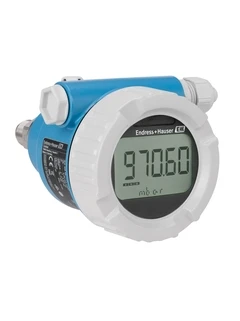
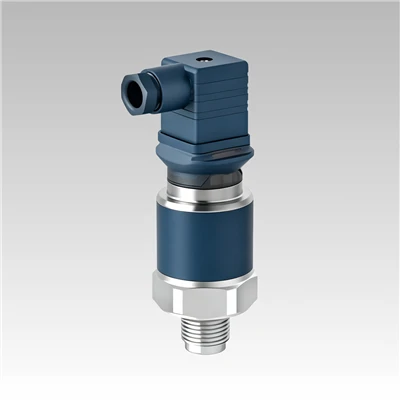
Anyone who's spent time around a sewage treatment line has a story about a level sensor that stopped making sense. The reading jumps for no reason, the alarm won't stop chirping, or the tank looks half full on the HMI while the operator standing next to it can see it's nearly overflowing. Ultrasonic level gauges are still one of the more reasonable choices for this kind of environment - no wetted parts, decent accuracy for the price, easy to swap out. But they do have failure patterns that repeat across plants, and most of them trace back to the same handful of causes.
This is a rundown of the problems that come up most often, what's actually happening behind them, and what tends to fix them for good rather than just for a week.
Why Plants Keep Choosing Ultrasonic Over Contact-Type Sensors
The logic is simple enough. Raw influent, primary sludge, grit slurry - none of it is kind to anything that touches it. Floats jam with rags and grease. Capacitance probes cake over and drift. Ultrasonic sensors sit above the liquid and never make contact, so in a lot of applications they genuinely last longer with less attention.
That said, the tradeoff is that they're measuring through open air above a tank that's often full of steam, foam, and moving parts - which is exactly the environment that trips them up. The technology solves one problem (fouling) and inherits a different one (interference). Worth knowing going in, especially if you're comparing quotes and one vendor's unit is noticeably cheaper - it's usually cheaper because it skips the features that deal with this second problem.

The Problems That Actually Show Up on Site
1. Foam Eating the Signal
This is the complaint we hear most, and it's almost always in aeration basins or anywhere with mechanical mixing. Foam doesn't reflect sound the way a flat liquid surface does - it scatters it, so the sensor either loses the echo entirely or grabs a partial reflection somewhere inside the foam layer, not the actual water surface underneath.
We had a case where a plant kept getting high-level alarms during peak biological loading, even though the tank was nowhere near full. It turned out the foam layer during that period was thick enough that the sensor was reading the top of the foam as the liquid level. The fix wasn't a new sensor - it was repositioning it away from the diffuser zone and adding a short stilling section to cut down direct foam exposure. The reading stabilized within a day.
If repositioning isn't practical, look at units with adjustable echo threshold sensitivity. It won't eliminate the issue in heavy foam, but it reduces false triggers meaningfully.
2. False Echoes Off Tank Internals
A ladder, an agitator shaft, a support beam sitting inside the sensor's beam cone - any of it can bounce sound back and get read as the surface. This tends to look like sudden, physically impossible jumps in the trend line: level drops ten centimeters in one scan cycle, then comes right back.
Buyers often overlook beam angle when comparing sensors, mostly because it's buried in the datasheet and every model "looks the same" on paper. It shouldn't be an afterthought - a wide beam angle in a tank full of structural clutter is asking for this exact problem. During commissioning, running a proper false-echo mapping routine, instead of skipping straight to default settings, solves a large share of these cases before they ever become a service call.
3. Blind Zone Catching You Right When Accuracy Matters Most
Every ultrasonic transducer has a dead zone close to the face where the reading isn't reliable - the wave hasn't stabilized yet. If your tank's maximum fill level sits anywhere near that zone, you lose accuracy exactly at the moment you most need it: near overflow.
This is one of those things that's cheap to prevent and annoying to fix after installation. Check the blind zone spec against your actual maximum expected level, with margin, before mounting - not the generic "measuring range" number vendors lead with, which usually assumes ideal open-tank conditions that don't match a real sewage basin.
4. Drift From Temperature and Humidity Swings
Sound speed changes with air temperature, so a tank that heats up under direct sun and cools overnight can show a slow drift in reading that has nothing to do with the actual liquid level. It's subtle enough that operators sometimes chase it as a calibration problem for weeks before realizing it tracks the daily temperature curve.
Sensors with a built-in temperature probe and automatic compensation handle this without operator intervention. If the unit already installed doesn't have it, a manual cross-check against a staff gauge at a few different times of day will at least quantify how much drift is happening, which helps decide whether an upgrade is worth it.
5. Buildup on the Transducer Face
Non-contact doesn't mean zero maintenance. Grease mist and condensation settle on the sensor face over time, especially near primary treatment or industrial discharge with high fat content. A coated face weakens the outgoing pulse, and the return signal gets noisier before anyone notices a full failure - it degrades gradually, which is part of why it's easy to miss during a quick visual check.
A wipe-down on a set interval prevents most of it. For lines where this is a recurring headache, it's worth paying attention to transducer coating material when purchasing - PTFE or PVDF-faced units shed grease far better than uncoated plastic, and the price difference is small next to the labor cost of cleaning a fouled sensor every few weeks.
6. Turbulence Scrambling the Return Signal
Grit channels, flow splitting boxes, anything near a mixer - surface turbulence breaks up the reflection into an inconsistent, noisy return instead of one clean echo. The sensor isn't broken, it's just not getting a signal it can trust.
Positioning over the calmest available section of flow helps more than people expect. Where that's not possible, the transmitter's damping or averaging settings are worth a look - most industrial units let you smooth the response without lagging too far behind real changes. It's a setting people rarely touch after commissioning, which is unfortunate, because it's often the whole fix.
7. Installation Shortcuts That Look Like Hardware Failures
This one is unglamorous but it's a genuinely common root cause. Sensor mounted too close to the tank wall, signal cable run parallel to a motor supply line with no shielding, unit not quite vertical - any of these will produce readings that look like a defective sensor when the sensor itself is fine.
Worth checking wall clearance against the manufacturer's minimum (typically 20-30 cm, varies by model), routing signal cable separately from power where possible, and confirming the mount is level before blaming the instrument. It's a five-minute check that saves a truck roll.
What This Means If You're Choosing a Sensor, Not Just Fixing One
For buyers comparing options rather than troubleshooting what's already installed, a few things matter more in practice than the spec sheet numbers usually suggest:
- Housing and cable gland material matter more in a sewage plant than almost anywhere else, because hydrogen sulfide corrodes cheap enclosures faster than most buyers expect. Stainless or high-grade PBT housing costs more upfront but changes the replacement cycle noticeably.
- Echo processing quality is the real differentiator between budget and mid-range units, more than raw range or accuracy numbers on paper. Two sensors with identical published accuracy can behave completely differently in a foamy tank depending on how well the internal filtering handles a noisy return signal.
- Local support and spare part availability end up mattering as much as the hardware itself once a unit has been in service for a while - a sensor that's slightly cheaper but takes weeks to get a replacement part isn't actually cheaper.
Maintenance Habits That Extend Service Life
- Wipe the transducer face clean on a set schedule rather than reactively - monthly is a reasonable default for grease-heavy lines
- Check housing seals and cable glands for corrosion a couple of times a year
- Re-verify against a manual reading after any tank cleaning or structural change nearby
- Recheck mounting brackets after big seasonal temperature swings
- Review and update the false-echo map if anything changes inside the tank - new equipment, added ladders, anything that alters the beam path
When It's Time to Consider Radar Instead
Ultrasonic sensors are a solid default for a lot of sewage tanks, but they're not always the right call. Persistent heavy foam, dense vapor, or narrow tanks packed with obstructions tend to favor a guided wave or non-contact radar level gauge, since radar is far less sensitive to vapor, foam, and temperature layering. It costs more to buy, but for a tank that's never behaved well with ultrasonic - the kind that generates a support ticket every other month - the total cost usually works out ahead within a couple of years once troubleshooting time is factored in.
FAQ
Can foam interference be solved through settings alone, without moving the sensor?
Partially. Adjusting echo threshold and damping reduces false triggers from moderate foam, but a thick, persistent foam layer usually needs a physical change too - repositioning, a stilling well, or a different technology altogether.
How often should these sensors actually be recalibrated in a sewage application?
Once a year is a reasonable baseline for most plants. Where the air is particularly corrosive or the tank internals change often, checking every six months tends to catch drift before it becomes an operational problem.
Does paying more for a sensor actually translate to fewer problems?
In this category, usually yes - the price difference tends to reflect real things like coating material, echo processing quality, and housing durability, not just branding. For harsh sewage conditions specifically, the cheaper option often ends up costing more in service visits.
Can these sensors be installed in sealed, gas-tight tanks?
Most models support it, but pressure differences inside a sealed vessel can still affect sound travel time slightly. Worth checking the pressure rating and compensation range before specifying a sensor for a closed tank.
How long do these units typically hold up in a wastewater environment before needing replacement?
With reasonable cleaning habits and the right housing rating, several years of dependable service is typical. Corrosive gas exposure or a lack of maintenance shortens that window considerably.
References
U.S. Environmental Protection Agency - guidance documentation on instrumentation, control, and automation for wastewater treatment facilities.
Water Environment Federation (WEF) - Manual of Practice on plant instrumentation and control systems.
International Society of Automation (ISA) - technical references on ultrasonic and radar level measurement principles.
Working through a specific tank that won't behave? Send us the configuration and we can help figure out whether it's a settings issue, a placement issue, or a case for switching technology.