1. Introduction
Radar level transmitters have gradually replaced traditional sensors and become the preferred level measurement solution across modern industrial production lines. Compared with ultrasonic sensors, float gauges and capacitance meters, radar instruments boast stronger anti-interference performance, dependable accuracy and minimal maintenance needs. They handle tough working conditions involving high temperature, tank pressure, surface foam and volatile vapor with ease.
However, most global procurement engineers and plant managers face the same dilemma during instrument sourcing. Industrial radar transmitters are categorized into two core types: guided wave radar and non-contact FMCW radar. A large number of overseas buyers cannot tell their practical differences clearly. This common misjudgment frequently leads to improper model selection, fluctuating level data, and unnecessary equipment replacement costs.
In actual industrial procurement and field installation cases, many users mistakenly believe these two radars are interchangeable. In reality, they vary drastically in working principles, physical structures, medium compatibility and installation requirements. Picking an unsuitable radar model not only lowers measurement efficiency, but also accelerates instrument aging under harsh operating environments.
Drawing on years of field application experience and industrial test data, this article elaborates on the essential differences between the two radar types. It covers working mechanisms, on-site performance, applicable industries and practical selection tips, helping global industrial users make cost-effective and reliable procurement decisions.


2. Basic Working Principles
Both guided wave radar and non-contact radar adopt microwave detection technology, yet their signal transmission logic is fundamentally different. This core distinction directly determines their environmental adaptability and inherent application limitations in industrial sites.
2.1 Non-Contact FMCW Radar
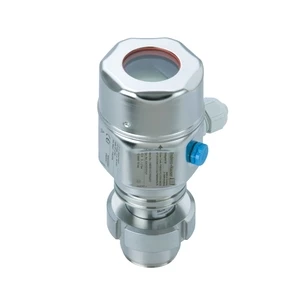
Also known as free-space radar, non-contact radar is mounted on tank tops without touching internal media. The antenna emits high-frequency microwaves that travel freely through air inside sealed vessels. Once the microwaves hit the liquid surface, clear echo signals will be reflected back to the receiving antenna.
The built-in chip calculates real-time liquid level based on signal transmission time and frequency deviation. 26GHz and 80GHz are the most mainstream frequencies on the industrial instrument market. Higher frequency delivers a narrower beam angle, which effectively avoids signal interference from tank walls, pipelines and internal baffles.
2.2 Guided Wave Radar
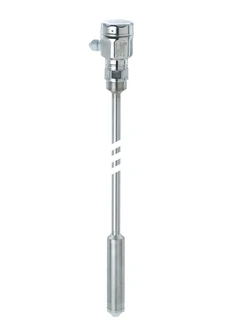
Guided wave radar belongs to the contact-type radar family. It is fitted with a durable stainless steel probe (rod or cable style) that extends from the tank top down into the liquid. Instead of propagating in the air, microwaves transmit steadily along the probe surface.
Obvious impedance changes occur when microwaves touch the gas-liquid interface, and the sensor identifies accurate liquid level through echo feedback. The probe-guided transmission greatly reduces signal loss and eliminates air-borne interference, ensuring stable detection in complex tanks.
3. Core Structural and Installation Differences
Physical structure is the most intuitive distinction between the two radar transmitters. Their unique hardware designs lead to obvious differences in installation difficulty, space occupation and long-term maintenance expenditure for factory operators.
3.1 Non-Contact Radar Structure & Installation
Non-contact radar features an integrated compact structure with no movable parts or extended probes. The whole unit is firmly fixed on standard tank flanges, requiring simple installation steps and minimal reserved space. Since it never contacts raw materials, there is no medium adhesion or probe corrosion issue, fully complying with strict sanitary manufacturing standards.
This radar type has no strict restriction on tank height, making it ideal for large vertical storage tanks with ultra-long measurement ranges. The only installation reminder is to keep the antenna away from feeding inlets and stirring zones, preventing liquid splashing from contaminating the antenna shell.
3.2 Guided Wave Radar Structure & Installation
A complete guided wave radar consists of a transmitter housing, connecting flange and customized detection probe. The probe length must strictly match the tank depth, which requires accurate size confirmation before procurement to avoid installation failure.
As the probe stays immersed in media permanently, corrosion-resistant alloy materials are essential for chemical corrosive liquids. Compared with non-contact radar, it demands more complicated installation procedures, and regular manual inspection is required to clean sticky residues on the probe surface.
4. Performance Comparison Under Complex Working Conditions
On-site working condition is the core factor for radar selection. Foam accumulation, high-temperature steam, viscous media and turbulent flow are four common interference factors that trouble industrial level sensors. The comparison table below clearly shows their performance gaps in complex environments.
|
Working Condition |
Non-Contact Radar |
Guided Wave Radar |
|
Light Foam (<3cm) |
Excellent penetration, stable reading |
Completely unaffected |
|
Thick Dense Foam (>5cm) |
Slight signal attenuation |
Zero interference, accurate measurement |
|
High-Temperature Steam |
Applicable with air purge accessories |
Suitable for saturated high-temperature steam |
|
High-Viscosity Medium |
Ideal, no medium contact |
Easy to adhere, requires regular cleaning |
|
Turbulent Liquid Surface |
Minor data fluctuation |
High stability without fluctuation |
5. Applicable Industrial Scenarios
Combined with structural traits and environmental adaptability, the two radar types have their own mature and exclusive application scenarios. Reasonable model matching based on production characteristics can effectively extend instrument service life and reduce operational risks.
5.1 Application of Non-Contact Radar
Non-contact radar is widely adopted in mild industrial working conditions. It serves as the top choice for food & beverage, daily chemical, pharmaceutical and petrochemical raw material storage. It performs exceptionally well in sealed sanitary tanks, low-viscosity mixing vessels and normal-temperature buffer tanks.
Thanks to its non-contact design, it eliminates secondary pollution to raw materials and meets global industrial hygiene certification requirements. It is also the preferred solution for large vertical storage tanks with a measuring range over 15 meters.
5.2 Application of Guided Wave Radar
Guided wave radar is specially engineered for harsh industrial environments. It is commonly installed in fermentation tanks, distillation towers, high-pressure reactors and boiler water tanks in chemical, biogas and energy industries. It maintains precise readings even for boiling liquid, turbulent media and tanks covered with dense foam.
Restricted by probe length, guided wave radar is more suitable for medium and short-range measurement within 10 meters. It is not recommended for ultra-high storage tanks due to transportation and installation limitations.
6. Practical Selection Guidelines for Global Buyers
Summarized from countless on-site debugging and matching experiences, the following practical guidelines help overseas buyers avoid common procurement pitfalls and control comprehensive operational costs.
- Choose non-contact radar: For sanitary production requirements, high-viscosity liquid, large-range measurement, and working conditions with light foam and normal temperature steam.
- Choose guided wave radar: For thick persistent foam, boiling turbulent liquid, high-temperature saturated steam, and narrow tank internal space.
- Budget consideration: Non-contact radar has lower installation and maintenance costs; guided wave radar requires higher one-time procurement cost but stronger anti-interference performance.
7. Frequently Asked Questions (FAQ)
7.1 Are guided wave radar and non-contact radar interchangeable?
No. These two radar sensors have clear applicable boundaries. Blind replacement will cause unstable echo signals, persistent data drift and frequent instrument alarms.
7.2 Which radar has a lower failure rate?
Non-contact radar boasts a lower failure rate under mild, clean working conditions. In contrast, guided wave radar maintains superior stability in extreme harsh industrial environments.
7.3 Does high viscosity liquid affect radar measurement?
Yes for guided wave radar. Sticky high-viscosity media will adhere to the probe and weaken detection sensitivity. Non-contact radar is completely free from such troubles without physical contact with liquids.
7.4 Can both radars work under high pressure?
Absolutely. Both radar types support customized high-pressure resistant shells and stainless steel flanges, perfectly adapting to sealed high-pressure reaction vessels in the chemical industry.
8. Conclusion
There is no absolute good or bad between guided wave radar and non-contact radar level transmitters. Their core differences lie in signal transmission mode, physical structure and environmental tolerance. Featuring easy installation, sanitary performance and low maintenance cost, non-contact radar is ideal for conventional mild working conditions. By comparison, guided wave radar achieves excellent anti-interference capability with probe guidance, making it the top pick for tanks with thick foam, boiling liquid and saturated high-temperature steam.
For industrial instrument procurement, the most suitable product always depends on actual on-site working conditions. Blindly pursuing high configuration or low unit price will bring hidden risks to long-term production monitoring. If you have any product procurement demands, please feel free to contact us, and we will recommend the most suitable radar level transmitters strictly according to your specific working conditions.
9. References
- Industrial Radar Level Measuring Instrument Selection Manual, International Society of Automation (ISA)
- Comparative Test Report of Guided Wave and Non-Contact Microwave Radar, Industrial Instrument Testing Center
- Harsh Condition Instrument Application Guidelines for Chemical & Energy Industry
- Field Application Case Collection of Industrial Radar Level Transmitters