Chemical processing sites present some of the harshest working conditions for level measurement equipment. Process tanks frequently handle corrosive reagents, volatile solvents, foaming mixtures, and flammable vapors, alongside wide swings in temperature and working pressure. Poor-performing level instruments can trigger tank overflow, feed-rate deviation, unplanned shutdowns, and even potential safety incidents within hazardous zones.
Many plant procurement and engineering teams face repeated instrument failures, not because of low-quality hardware, but because they pick devices designed for general-purpose water or oil service rather than chemical-specific environments. There is no universal "best" instrument for every chemical plant tank. Each technology carries distinct strengths and real-world limits that must be weighed against your actual process media, vessel design, and site safety regulations.
This guide breaks down which level measuring instruments deliver reliable performance across typical chemical plant workflows. It covers core evaluation criteria, technology-by-technology field feedback, common deployment pitfalls, and compliance considerations. The content is built for process engineers, system integrators, and procurement specialists responsible for specifying instrumentation for reactors, storage tanks, separators, and buffer vessels within chemical facilities.
Key Operating Challenges for Level Instruments in Chemical Plants
Before comparing hardware options, it helps to understand the stress factors that wear down level sensors inside chemical facilities. These conditions set the baseline for every instrument specification decision.
Corrosive and Aggressive Process Media
Acids, bases, and mixed chemical blends will slowly attack unsuitable wetted materials. Standard carbon steel or ordinary 304 stainless steel probes degrade quickly, leading to pitting, material flaking, and measurement drift. Even minor corrosion can create safety risks inside pressurized reaction vessels. Wetted component material selection is non-negotiable for long service life.
Vapor, Foam, Condensation and Surface Agitation
Reaction tanks and heated storage vessels often build heavy vapor layers, surface foam, and internal condensation. Acoustic-based instruments struggle here, as vapors and foam scatter sound signals and produce jumpy, unreliable readings. Agitators inside mixing tanks add further complexity by creating constantly moving liquid surfaces that confuse poorly suited sensors.
Hazardous Area Classification and Compliance Rules
Most chemical plant tank farms and reaction areas fall under explosive hazardous zone classifications. Every instrument installed in these zones must hold valid explosion-proof certification. Non-certified hardware cannot pass safety audits and poses unacceptable ignition risk, regardless of how well the sensor performs from a measurement standpoint.
Top Performing Level Measuring Instruments for Chemical Plant Applications
Each instrument type listed below sees widespread real-world deployment within chemical facilities. We focus on practical field performance rather than just datasheet specifications, noting where each solution works well and where you should avoid specifying it.
Non-Contact Radar Level Transmitters
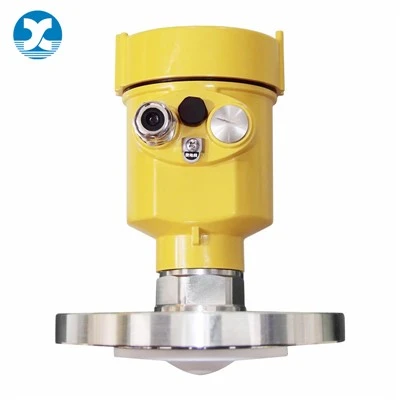
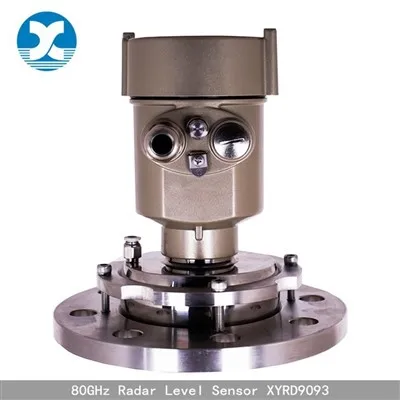
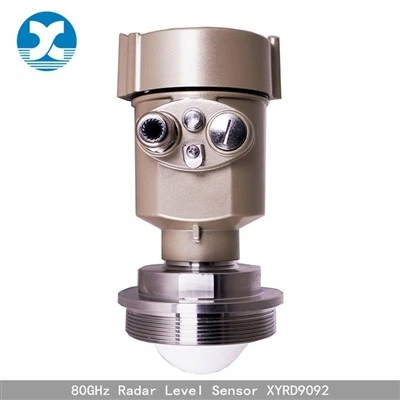
Non-contact radar represents one of the most flexible workhorses across modern chemical plants. High-frequency microwave signals travel through vapor, condensation, light-to-moderate foam, and dust without physical contact with process liquids. Wetted parts are limited to the antenna surface, so you can specify PTFE, 316L stainless steel or Hastelloy to match corrosive media.
These transmitters fit storage tanks, distillation columns, mixing reactors, and buffer vessels operating under variable pressure and temperature. Since there is no probe dipping into the process fluid, buildup and coking on sensor hardware are kept to a minimum. The main downside is higher upfront investment compared to simpler technologies. Very heavy, dense foam can still impact measurement accuracy in extreme cases.
Guided Wave Radar Level Transmitters
Guided wave radar sends microwave energy down a cable or rod probe immersed inside the tank. It excels in narrow vessels, agitated reactors, and applications where you need to measure both liquid level and liquid-liquid interface, such as oil-water separation tanks common in chemical intermediate processing.
This technology handles high pressure and high-temperature chemical service reliably. Probe materials can be selected for corrosive service. The primary limitation comes from sticky, viscous or heavily coking media. Material buildup along the probe will gradually distort signal quality and require periodic cleaning. Even with this caveat, guided wave radar remains a preferred choice for many closed-loop chemical process control points.
Differential Pressure Level Transmitters
Differential pressure transmitters are a mature, well-understood solution for pressurized chemical tanks. They calculate level by measuring hydrostatic pressure difference between the tank liquid and headspace gas. They are widely deployed on condensate receivers, solvent buffer tanks and closed storage vessels where process fluid density stays relatively stable.
Diaphragm seals with chemical-compatible fill fluids allow DP transmitters to work with corrosive fluids. However, performance degrades noticeably when media density shifts during batch processing. Foam and suspended solids also create measurement uncertainty. DP transmitters work best as part of a stable process, not for highly variable batch chemical reactions.
Tuning Fork Level Switches
Tuning fork switches do not deliver continuous level readings, but they form a critical layer of safety protection inside chemical plants. They trigger digital alarm signals at predefined high-level or low-level thresholds, protecting against overflow and pump dry-run conditions. They work with liquids, slurries, and many powder-form chemical feedstocks.
You will commonly see them paired alongside continuous radar or DP transmitters to build redundant monitoring systems. Select forks with appropriate wetted material grades and full hazardous-area certification. They have very low maintenance demand and very few moving parts, making them dependable safety backup hardware.
Capacitance Level Transmitters
Capacitance level sensors measure change in electrical capacitance along an immersed probe. They can work for many corrosive chemical liquids when fitted with PTFE-coated probes. They are compact and suitable for smaller vessels. Still, coating and material buildup on the probe surface will shift calibration over time. For that reason, capacitance is less frequently selected for heavy-coking chemical processes compared to radar-based alternatives.
Critical Specification Checklist for Chemical Plant Level Instruments
Even when you pick the correct instrument technology, overlooking these specification items leads to poor field outcomes.
Wetted material compatibility: Match antenna, probe, diaphragm or seal materials against your exact chemical media, temperature and concentration. Generic 316L will not hold up against many strong acids.
Explosion-proof certification: Confirm ATEX or IECEx certification matching your site's zone classification.
Process pressure and temperature rating: Include safety margin above normal operating peaks, not just nominal working values.
Output and communication: Confirm support for 4-20 mA, HART or Modbus to integrate with your existing DCS or PLC control system.
Mounting constraints: Check nozzle size, tank internals such as baffles and stirrers that may interfere with signal paths.
Common Mistakes Seen in Chemical Plant Level Instrument Specification
Real-world project experience repeats several avoidable errors. Many of these mistakes appear on specification sheets from teams that rely only on datasheet browsing without thinking through plant operating reality.
Specifying ultrasonic transmitters for chemical reactors and solvent storage tanks stands as one of the most frequent missteps. Vapor, condensation and foam destroy acoustic measurement reliability, yet ultrasonic sensors are occasionally selected for their low purchase price. The resulting constant calibration work and unreliable data erase any initial cost savings.
Another common issue is ignoring media coating risk when selecting guided wave radar or capacitance probes. If your process produces sticky deposits, you either accept scheduled probe cleaning cycles or switch toward non-contact radar to reduce fouling-related headaches. Skipping hazardous-area certification checks creates compliance exposure that can halt commissioning work entirely.
Application-Based Quick Reference
Chemical Raw-Material Storage Tanks
Non-contact radar is the primary choice for inventory monitoring of corrosive solvents. Pair with tuning fork high-level switches for overflow prevention.
Batch Reaction Vessels
Guided wave radar works well for agitated batch reactors. Where heavy foam occurs, move to high-performance non-contact radar. Always add point-level safety switches.
Liquid-Liquid Separator Tanks
Guided wave radar supports interface-level measurement, ideal for separators with layered chemical fluids.
Condensate and Stable-Density Buffer Tanks
Differential pressure transmitters with chemically matched diaphragm seals offer cost-effective, proven performance.
FAQ
Which level instrument works best for corrosive chemical tanks with heavy vapour?
High-frequency non-contact radar level transmitters are the preferred solution. Microwave signals are largely unaffected by vapour and condensation, and you can select antenna materials compatible with aggressive chemicals.
Can tuning fork switches be used for all hazardous-zone chemical tanks?
Yes, provided the unit carries valid ATEX or IECEx certification matching your zone classification and correct wetted material for the process fluid. They serve safety alarm functions, not continuous level readout.
Is guided wave radar suitable for heavily fouling chemical media?
It can work, but fouling will degrade readings over time. You will need scheduled maintenance for probe cleaning. In such cases non-contact radar is often the better long-term option.
Closing Thoughts
Selecting level measuring instruments for chemical plants demands more than comparing technical parameters on product brochures. You must account for media aggressiveness, tank internals, vapor and foam behaviour, and local hazardous-area compliance. Non-contact radar offers broad versatility for harsh chemical conditions. Guided wave radar shines for interface measurement and narrow agitated vessels. Differential pressure transmitters remain economical for stable-density pressurized tanks. Tuning fork switches deliver essential safety-alarm backup across nearly all installations.
Getting these choices right cuts unexpected maintenance work, reduces unplanned downtime, and keeps your plant aligned with safety audit requirements. If you would like support for your own chemical-plant level-measurement project, share details such as media composition, vessel dimensions, operating temperature-pressure values and hazardous-zone classification. Our technical team can provide application-specific instrument recommendations.
References
1. IEC 61517:2024, Industrial Process Measurement and Control - Level-measuring Instruments, General Specification.
2. ISA-RP12.06.01:2022, Recommended Practice for Hazardous Area Instrument Installation in Chemical Process Industries.
3. Endress+Hauser, 2025. Level Measurement Handbook for Chemical Process Vessels.
4. Vega Instruments Engineering Team, 2026. Field Application Report: Level Measurement Challenges within Chemical Plants.
5. International Society of Automation (ISA), 2025. Specification Guidance for Process-Instrument Wetted-Material Selection.