Tank level monitoring serves as the backbone of safe, stable, and cost-efficient process operations across chemical, oil and gas, water treatment, and food and beverage facilities. Accurate level instrumentation prevents frequent on-site issues such as tank overflow, pump dry running, raw material loss, and unplanned production downtime. Even so, many process plants struggle with recurring instrument inaccuracies and premature failures. In most cases, these problems stem from improper sensor selection, not defective product quality.
No single level measurement technology works for every tank application. Ultrasonic, non-contact radar, guided wave radar, capacitance, and differential pressure sensors all deliver solid performance in specific scenarios, yet each has clear operational limitations. Choosing instruments based solely on low cost or brand reputation often leads to gradual measurement drift, intermittent signal loss, frequent recalibration, and inflated long-term maintenance expenses. Reliable, consistent tank level monitoring always hinges on matching the right technology to your actual tank structure, process media, and site environmental conditions.
This on-site-focused guide outlines a step-by-step workflow for selecting tank level monitoring instruments. It covers essential evaluation criteria, head-to-head technology comparisons, industry-specific application rules, and common selection pitfalls to avoid. Tailored for field engineers, system integrators, and plant procurement teams, this resource helps you make practical, cost-effective, and audit-compliant instrument decisions aligned with real-world plant operating conditions.
Step 1: Clarify Core Monitoring Requirements First
Before comparing individual instrument models, take time to define your core monitoring objectives. Vague or generalized requirements often result in over-specified, unnecessarily costly hardware, or under-equipped sensors that fail to meet process control needs on site.
Continuous Level Tracking vs. Point Alarm Protection
First, confirm whether your site requires continuous level tracking or only point-based safety alarming. Continuous level transmitters deliver real-time, dynamic level readings to support closed-loop process tuning, inventory tracking, and operational trend analysis. They are ideal for reaction vessels, raw material storage tanks, and buffer tanks that demand constant data visibility. Point level switches only activate signals at preset high or low level thresholds, primarily for overflow prevention and pump dry-run protection. For most industrial tank setups, pairing continuous monitoring with point alarm switches creates a robust, balanced safety and control system.
Confirm Required Measurement Accuracy
Accuracy requirements vary significantly between industrial processes. General water storage tanks and auxiliary utility vessels tolerate minor measurement deviations and do not require ultra-high precision. In contrast, fine chemical synthesis, pharmaceutical manufacturing, and precision batching processes depend on consistent high-precision readings to eliminate batch-to-batch quality inconsistencies. Over-specifying accuracy wastes budget on unnecessary performance, while deploying low-precision sensors on critical process tanks introduces avoidable operational and safety risks.
Step 2: Evaluate On-Site Medium Characteristics
Process media characteristics directly dictate which measurement technologies and wetted materials are viable for long-term service. Failing to account for medium properties commonly leads to probe corrosion, surface scaling, signal attenuation, and steady performance degradation over time.
Liquid, Slurry or Solid Powder
Clean, stable liquids such as process water, standard oils, and inert solvents work well with ultrasonic, radar, and differential pressure sensors. For viscous fluids, heavy slurries, and media prone to coking or solid buildup, non-contact radar is the preferred solution. Contact probes in these applications quickly accumulate residue, which skews readings and causes frequent drift. For granular solids and dusty powder materials, ultrasonic sensors struggle with signal attenuation, while radar and capacitance instruments maintain stable, repeatable output.
Corrosiveness, Volatility and Foam Generation
Highly corrosive process media require robust wetted materials such as 316L stainless steel, Hastelloy, or PTFE to extend instrument service life. Volatile solvents and steam-rich tank environments severely disrupt ultrasonic sound wave propagation, rendering ultrasonic sensors unreliable. Surface foam also scatters and reflects acoustic signals, causing erratic, jumping level data. In these harsh conditions, microwave-based radar technology remains unaffected by vapor, foam, and ambient temperature fluctuations, delivering steady measurement performance.
Step 3: Match Tank Structure and Installation Conditions
Tank geometry, sealing configuration, and available installation space all influence instrument placement and signal stability. Many sensors perform flawlessly under laboratory conditions but fail to deliver consistent results when installed in constrained, structurally complex field tanks.
Open Tanks vs. Sealed Pressurized Tanks
Open atmospheric tanks, including water ponds and sewage basins, experience minimal environmental interference. Ultrasonic level transmitters offer exceptional cost performance and fully satisfy routine monitoring demands for these assets. Sealed pressurized vessels, chemical reaction kettles, and nitrogen-blanketed storage tanks feature internal pressure swings and persistent vapor buildup. Only pressure-resistant, high-interference-resilience radar or guided wave radar sensors deliver reliable long-term operation in these closed-tank environments.
Tank Height, Obstructions and Agitation
Narrow, compact tanks fitted with internal stirrers, baffles, and piping often create ultrasonic echo disruption and signal confusion. Guided wave radar avoids this issue by directing microwave signals along a fixed probe, eliminating stray interference. For tall silos and large-volume storage tanks, high-frequency non-contact radar provides extended measuring range and superior signal penetration for consistent top-to-bottom level tracking.
Step 4: Select Technology Based on Working Condition Matching
Once you define your monitoring requirements, media properties, and tank constraints, you can select the optimal measurement technology using proven field application logic. Below is a practical breakdown of real-world instrument matching for common industrial scenarios.
Ultrasonic Level Transmitters
Ultrasonic level transmitters excel on open water tanks, sewage basins, and non-volatile liquid storage vessels with minimal environmental interference. They feature simple top-mounted installation, zero media contact, and almost no routine maintenance. However, they should never be specified for steaming, foamy, dusty, or high-temperature sealed tanks, as these conditions cause persistent signal instability and unreliable readings.
Non-Contact Radar Level Transmitters
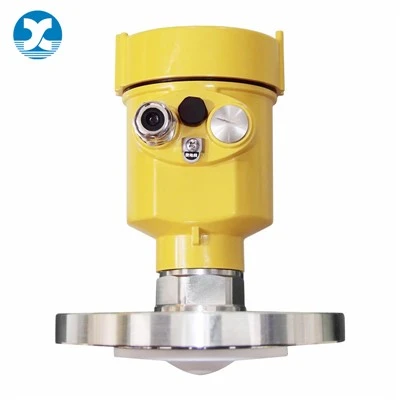
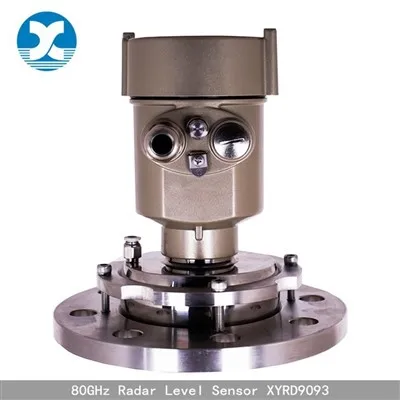
Non-contact radar level transmitters offer the most versatile performance for harsh industrial environments. High-frequency microwave signals ignore steam, dust, surface foam, pressure variations, and temperature shifts. This makes them ideal for corrosive chemical tanks, petrochemical hydrocarbon storage vessels, pharmaceutical process tanks, and dust-laden solid silos. Though upfront costs are slightly higher, their long-term stability and minimal maintenance requirements deliver strong overall value.
Guided Wave Radar Transmitters
Guided wave radar transmitters are optimized for narrow vessels, agitated tanks, and processes with severe liquid surface fluctuation. A unique advantage is their ability to measure both liquid level and oil-water interface layers, critical for separation and layered storage tanks. The technology withstands high temperature and high pressure operating conditions, making it a top choice for high-precision closed-loop process control.
Differential Pressure Level Transmitters
Differential pressure level transmitters work best on sealed pressurized liquid tanks with stable, consistent media density, such as condensate vessels and solvent buffer tanks. The technology is mature, easy to install, and highly cost-effective for standard liquid level monitoring. It is not suitable for media with fluctuating density, nor for solid powder level measurement applications.
Tuning Fork Level Switches
Tuning fork level switches serve as auxiliary safety devices, commonly paired with continuous transmitters to create redundant monitoring systems. They reliably prevent tank overflow and equipment dry-run conditions across most liquid and solid media, with extremely low failure rates and negligible maintenance demands.
Step 5: Verify Industrial Certification and Environmental Adaptability
Many teams overlook compliance and environmental adaptability during instrument selection, leading to post-installation audit issues and safety risks. For flammable, explosive tank farm environments, all field instruments must carry valid ATEX or IECEx explosion-proof certification to meet plant safety standards. For food and pharmaceutical processing tanks, wetted components must use sanitary-grade materials that comply with GMP guidelines to eliminate contamination risks.
Additionally, verify each instrument's temperature rating and IP protection class. Outdoor tank installations require IP67 or IP68 ingress protection to withstand rain, dust, and temperature cycling. Indoor process instruments prioritize corrosion resistance and signal anti-interference performance for consistent round-the-clock operation.
Common Tank Level Instrument Selection Mistakes to Avoid
Nearly all recurring level instrument issues on industrial sites stem from poor selection practices, not manufacturing defects. These avoidable errors remain common in plant procurement and can be eliminated with a structured evaluation workflow.
Common missteps include deploying low-cost ultrasonic sensors on steaming, volatile chemical tanks, which creates persistent measurement inaccuracy and constant recalibration needs. Many facilities also incorrectly replace continuous transmitters with point-level switches, eliminating the real-time data required for process tuning and trend analysis. Ignoring media adhesion and corrosion properties leads to probe fouling, scaling, and premature instrument failure. Finally, skipping hazardous area certification checks often results in audit non-compliance and mandatory equipment retrofits.
Industry-Specific Quick Selection Rules
Chemical & Petrochemical Industry
Chemical and petrochemical facilities rely on non-contact or guided wave radar for continuous level monitoring, supplemented by tuning fork safety switches. These technologies resist corrosion, vapor interference, and pressure fluctuations, ensuring stable operation in classified hazardous areas.
Water Treatment Industry
Water treatment plants use cost-effective ultrasonic transmitters for open basins and standard water tanks. For sealed process vessels prone to humidity, fog, and vapor buildup, radar sensors deliver far more dependable and consistent data output.
Food & Pharmaceutical Industry
Food and pharmaceutical manufacturing requires strict hygienic control. Sanitary-grade non-contact or guided wave radar sensors with 316L stainless steel wetted parts and clamp-style mounting are the standard choice, fully aligning with GMP production and audit requirements.
Building Material & Powder Industry
Dusty building material and powder processing silos pair radar or capacitance continuous level sensors with tuning fork switches. This combination prevents overfilling and material blockages while maintaining stable measurement in heavy dust conditions.
FAQ
What is the most reliable level instrument for sealed chemical tanks?
High-frequency non-contact radar transmitters offer the most reliable performance for sealed chemical tanks. They ignore internal steam, volatile fumes, and process pressure changes, sustaining accurate readings during long-term unattended operation.
Which level sensor is the most cost-effective for general water tanks?
Ultrasonic level transmitters deliver the best cost-performance balance for open and standard sealed water tanks, thanks to their simple installation and maintenance-free operation.
Do powder silos need continuous level monitoring?
Critical raw material silos used for inventory control require continuous radar level measurement for real-time stock visibility. Non-essential auxiliary silos can utilize only point-level switches for basic high/low level alarming to reduce hardware costs.
Final Summary
Selecting tank level instrumentation is a structured, condition-based decision that accounts for process requirements, media behavior, tank design, and safety compliance standards. Successful selection focuses on application fit rather than price or specification comparisons alone. Ultrasonic sensors suit general water and low-interference environments; radar systems handle harsh chemical, high-temperature, and dusty processes; differential pressure sensors work reliably for standard pressurized liquid tanks; tuning fork switches deliver essential safety backup.
A standardized selection approach directly improves measurement stability, lowers instrument failure rates, cuts ongoing maintenance expenses, and helps facilities pass routine safety and compliance audits without unnecessary delays.
If you need tailored instrument recommendations for your specific tank monitoring project, share details about your process media, tank configuration, and operating temperature and pressure parameters. Our technical team will provide fully compliant, cost-optimized level measurement solutions matched to your site conditions.
References
1. IEC 61517:2024. Industrial Process Measurement and Control – Level Measuring Instruments General Specification.
2. ISA-100.11a:2023. Wireless Systems for Industrial Automation: Process Control and Related Applications.
3. Endress+Hauser. (2025). Level Measurement Selection Handbook for Process Tanks & Vessels.
4. Balluff Engineering Team. (2026). Practical Guide for Industrial Tank Level Sensor Deployment.
5. International Society of Automation (ISA). (2025). Best Practices for Level Instrument Specification and On-Site Application.