Accurate level measurement forms the foundation of stable process control across chemical plants, oil and gas facilities, water treatment systems, and pharma and food manufacturing lines. Every storage tank, reaction vessel, and buffer tank requires consistent, repeatable level data. This data stabilizes batch dosing, prevents costly overflow and dry-run incidents, and keeps daily production fully compliant with operational standards.
All industrial level sensors fall into two core categories: contact and non-contact measurement. The key difference is simple: whether the sensor physically touches the process fluid. Plant engineers and procurement teams quickly learn there is no universal option for all applications. Most persistent on-site measurement issues stem from incorrect technology selection, not faulty hardware. A sensor that runs flawlessly in clean water can fail rapidly when exposed to corrosive, viscous, or easily fouled process media.
This field-focused guide breaks down the working principles, real-world pros and cons, ideal application scenarios, and cost profiles of contact and non-contact level measurement technologies. It delivers practical, site-verified selection logic to help you match the right sensor to your process conditions, balancing long-term stability, maintenance workload, and project budget.
Core Definitions: Contact vs Non-Contact Level Measurement
To make accurate sensor comparisons, it is critical to first define the core traits of each measurement method. Their fundamental structural differences determine environmental compatibility, failure risks, and overall maintenance cycles on industrial sites.
Contact Level Measurement
Contact level sensors operate with wetted components that physically touch the process fluid to detect level changes. Common devices include guided wave radar, magnetic float level gauges, capacitance transmitters, submersible hydrostatic sensors, and tuning fork level switches. Direct physical contact with the medium delivers reliable, consistent readings that resist minor headspace steam and thin surface foam.
However, continuous exposure to process media creates hard limits for these sensors. Corrosive fluids, sticky viscous materials, and abrasive slurries gradually erode, coat, and damage wetted parts. Over time, this buildup causes signal drift, unstable output, and premature equipment failure.

Non-Contact Level Measurement
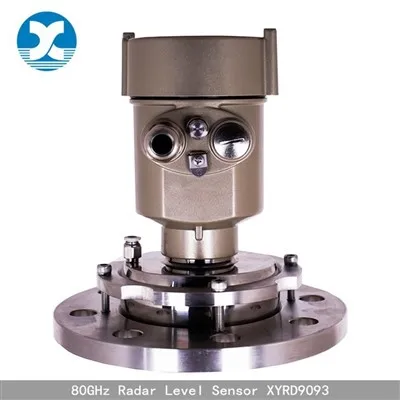
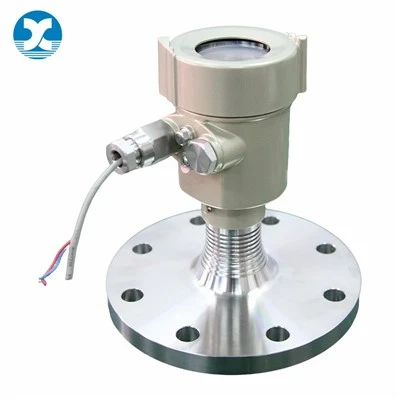
Non-contact level sensors mount externally on tank tops or vessel walls, with no wetted parts entering the process environment. High-frequency FMCW radar and ultrasonic sensors are the two dominant technologies in this category. They transmit electromagnetic or acoustic signals, calculate level height via echo feedback, and achieve fully isolated, non-intrusive measurement.
Zero medium contact eliminates corrosion, fouling, and mechanical wear entirely, making non-contact sensors ideal for harsh process conditions. That said, they are not completely interference-proof. Dense steam, thick surface foam, and heavy suspended dust can attenuate signals and cause temporary measurement instability.
Key Advantages and Limitations of Contact Level Sensors
Contact level measurement has long served as the industry standard for general industrial applications. It delivers steady signal output and clear cost advantages for conventional process setups. Even so, its reliance on wetted components creates obvious limitations in harsh, high-fouling, and corrosive environments.
Major Benefits
Strong anti-interference capability: Direct medium contact stabilizes sensor output against common tank headspace variables, including light steam, thin foam, and minor pressure fluctuations. These sensors maintain excellent repeatability in steady process conditions.
High accuracy and process stability: Guided wave radar and capacitance transmitters provide precise continuous level data, supporting tight-tolerance batching and closed-loop automatic process control.
Budget-friendly for standard applications: Conventional contact instruments carry lower upfront costs compared to high-end radar sensors. This makes them ideal for large-scale deployment on clean medium storage tanks and general process vessels.
Simple installation and commissioning: Mature mechanical design eliminates complex calibration procedures. Field technicians can install, debug, and maintain these sensors with minimal technical overhead.
Primary Drawbacks
Strict medium compatibility limits: All wetted materials must match the fluid's corrosion, viscosity, and abrasion properties. Poor material selection leads to surface pitting, layered fouling, and irreversible component damage.
Higher routine maintenance demand: Residue buildup and surface fouling require regular manual cleaning and recalibration. Severe blockages or component failures force unplanned shutdowns, disrupting continuous production cycles.
Not suitable for sanitary-grade processes: Physical medium contact introduces potential contamination risks. This disqualifies most contact sensors from GMP-compliant pharmaceutical, food processing, and high-purity chemical production lines.
Key Advantages and Limitations of Non-Contact Level Sensors
As industrial automation standards continue to rise, non-contact level measurement has become the preferred solution for harsh process environments. Its greatest strengths are zero medium contact and drastically reduced maintenance, though it does have specific environmental and technical limitations.
Major Benefits
No wear or fouling accumulation: Without wetted parts, these sensors completely avoid corrosion, adhesion, and mechanical jamming. They perform reliably with viscous, cured, abrasive, and highly corrosive process media.
Near-zero maintenance operation: No wearable components and no direct medium contact eliminate routine cleaning and frequent recalibration. This cuts long-term labor and operational costs significantly.
Broader process adaptability: Non-contact sensors support extreme working conditions, including high temperature, high pressure, and vacuum sealed tanks. They cover nearly all complex industrial measurement scenarios.
Full sanitary compliance: Isolated measurement eliminates contamination risks, fully meeting GMP hygiene standards for food, beverage, and pharmaceutical manufacturing.
Primary Drawbacks
Environmental signal interference: Ultrasonic sensors struggle with dense vapor, thick surface foam, and drastic temperature shifts. Low-frequency radar also suffers signal attenuation in highly cluttered tank interiors.
Higher upfront capital cost: High-performance 80GHz FMCW radar sensors require a larger initial investment than standard contact devices, raising short-term project budgets.
Advanced commissioning required: Tanks with internal obstructions, uneven liquid surfaces, or complex structures need professional parameter tuning and signal filtering to maintain stable readings.
Practical Industrial Selection Scenarios
There is no universal best sensor type. Proper selection always depends on actual on-site process parameters. The following field-verified scenarios help engineers quickly identify the most reliable and cost-effective solution for each application.
Choose Contact Level Measurement For These Cases
Contact sensors deliver the best cost-to-performance ratio for clean, stable, low-risk process environments. Typical applications include clean water tanks, low-viscosity oil storage, general sewage basins, and inert solvent vessels. These media cause no fouling or corrosion, allowing contact instruments to operate accurately for extended periods. For large-scale, budget-sensitive projects, contact measurement remains the most practical option.
Choose Non-Contact Level Measurement For These Cases
Non-contact sensors are the only viable long-term solution for harsh and high-standard process conditions. This includes corrosive acid and alkaline fluids, high-viscosity resins and crude oil, crystallizing chemical solutions, and sanitary-grade food and pharmaceutical media. In these environments, contact sensors degrade rapidly and require frequent replacement. Non-contact devices maintain stable operation for years with minimal intervention.
Field Application Case: Technology Upgrade Comparison
A mid-sized integrated chemical plant previously deployed contact capacitance level transmitters on tanks holding corrosive solvents and high-viscosity syrup. Within six months, probe fouling and minor surface corrosion triggered persistent signal drift. The maintenance team was forced to perform biweekly cleaning and calibration, consuming significant labor hours and disrupting production continuity.
Following a full process audit, the facility upgraded all problematic measurement points to 80GHz non-contact radar sensors. The non-intrusive design eliminated adhesion and corrosion issues entirely. After targeted parameter tuning to offset on-site foam and steam interference, the sensors delivered consistent, accurate level data around the clock. The upgrade eliminated routine maintenance tasks and reduced field failure rates to nearly zero. While initial procurement costs rose slightly, long-term operational savings and improved uptime quickly justified the investment.
Direct Comparison Table: Contact vs Non-Contact Measurement
The table below summarizes key performance metrics to streamline engineering selection and direct side-by-side comparison:
|
Evaluation Dimension |
Contact Level Measurement |
Non-Contact Level Measurement |
|
Medium Adaptability |
Suitable for clean, low-viscosity, non-corrosive media |
Suitable for corrosive, viscous, fouling, sanitary media |
|
Anti-Interference Ability |
Strong against foam and steam interference |
Ultrasonic limited by steam; high-frequency radar stable |
|
Maintenance Frequency |
High, requires regular cleaning and calibration |
Extremely low, no routine maintenance needed |
|
Service Life |
Medium-dependent, short lifespan for harsh media |
Long, unaffected by medium contact wear |
|
Upfront Cost |
Low to medium |
Medium to high |
|
Sanitary Compliance |
Limited application |
Fully compliant with high sanitary standards |
Common Selection Mistakes to Avoid
Cost-driven oversimplification is the most common selection error on industrial sites. Many teams prioritize low upfront pricing and install contact sensors on corrosive, sticky, or high-fouling media. This leads to frequent failures, repeated replacements, and far higher long-term operational expenses. Conversely, over-specifying high-end non-contact radar for basic clean-water tanks creates unnecessary budget waste.
Unaccounted environmental interference is another major risk factor. Ultrasonic non-contact sensors cannot sustain stable output in high-steam or heavy-foam tank conditions. For complex harsh environments, engineers must match specific non-contact radar models to on-site conditions rather than adopting a one-size-fits-all approach.
Final Conclusion
Neither contact nor non-contact level measurement holds absolute superiority. The best solution always aligns with your unique process parameters. Contact sensors deliver reliable accuracy and cost benefits for clean, stable, budget-focused industrial applications.
For harsh operating scenarios involving corrosion, high viscosity, heavy fouling, extreme temperatures, or strict sanitary standards, non-contact measurement is the most dependable long-term solution. It cuts maintenance workload, avoids unplanned downtime, and sustains stable automated process operation year-round.
If you are unsure which measurement technology fits your tank and process conditions, share your medium type, operating temperature, viscosity grade, and on-site environmental challenges. Our technical team will provide tailored, cost-effective level instrument selection solutions for your project.
References
1. IEC 61518:2024, Industrial Process Measurement – General Guidelines for Level Sensing Technology Selection
2. ISA-77.00.01:2023, Level Measurement Best Practices for Process Industry Applications
3. Endress+Hauser Industrial Level Measurement Technical Manual, 2025 Edition
4. NACE SP0198:2025, Instrument Deployment Standards for High-Fouling Industrial Environments
5. International Society of Automation, Contact vs Non-Contact Sensing Technology Comparative Analysis, 2026