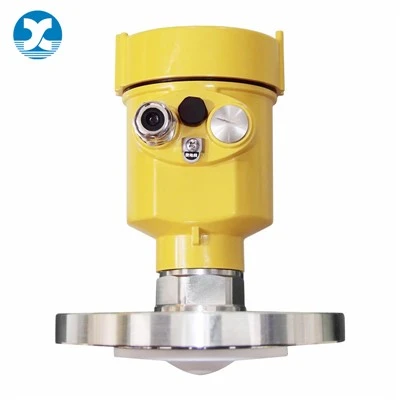
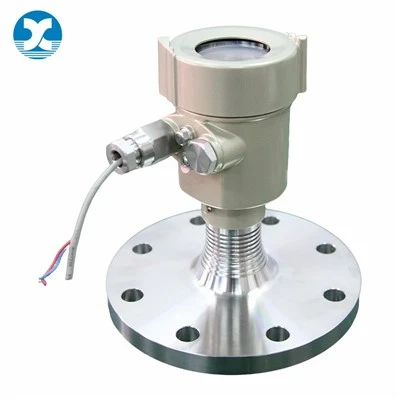
Ultrasonic level sensors are revolutionizing how we manage water systems. They offer extremely high accuracy, down to ±1% or even higher, with a resolution of up to 1 millimeter. Industry began adopting these devices in the mid-1950s, and today they are widely used for level monitoring across various industries.
These sensors stand out because they allow for non-contact measurement. This key feature enables users to accurately track corrosive or high-temperature liquids without worrying about contamination risks or sensor damage. These sensors provide real-time data, making them essential for modern applications. This article will explore how ultrasonic level sensors utilize sound waves to achieve exceptional accuracy. They maintain an accuracy of ±3 millimeters in many environmental applications. You will also learn how they compare to traditional measurement techniques to help you choose the right ultrasonic level sensor for your water management needs.
Understanding Traditional Water Level Measurement Methods
Let's begin by understanding ultrasonic technology and look at the traditional methods used with it. Each traditional method for water level monitoring has its own operating principles and uses, but they also have some inherent limitations, which new technologies have overcome.
Float Level Sensors
Float level sensors are among the oldest and easiest-to-use water quality measurement technologies. These mechanical devices work on a simple principle: a float moves with the liquid surface, converting vertical motion into an electrical signal. The float typically contains a magnetic element that triggers a reed switch when the water level changes.
Float sensors are popular due to their simple structure and high reliability. They require minimal technical knowledge to install and maintain, making them an economical choice for simple applications. Furthermore, they provide direct measurement results regardless of the liquid's conductivity or dielectric properties.
However, these mechanical advantages also have their drawbacks. Moving parts are prone to wear, especially in harsh or corrosive environments. Additionally, these sensors are less accurate under turbulent conditions or when measuring viscous liquids.
Pressure Sensors
Pressure sensors determine water level by measuring the hydrostatic pressure of a column of liquid. These devices convert pressure into an electrical signal corresponding to water depth. Modern pressure sensors typically use a flexible silicon diaphragm between the water and the sensing element, giving them excellent linearity and extremely low hysteresis.
Many pressure sensors employ a submersible design and feature automatic pressure compensation via a ventilated cable. Their output signal (typically 4-20mA) can reliably transmit data over distances up to 3,000 feet (approximately 914 meters) from the measurement point.
The relationship between pressure and water depth follows the formula p = ρgh, where p is the pressure, ρ is the water density, g is the acceleration due to gravity, and h is the water depth. This relationship helps in accurately converting pressure readings to water level.
Capacitive and Conductivity Sensors
Capacitive Level Sensors
These sensors operate based on capacitance-the system's ability to store electrical charge. They typically have two electrodes forming a capacitor, with the liquid acting as the dielectric between the electrodes. The capacitance changes as the liquid level rises, enabling accurate measurement.
The biggest advantage of capacitive sensors lies in their solid-state design, with no moving parts, meaning less maintenance and a longer lifespan. They can be used with both conductive and non-conductive liquids, and can even penetrate non-metallic container walls for measurement.
Conductivity sensors utilize multiple electrodes placed at different heights inside a container. When the liquid comes into contact with these electrodes, a conductive path is formed, completing the circuit. This simple principle makes them ideal for point-of-sale (POS) detection in many industrial applications.
How do ultrasonic level sensors work?
Ultrasonic level sensors are based on a simple yet ingenious principle that has revolutionized the way we measure water and liquid levels. They demonstrate superior performance in both core functionality and the ability to withstand environmental challenges.
The basic principle of the time-of-flight method: These sensors utilize sound waves that travel at a specific speed through the air. A transducer mounted above the liquid emits high-frequency ultrasonic pulses (typically above 20 kHz, beyond the range of human hearing). The sound waves travel through the air gap until they strike the liquid surface, reflect back, and return to the sensor.
The measurement depends on the time-of-flight principle: The sensor measures the time required for the sound wave to complete its propagation. The propagation time is related to the distance between the sensor and the liquid surface. The calculation formula is as follows: Distance = (Speed of sound × Time) ÷ 2. Dividing by two is to account for the round-trip distance during the measurement process (reaching the target position and returning). The sensor then subtracts this distance from the known tank height to obtain the actual liquid level.
Temperature and Environmental Compensation
Because sound waves propagate in the air, environmental factors can affect measurement accuracy. The speed of sound in air varies with temperature-approximately 0.6 m/s for every 1 degree Celsius change in temperature.
High-quality ultrasonic sensors incorporate a temperature compensation system. These systems feature:
Internal temperature sensor monitoring environmental conditions
A microprocessor recalculating the speed of sound based on the current temperature
Integration with digital systems
Today's ultrasonic level sensors not only measure liquid levels but are also an important component of complete monitoring systems. These devices communicate with the control system via standard outputs such as 4-20mA current signals or digital protocols.
Applications of Ultrasonic Level Sensors
Ultrasonic level sensors demonstrate remarkable versatility across various fields, from urban infrastructure to environmental protection. These sensors can perform measurements without contact, making them ideal for numerous practical applications.
Urban Water Supply and Smart Cities
Ultrasonic sensors are used to monitor reservoir levels in municipal water supply systems. They provide continuous, real-time data analysis, aiding in water management during droughts or heavy rainfall. Smart systems use this information to control valves and gates based on current needs. Today, cities employ solar-powered ultrasonic sensor monitoring systems that periodically activate to measure water levels in remote storage tanks. Data is transmitted to a base station via remote WiFi. This setup requires no manual inspection and supports preventative maintenance. Any abnormal water level changes can provide early warnings before system failures occur.
Sewage and Stormwater Systems
Ultrasonic sensors excel at measuring water levels in wet wells, stormwater pools, and chemical storage tanks at sewage treatment plants. They are essential tools for measuring the inflow rate of open channel weirs or flumes, a key metric for sewage treatment facilities. Factory operators can clean mechanical bar screens more effectively by installing an ultrasonic sensor upstream and downstream of the bar screen, a more convenient method than cleaning according to a fixed schedule. Cities use these sensors in gutter systems to measure stormwater runoff and assess their stormwater retention programs.
Agriculture and Irrigation
Modern agriculture relies on ultrasonic level sensing technology to precisely allocate water, a crucial means of reducing food waste. Today's automated irrigation systems utilize these sensors to measure levels in channels, canals, weirs, and sluice gates. This new approach replaces traditional manual farm water control methods. Sediment or floating debris in irrigation water does not affect its non-contact measurement. These sensors can also track liquid feed in livestock systems and monitor grain levels in grain silos.
Industrial Tanks and Chemical Storage: Ultrasonic sensors can safely and non-contactly measure the levels of corrosive and viscous liquids (such as calcium chloride, ferric chloride, and aluminum chloride) in chemical storage. Even in humid environments, where acoustic signal attenuation due to condensation occurs, their reflective technology functions normally. These sensors are particularly suitable for monitoring chemical storage tanks, diesel fuel storage, and harsh paper processing environments. They transmit level data to control systems to track inventory and issue alerts when replenishment is needed.
Environmental Monitoring
Ultrasonic level sensors have become a reliable tool for flood monitoring, and their non-contact design reduces maintenance requirements. Environmental monitoring networks are typically equipped with solar-powered wireless communication sensors that continuously transmit data from remote locations. Networks of hundreds of sensors are distributed along rivers and streams. They transmit data to hydrological models for use by the public and emergency officials. Coastal communities benefit from sensors installed upstream that can issue flood warnings to downstream residents.
Challenges and Considerations When Using Ultrasonic Sensors
Ultrasonic level sensors offer many advantages, but they also have some limitations. To achieve optimal performance in water resource management applications, you should be aware of these challenges.
Foam, Steam, and Turbulence
Foam materials are one of the biggest challenges facing ultrasonic technology. These air-filled structures absorb sound energy and can even completely block echo signals. Sound waves hitting foam are reflected multiple times, and the uneven surface scatters sound waves in all directions, making them difficult for sensors to read.
Steam can also significantly affect ultrasonic level measurements. Steam absorbs the energy of ultrasonic pulses, thus shortening the normal measurement distance. The chemicals released into the steam create air layers of varying densities. These air layers alter the propagation speed and time of sound waves.
Turbulent liquid surfaces increase measurement complexity. The filling process generates foam and waves, which randomly scatter signals. Surface ripples cause sound waves to change direction unpredictably, making accurate measurements difficult.
Obstacles and Installation Location
The correct installation location is crucial for the accuracy of ultrasonic sensors. The area beneath the sensor must be unobstructed, free from pipes, fittings, ladders, or walls. Most errors are caused by improper installation or excessive vibration in certain locations.
To avoid reading errors, sensors must maintain a specific distance. Many manufacturers now offer synchronization modes to coordinate the work cycles of multiple sensors. This helps reduce minimum spacing requirements and prevents interference between sensors.
Environmental Factors such as Temperature and Humidity
Temperature significantly affects the accuracy of ultrasonic measurements. For every 1 degree Celsius increase in temperature, the speed of sound changes by approximately 0.17%. Without adjustment, a 20°C temperature change at a measurement distance of 100 cm can result in an error of up to 8.5 cm.
High-quality ultrasonic sensors have a built-in temperature sensor that automatically adjusts its calculations. In environments with drastic temperature changes, you may need additional temperature compensation accessories.
The effect of humidity on sensors varies with temperature. Room temperature humidity has a negligible effect on the sensor (only a 0.036% increase in relative humidity per 10%). However, increased temperature and humidity can cause condensation on the sensor transducer surface, weakening the signal and reducing sensor effectiveness.
In some cases, traditional methods are still preferred.
While ultrasonic technology has many advantages, in certain situations, traditional measurement methods are more suitable. For example, for applications with high foam or high vapor concentrations, contact sensors that are in direct contact with the liquid generally perform better.
For liquids that generate large amounts of vapor, guided wave radar typically provides more reliable measurements. Furthermore, in environments with drastic temperature changes or persistent turbulence, you may require specialized solutions.
Applications requiring measurements to penetrate foam layers typically require different technologies because ultrasonic waves have difficulty penetrating these surfaces. In such cases, pressure sensors or capacitive sensors typically provide more stable measurements.
Conclusion
Ultrasonic level sensors, now 30 years old, have revolutionized water management systems. These sensors perform measurements without contact and are more efficient than traditional methods, especially for corrosive or hazardous substances. While their initial cost may be higher than traditional systems, their low maintenance requirements and long lifespan make them an affordable option in the long run.
However, these advanced sensors also have limitations. Foam, steam, and turbulence can all affect readings. Proper installation is crucial for optimal performance. Temperature variations can also affect measurement accuracy. Many modern models now incorporate features to address this issue.
Traditional methods remain highly effective in certain situations. Pressure sensors perform better at deeper depths. Conductivity sensors excel in specific liquids requiring point-level detection. Your specific needs will determine whether you choose ultrasonic technology or continue with traditional methods.
Choosing a level measurement technology requires considering both current needs and future goals. Ultrasonic sensors are particularly advantageous when real-time data, remote monitoring, and digital system integration are required. Their successful applications in urban water supply, wastewater treatment, agriculture, industrial warehousing, and environmental monitoring fully demonstrate their versatility and reliability.
Water resource management technology is advancing rapidly, and the emergence of ultrasonic level sensors is undoubtedly a major step forward. Compared to traditional mechanical systems, ultrasonic level sensors offer unparalleled accuracy and ease of use. Please carefully evaluate your specific needs, environmental conditions, and budget constraints. The best choice lies in balancing technical performance with practical application requirements.