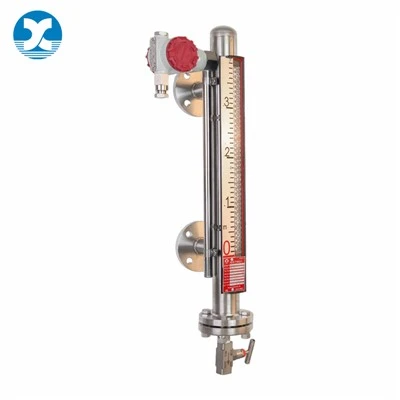
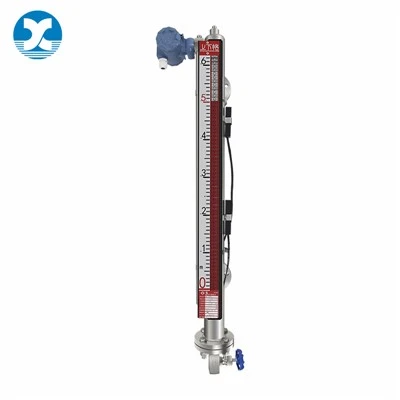
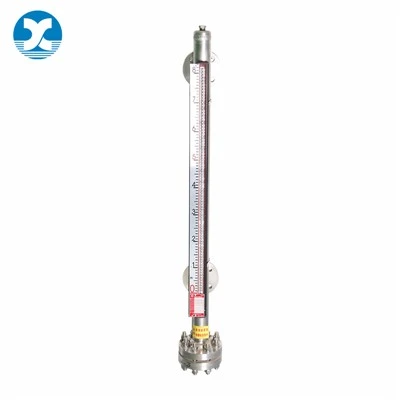
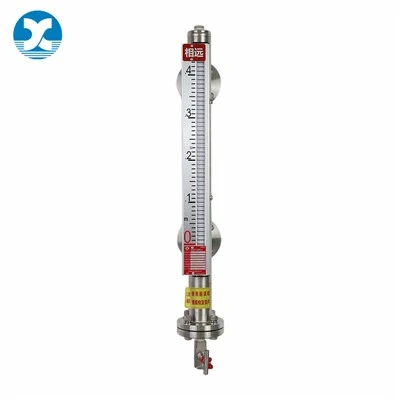
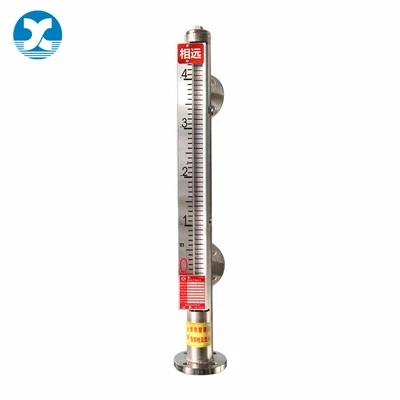
Why Choose Magnetic Level Gauge for LNG/LPG
Conventional magnetic level gauges lack cold insulation structure, prone to frost crack, condensed water icing and float failure under LNG ultra-low temperature (-162℃). Ordinary materials suffer cold embrittlement and safety risks in cryogenic environments, unable to adapt LNG cryogenic storage tanks, LPG bullet tanks.
Our LNG/LPG dedicated magnetic level gauge adopts double-layer vacuum insulation jacket + cryogenic resistant special alloy structure, preventing external frosting and internal medium vaporization. All wetted parts adopt cryogenic toughened materials to avoid cold brittle fracture. Equipped with intrinsically safe explosion-proof accessories matched for low-temperature flammable gas environments. Differentiate positioning:
- Core feature: vacuum insulation + ultra-low temperature resistance (-196℃), different from normal-temperature oil&gas version;
- Different from chemical series: no strong corrosion resistance focus, solve cryogenic embrittlement, frosting, medium vaporization problems;
- Mainly applied to cryogenic liquefied gas storage industry only.
It realizes stable local level display and intrinsically safe remote signal transmission, the dedicated cryogenic level measuring instrument for LNG receiving stations, LPG storage stations.
Key Features and Benefits
- Double-Layer Vacuum Cryogenic Insulation Structure Outer insulation jacket avoids frost formation on the gauge surface, prevents internal LNG vaporization caused by ambient heat infiltration.
- Cryogenic Tough Material Configuration 316L low-temperature steel, titanium alloy floats & barrels resist cold embrittlement, stably operate down to -196℃ for LNG working conditions.
- Anti-Vaporization & Anti-Bubble Design Optimized connection structure reduces gas bubbles entering the measuring cylinder, eliminate level jumping caused by LNG vaporization.
- Intrinsically Safe Configuration for Cryogenic Hazardous Areas Match IA intrinsically safe transmitters, applicable to LNG tank Zone 0/1 hazardous environments.
- Dual monitoring mode Local visual indication + cryogenic intrinsically safe transmitter remote signal output for LNG station automatic control system.
- Cryogenic standard flange installation LN standard cryogenic flange optional, perfectly dock LNG tank cryogenic nozzles.
LNG/LPG Medium Compatibility & Installation Guide
This section provides medium-specific guidance for selecting and installing the gauge on different cryogenic liquefied gas storage systems. Each medium has distinct boiling point, vapor pressure, density and corrosivity, which directly affect wetted material selection, flange rating and installation configuration.
Medium Property Comparison & Material Selection
| Cryogenic Medium | Boiling Point at 1 atm | Typical Storage Pressure | Recommended Wetted Material | Key Selection Note |
|---|---|---|---|---|
| LNG (Liquefied Natural Gas) | -162℃ | Atmospheric / low pressure | 316L low-temp steel, Titanium | Methane-rich, low density (~0.42 g/cm³), requires minimum density verification |
| LPG (Propane/Butane) | -42℃ / -0.5℃ | 0.5 ~ 1.6 MPa | 316L, 304SS | Higher vapor pressure, pressure-rated flange mandatory; not as cold as LNG |
| Liquid Ammonia (NH₃) | -33℃ | 0.8 ~ 1.5 MPa | Titanium, 316LTi | Stress corrosion risk on standard 316L; titanium wetted parts strongly recommended |
| Liquid Ethylene (C₂H₄) | -104℃ | Atmospheric / low pressure | 316L low-temp steel, Inconel 625 | Intermediate cryogenic temperature; verify flap assembly cold rating |
| Liquid Oxygen (LOX) | -183℃ | Atmospheric | 316L, Copper-free alloys | Oil-free cleaning mandatory; strictly no organic contamination on wetted surfaces |
Typical Installation Nozzle Configuration
For LNG and LPG storage tanks, the gauge is typically side-mounted with upper and lower nozzle connections directly welded to the tank shell. Recommended configuration:
- Upper nozzle (gas phase): DN50 / DN80 cryogenic flange, located 100–200 mm below tank maximum liquid level
- Lower nozzle (liquid phase): DN50 / DN80 cryogenic flange, located 100–200 mm above tank bottom
- Nozzle extension: 150–300 mm extended neck recommended to reduce heat conduction from tank wall to gauge chamber
- Isolation valves: Cryogenic ball valves or gate valves optional on both nozzles for maintenance isolation
- Drain port: Standard 1/2" NPT drain valve at chamber bottom for purge and residual liquid evacuation
Safety & Installation Notes
- Electrostatic grounding: The gauge chamber and all metal flanges must be electrically bonded to the tank grounding system. LNG and LPG are non-conductive fluids; static charge accumulation during filling can create ignition hazards.
- Explosion-proof zoning: LNG storage tanks are typically classified as Zone 1 (within 3 m of tank openings) or Zone 2 (3–7.5 m). All electronic accessories must carry appropriate Ex certification for the installed zone.
- Thermal shock prevention: During initial cooldown, introduce cryogenic liquid gradually to avoid thermal shock on chamber and flanges. Rapid temperature change from ambient to -162℃ can cause seal failure.
- Maintenance access: Maintain minimum 500 mm clear space in front of the indicator flap for visual reading and 800 mm above the gauge for transmitter removal and calibration.
Technical Specifications
This LNG/LPG cryogenic magnetic level gauge solves frosting, cold embrittlement and liquid vaporization faults of liquefied gas tanks via vacuum insulation and cryogenic material design. Complete parameters below:
|
Item |
Specification |
|
Chamber Outer Diameter |
51, 55, 57, 60.3, 65, 76mm; vacuum insulation jacket customizable |
|
Chamber & Flange Wetted Material |
Low-temperature 316L, 316LTi, Titanium, Inconel 625 |
|
Float Material |
Low-temperature 316L, Titanium alloy |
|
Indicator Flap Temperature Resistance |
Aluminum nylon flap: ≤150℃; All-metal flap: ≤400℃ (external display part away from cold source) |
|
Working Pressure |
Vacuum ~ 16MPa (Class 900); Max customized design pressure: 32MPa @100℃ |
|
Medium Operating Temperature |
-196℃ ~ 80℃ (adapt LNG / LPG cryogenic storage) |
|
Minimum Medium Density |
≥0.4g/cm³ |
|
Medium Viscosity |
≤10⁻⁴ ㎡/s |
|
Measuring Range |
200mm ~ 5500mm; standard tube length 6000mm, extra-long range customizable |
|
Installation Mode |
Cryogenic special flange, welding, thread |
|
Drain Port |
Standard 1/2" internal thread drain valve |
|
Vent Port |
Anti-bubble vent structure customizable |
|
Optional Supporting Accessories |
Intrinsically safe cryogenic transmitter, magnetostrictive transmitter, low-temperature magnetic switches |
Applications
- LNG receiving station cryogenic storage tanks
- LPG spherical tanks & bullet storage tanks
- Liquid ammonia, liquid ethylene cryogenic storage vessels
- LNG vehicle tank container level monitoring
- Cryogenic energy storage liquefied gas tanks
FAQ
Q1: What's the biggest difference between LNG version and ordinary oil & gas magnetic level gauge?
A: LNG model adds vacuum insulation jacket and low-temperature anti-brittle materials to adapt -196℃ ultra-low temperature; oil&gas type works under normal temperature without insulation structure.
Q2: Will frosting affect measurement accuracy?
A: Double-layer vacuum insulation avoids frosting on the outer wall, measurement cylinder is isolated from ambient temperature, level reading keeps stable.
Q3: Can it be used for liquid ammonia cryogenic tanks?
A: Yes, we can match titanium wetted parts for liquid ammonia anti-corrosion & low-temperature resistance.
Q4: Why is electrostatic grounding required for LNG/LPG gauge installation?
A: LNG and LPG are non-conductive fluids. During tank filling, static charge can accumulate on the gauge metal surface if not bonded to tank ground. Proper grounding prevents potential spark discharge in flammable gas zones.
Q5: Can the gauge be installed on liquid oxygen (LOX) tanks?
A: Yes, but all wetted parts must undergo oil-free cleaning and the chamber must be certified for oxygen service. Standard LNG configuration is not suitable for LOX without special cleaning and material verification.
Provide your liquefied medium (LNG/LPG/liquid ethylene), lowest working temperature, tank pressure and safety zone grade. Our cryogenic instrumentation team customizes insulated level gauge solutions for free, offer quotation within 24 hours. Click contact to inquire.
Hot Tags: magnetic level gauge for lng/lpg, China magnetic level gauge for lng/lpg manufacturers, suppliers, factory