
Why Choose Magnetic Level Gauge for Local On-site Indication
Many auxiliary process tanks, interim storage containers and underground sump vessels only demand periodic manual spot‑checks. Specifying magnetic level instruments fitted with 4‑20mA, field‑bus or wireless modules adds unnecessary capital expense, cabling labour and ongoing configuration work for facilities lacking centralised automation infrastructure. Multi‑parameter variants with integrated temperature‑pressure sensing also introduce superfluous electronic assemblies for basic liquid‑height observation.
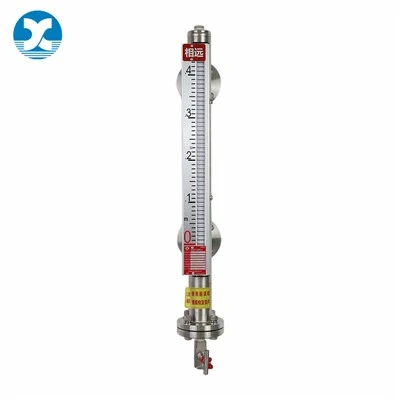
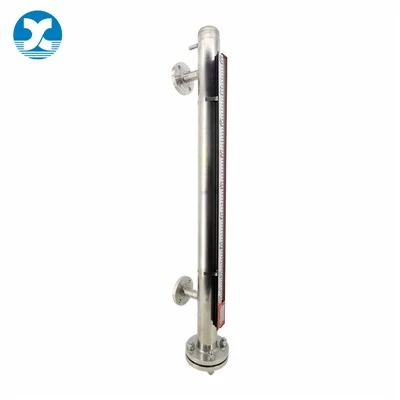
This visual‑only magnetic level gauge keeps the proven pressure‑containing and corrosion‑resistant bypass‑chamber architecture while stripping out all electronic sensing hardware. It relies wholly on mechanical magnetic coupling: an internal float follows liquid‑surface movement, and its permanent‑magnet array toggles external bi‑colour flags to mark real‑time liquid‑gas boundaries. No power supply is necessary for routine operation, cutting fault sources to a minimum and lowering long‑term servicing burden.
Unlike transmitter‑equipped or multi‑sensor magnetic level gauges built for control‑room‑centric plant management, this unit is optimised for cost‑conscious walk‑around inspection regimes. When weighed against glass sight tubes or discrete float switches, it delivers superior pressure containment, reduced leakage risk and extended service cycles. It represents a pragmatic selection for sites that may add automation capabilities in future but require straightforward visual monitoring today.
Key Features and Benefits
- Completely passive mechanical operation, zero power draw All level indication runs via magnetic‑coupled mechanics. No power cables, batteries or transmitter electronics are needed, making it well‑suited for unpowered hazardous‑area inspection points.
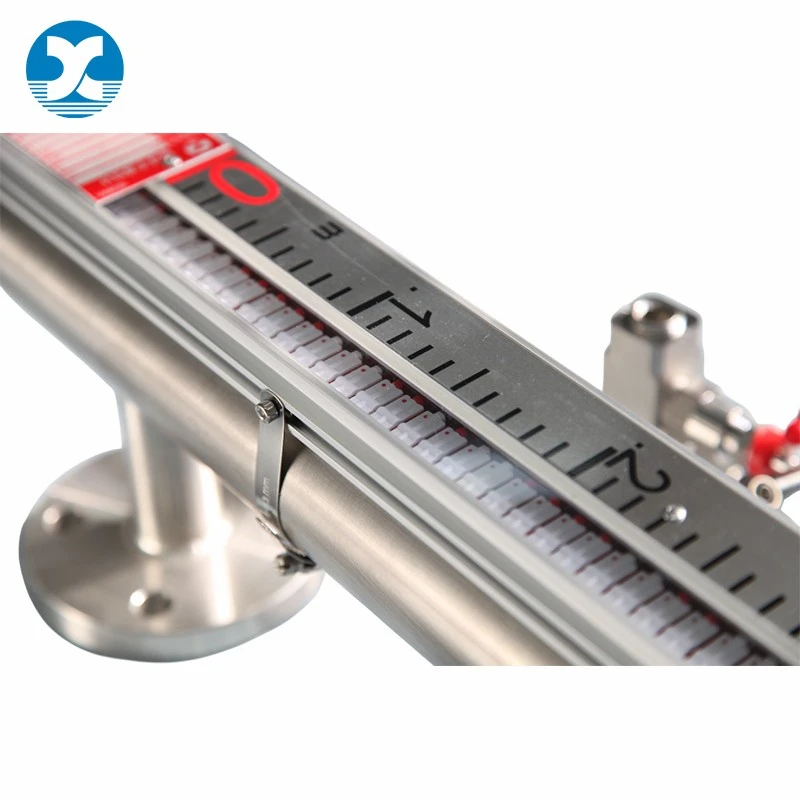
- High‑contrast bi‑colour flag read‑out for field patrols Liquid zones display red; vapour‑space zones show white. The sharp colour contrast makes liquid‑gas demarcation easy for technicians to identify from a reasonable viewing distance during routine rounds.
- Broad material selection for harsh process media Bypass chamber, flanged joints and internal float can be constructed from 304SS, 316L, Titanium, Hastelloy C276, Inconel 625 or 310S. These material grades support vacuum conditions, high working pressure and chemically aggressive process fluids.
- Two flag assemblies to match differing thermal regimes Nylon‑coated aluminium flag sets handle medium temperatures up to 150 °C for general‑purpose storage tanks. All‑metal magnetic flag constructions cope with process heat up to 400 °C for thermal‑oil vessels and high‑temperature batch reactors.
- Minimal ongoing maintenance requirement Eliminates failure modes linked to electronic drift, component ageing or circuit damage. Routine work mainly consists of periodic chamber flushing to clear sediment build‑up caused by sticky or particle‑laden process liquids.
- Retrofit‑ready rail for future functional expansion External guide rails are pre‑reserved for reed‑switch alarm hardware. If site‑automation upgrades happen later, high‑low limit switches can be clipped onto the existing gauge without removing the main bypass assembly or modifying tank nozzles.
- Multiple connection options for new builds and retrofit jobs Flange‑mounted, welded‑in or threaded inlet configurations are supported, simplifying replacement of legacy sight‑level hardware on existing storage vessels.
Technical Specifications
This visual‑only magnetic level gauge inherits the pressure‑resistant bypass‑chamber engineering of standard side‑mounted magnetic level instruments, with all electronic signal‑processing hardware omitted. Read‑out is achieved purely through mechanical magnetic coupling. Wetted‑part material options and thermal‑pressure envelopes follow established industrial norms for bypass‑style level hardware. Full specifications are shown in the table:
|
Parameter |
Specification |
|
Chamber Outer Diameter |
OD 51mm, 55mm, 57mm, 60.3mm, 65mm, 76mm; wall thickness customized by working pressure & temperature |
|
Chamber & Flange Wetted Material |
304SS, 316L, Titanium, Hastelloy C276, Inconel 625, 310S |
|
Float Material |
304SS, 316L, Titanium, Hastelloy C276, Inconel 625, 310S |
|
Indicator Flap Temperature Resistance |
Aluminum nylon flap: ≤150℃; All-metal magnetic flap: ≤400℃ |
|
Working Pressure |
Full vacuum ~ 16MPa (Class 900); Max design pressure 32MPa @ 100℃ |
|
Medium Operating Temperature |
-40℃ ~ 400℃ |
|
Minimum Medium Density |
≥0.4g/cm³ (varies with working pressure) |
|
Allowable Medium Viscosity |
≤ 10⁻⁴ ㎡/s |
|
Measuring Range |
Single tube: 200mm ~ 5500mm; standard finished pipe length 6000mm, ultra-long size customizable |
|
Signal Output |
No remote transmission signal output, only on-site mechanical display |
|
Process Connection |
Custom flange standard, welded connection, threaded connection optional |
|
Drain Port |
Standard 1/2" internal thread drain valve, customized structure available |
|
Vent Port |
No standard vent port, customized upon request |
|
Optional Accessories |
Passive magnetic limit alarm switches |
Applications
This passive‑indication magnetic level gauge targets installations requiring only periodic manual on‑site inspection and no remote process‑control feedback:
- Auxiliary cooling & circulating‑water tanks: For power‑plant and chemical‑workshop buffer tanks where field operators perform routine water‑level patrol checks.
- Small‑batch blending and temporary raw‑material drums: Food‑grade and fine‑chemical intermediate vessels operating without automated PLC‑linked control infrastructure.
- Underground sewage and waste‑liquid collection sumps: Environmental‑workshop underground tanks, monitored by on‑site staff to prevent overflow incidents.
- Manually‑run batch reaction vessels: Intermittent‑cycle pharmaceutical and chemical reactors operated via manual workflow rather than closed‑loop automation.
- Municipal fire‑protection and water‑supply buffer tanks: Fire‑water reservoirs requiring straightforward visual spot‑checks without permanent remote data links.
Frequently Asked Questions
Q1: How does this purely‑local‑indication gauge differ from WirelessHART‑enabled magnetic level gauges?
A: WirelessHART‑equipped units contain radio‑transmission electronics to push level readings to distant control systems. This visual‑only variant contains zero electronic transmission hardware and delivers readings exclusively for on‑site visual checks, offering a cost‑optimised solution for manual‑inspection‑oriented sites.
Q2: Is it possible to add alarm or remote‑read capabilities after installation?
A: Yes. The outer mounting rail shares universal dimensions. Reed‑switch limit alarms, 4‑20mA transmitters or WirelessHART modules can be retro‑clamped onto the rail for later‑phase plant‑automation upgrades. No removal of the main bypass‑chamber assembly or tank‑reworking is needed.
Q3: Is the all‑mechanical local‑indication unit fit for explosive‑hazard zones?
A: Since there are no internal electronic circuits or power‑consuming components, it carries intrinsic non‑spark characteristics. It can safely be deployed within Zone 0 / Zone 1 flammable‑liquid tank environments without special explosion‑proof electronic enclosures.
Q4: What may cause magnetic‑flag malfunction during long‑term field service?
A: Under clean‑medium conditions, the permanent‑magnet flag assembly typically exceeds 8‑year operational life. Where sticky, high‑viscosity or particle‑rich fluids are present, sediment may restrict float travel. Periodic chamber draining and flushing will restore normal function.
Q5: Can high‑temperature process media degrade magnetic‑flag performance?
A: Select the all‑metal flag variant for media up to 400 °C. Within the published thermal rating, the embedded permanent‑magnet components will not suffer demagnetisation, preserving reliable visual indication.
If your tank assets rely primarily on manual patrol‑based liquid‑level checks and you have no immediate requirement for control‑room‑bound remote signal feeds, this purely‑local‑indication magnetic level gauge eliminates unnecessary expenditure on transmitters and field‑wiring work. It offers inherently safe passive mechanical monitoring, with provision for future addition of limit‑alarm hardware.
Share your process‑medium characteristics, operating temperature‑pressure envelope and tank‑nozzle connection requirements. Our engineering team will compile the most cost‑effective material and accessory configuration and provide factory‑direct quotation.
Hot Tags: magnetic level gauge with local display, China magnetic level gauge with local display manufacturers, suppliers, factory, digital level box, mechanical float level indicator, radar water level control switch, sonar tank level sensor, Top Mounted PP Magnetic Level Gauge, ultrasonic level transducers