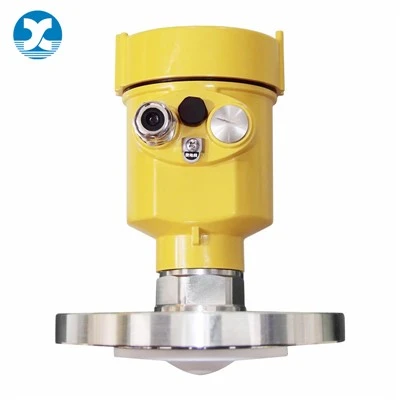
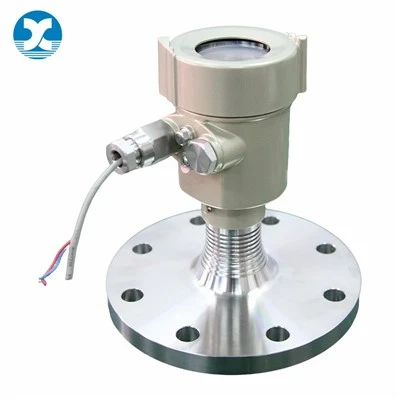
Back in 2007, I got a frantic call from a wastewater plant superintendent. They'd installed what the vendor called a "non-full pipe capable" magnetic meter three months earlier, and the environmental audit was showing their discharge was 45% higher than actual. I drove out there, climbed into the manhole, and immediately saw the problem: the meter was reading velocity just fine, but the pipe was only half full. The meter was calculating flow as if the entire cross-section was liquid. That $1,800 "cheap" meter ended up costing them $47,000 in unnecessary effluent fees.
That story isn't an exception. It's the norm. In 22 years of doing this, I've fixed more botched non-full pipe installations than I can count. The dirty secret? 90% of flow meters on the market simply weren't designed for partially filled pipes. Most vendors will happily sell you a standard mag meter and cross their fingers.
This isn't a textbook. This is what I actually tell my clients before they waste their money.

Why Non-Full Pipe Flow Measurement Fails (Common Mistakes)
Every flow meter you've ever used works on one basic assumption: the pipe is completely full.
When that's not true, everything breaks. Magnetic meters measure velocity great-but they have no clue how much of the pipe is actually filled with liquid. Ultrasonic? Same problem. Turbine meters? Half the time they're spinning in air. Vortex? The signal just disappears.
The math is simple, but almost nobody gets it right:
Flow = Velocity × Actual Wetted Area
You need TWO measurements, not one. You need to know how fast the liquid is moving, AND exactly how high it is in the pipe. Only then can you calculate real flow.
I see this mistake every single week. Someone buys a standard mag meter, hooks it up, and gets a nice steady 4-20mA signal. They think it's working. It's not. It's just confidently wrong.
The Applications That Always Cause Headaches
- These are the ones I get called out to fix most often:
- Municipal sewer lines and lift stations
- Industrial plant effluent discharge
- Stormwater and drainage systems
- Any gravity-fed process line
- Those stupid "closed pipe" conversions of open channels
-
Siphon systems that sometimes run partially full
Best Flow Meters for Partially Filled Pipes: Tech Comparison
I've tested every single one of these in actual plants. This isn't from datasheets-it's from my service reports.
| Technology | Real Accuracy | Minimum Liquid Level | Best Pipe Size | What You'll Actually Pay |
|
Area-Velocity Mag Meter
|
±2-5%
|
10-25mm
|
100-1200mm
|
$3,500-6,000
|
|
Ultrasonic A-V System
|
±5-12%
|
50mm+
|
1200mm+
|
$5,000-9,000
|
|
Parshall Flume
|
±3-7%
|
N/A
|
Any
|
$8,000-18,000
|
|
Standard Mag Meter
|
±30% to +100% ERROR
|
Must be 100% full
|
Any
|
$1,500-3,000
|
Let me repeat that last one: a standard magnetic meter in a non-full pipe will read anywhere from 30% wrong to DOUBLE actual flow. And it will look perfectly normal while doing it.

Area-Velocity Magnetic Meters: What I Specify 8 Out of 10 Times
This is the workhorse. It's not perfect, but it's the best tool we have for 80% of applications.
How It Actually Works (No Marketing BS)
There are two sensors crammed into the same body:
- The regular magnetic flow sensor coils that measure velocity-same as any mag meter
- Either an ultrasonic or capacitive sensor that measures exactly how high the liquid is
The transmitter does the math: based on the pipe diameter you entered and the measured level, it calculates what fraction of the pipe is actually filled, multiplies by velocity, and gives you real flow.
That's it. That's the magic.
What It Actually Does Well
Let me tell you the real advantages, not the brochure bullet points:
- No straight pipe requirements. This is game-changing. You can bolt this thing on immediately after an elbow, a valve, a pump-doesn't matter. I've installed them 12 inches downstream from gate valves and they still work.
- Bidirectional. Sewers and drains flow backwards sometimes. This meter handles it. Most others don't.
- No moving parts. In wastewater with solids, rags, and everything else people flush down toilets? This is non-negotiable.
- Completely submersible. When the line surcharges completely during a storm? It keeps working.
The Limitations Nobody Tells You About
Accuracy falls off a cliff below 5% fill. Below 30mm in a 600mm pipe? You're looking at ±10% error if you're lucky. The datasheet will say ±2%. Don't believe it.
It needs conductive liquid-same as any mag meter. Pure water, hydrocarbons, diesel? Forget it.
Sediment is the silent killer. If sludge builds up on the bottom of the pipe, the level sensor thinks the liquid is higher than it actually is. You need to program the automatic electrode cleaning cycle.
And yes, it's more expensive. Figure 50-100% more than a standard mag meter. Worth every penny.
Ultrasonic Area-Velocity: For the Big Pipes
For pipes larger than 1200mm, electromagnetic gets stupid expensive. That's when ultrasonic makes sense.
When You Actually Need This
- 48" and larger diameter pipes
- Non-conductive liquids where mag meters won't work
- Retrofits where you can't cut the pipe
- Temporary monitoring for studies
The Problems You Will Have
The minimum liquid level is 50mm, period. Below that, there's nothing for the sound to bounce off of.
Entrained air is a nightmare. Bubbles in the flow scatter the ultrasonic signal and you get garbage data. Aeration basins downstream? Good luck.
Accuracy just isn't as good. ±8% is doing well. Don't expect mag meter performance.
And you'll be cleaning those transducers. Every three months minimum. Grease, biofilm, sludge-it all builds up.
Parshall Flumes: The Old School Solution That Still Works
If you're building new and can do the civil works, nothing beats a properly installed Parshall flume for long-term reliability.
I have flumes installed in the 1990s that are still within calibration today. No electronics in the flow stream, nothing to wear out, nothing to drift.
But there's a catch. You need head loss-lots of it. 15-30% of your flow depth gets lost across the flume. If your system doesn't have that slope available, forget it.
And the civil works are expensive. But over 20 years? It's the cheapest option by far.
My Specification Sheet That Prevents 90% of Problems
This is exactly what I write on every purchase order. I've refined this over 20 years of fixing other people's mistakes.
Non-Negotiable Requirements
- Genuine area-velocity technology, not a standard mag meter with a firmware update
- Minimum measurable level ≤25mm – if they specify 50mm, walk away
- Accuracy must be stated at 10%, 25%, 50%, AND 100% fill – not just at full pipe
- Capacitive or ultrasonic level built-in – NOT pressure. Sediment destroys pressure sensors
- IP68 submersible, 10m minimum depth rating
- Programmable reverse current electrode cleaning
- Modbus RTU output with data logging – you WILL need to diagnose this someday
The Red Flags That Mean Run Away
- Any salesperson who says "our standard mag meter works in partial fill"
- They won't give you at least three local reference installations
- The datasheet only shows accuracy at full pipe conditions
-
They try to sell you a pressure-based level system
Non-Full Pipe Meter Installation Rules (Field-Proven)
These come from climbing into hundreds of manholes. Ignore them and you will be back.
- Mount as low as physically possible. I see this mistake every single time. Someone mounts the sensor at pipe centerline. When the pipe is 40% full, the sensor is sitting in air reading zero. For a 600mm pipe, mount it 30-60mm from the bottom. That's it.
- Only in perfectly horizontal pipe. Even 2 degrees of slope changes the level-to-area relationship enough to add 5% error.
- Always add isolation valves and a bypass. You will need to pull this meter someday. Don't force yourself to shut down the entire plant to do it.
- Ground rings are not optional. Same as any mag meter, but even more critical here.
-
Never install at a high point in the line. Air pockets will collect there and you'll get random dropouts.
Calibration: What The Manual Doesn't Tell You
Commissioning a non-full pipe meter is different. Here's my actual procedure:
- Empty pipe zero first. This is the most important step. The pipe must be completely dry. No trickling, no puddles. Completely empty.
- Verify level at multiple points. Fill to 25%, 50%, 75%, 100%. Manually measure the actual depth and compare to what the meter says. This catches 90% of setup errors.
- Portable Doppler check. Run a portable velocity meter alongside it at three different flow rates.
-
Annual verification. Every year: empty pipe zero, manual dip level check, electrode clean. That's 30 minutes of work that prevents $50,000 billing errors.
Troubleshooting: The Problems I See Every Week
- Reading way too high at low flows: 9 times out of 10, the zero drifted or there's sludge built up on the sensor. Do an empty zero, clean the face.
- Spiky crazy readings: Entrained air or ground loop. Check for aeration upstream, fix your grounding, turn up the damping.
- Shows zero but there's definitely liquid: The sensor isn't submerged (you mounted it too high, didn't you?) or the electrodes are completely coated. Run the cleaning cycle.
-
Consistent offset: You typed the wrong pipe ID into the transmitter. I do this at least once a year myself. Double check.
Cost Comparison: 10-Year Total Cost of Ownership
Here's what this actually costs over 10 years, for a typical 300mm line:
| Solution | Upfront Cost | Annual Maintenance | 10 Year Total |
|
Area-Velocity Mag
|
$5,000
|
$200
|
$7,000
|
|
Ultrasonic A-V
|
$7,000
|
$800
|
$15,000
|
|
Parshall Flume
|
$12,000
|
$50
|
$12,500
|
|
Cheap Standard Mag
|
$2,000
|
$0
|
$2,000 + $30,000+ in wrong billing
|
That last line isn't a joke. I've seen standard mag meters in half-full pipes reading 70% high for YEARS before anyone noticed. The cheap meter is always the most expensive option.
Final Recommendation After 22 Years
I keep this simple:
Get the area-velocity magnetic meter if:
- Your pipe is 100-1200mm
- The liquid is conductive (sewage, water, effluent)
- Accuracy actually matters
- This is a permanent installation
Go ultrasonic if:
- Bigger than 48" pipe
- Non-conductive liquid
- You can't cut the pipe
Build a flume if:
- It's new construction
- You have the slope and head loss
- You want to forget about it for 20 years
And never, ever use a standard magnetic meter in a pipe that doesn't run full. It will give you a beautiful, steady, completely wrong reading. And you won't find out until the auditors show up.
Non-full pipe measurement doesn't have to be a disaster. Specify the right thing, install it correctly, and you'll forget about it for 15 years.
Frequently Asked Questions
Q: Can a standard magnetic flow meter work in a non-full pipe?
A: No. A standard mag meter operates on the assumption that the pipe is 100% full. In partially filled pipes, it will generate readings 30% to 100% higher than the actual flow, which often leads to costly effluent fees and compliance errors.
Q: What is the best flow meter for partially filled pipes?
A: For pipes with a diameter of 100–1200mm carrying conductive liquids, an area-velocity (A-V) magnetic meter is the most reliable option, with a practical accuracy of ±2–5%. For pipes larger than 1200mm, an ultrasonic A-V system is more cost-effective.
Q: How does an area-velocity magnetic flow meter work?
A: It integrates two sensors in one body: a standard magnetic coil to measure flow velocity, and a built-in level sensor (capacitive or ultrasonic). The transmitter calculates real flow by multiplying the measured velocity by the actual wetted cross-sectional area of the pipe.
Q: What is the minimum measurable liquid level for non-full pipe flow meters?
A: A high-quality area-velocity mag meter can deliver reliable readings at liquid levels as low as 10–25mm. Accuracy drops significantly below 5% pipe fill, and sediment buildup on the pipe bottom will further increase measurement deviation.
References
[1] ISO 1088:2021. Hydrometry – Velocity-area methods using current-meters. International Organization for Standardization, Geneva.
[2] Baker, R. C. (2020). Flow Measurement Handbook: Industrial Designs, Operating Principles, Performance, and Applications. 3rd Edition. Cambridge University Press.
[3] Water Environment Federation. (2022). Municipal Wastewater Flow Measurement: A Practical Guide. Alexandria, VA.
[4] Spitzer, D. W. (2021). Industrial Flow Measurement. 4th Edition. International Society of Automation.
[5] IEC 61937:2020. Electromagnetic flowmeters for partial filled pipe flow. International Electrotechnical Commission.