Stable and accurate level monitoring is the backbone of reliable water and wastewater treatment operations. Every process stage - from raw water intake basins and sedimentation tanks to filtration vessels, chemical dosing systems, and final effluent storage - relies on consistent level data to regulate pump cycles, balance hydraulic flow, prevent tank overflow, and protect mechanical equipment from damaging dry-run conditions.
Water treatment sites present a unique set of measurement challenges that set them apart from chemical or oil and gas facilities. Operators regularly deal with suspended sludge, persistent surface foam, high ambient humidity, algae buildup, and frequent tank cleaning cycles. A common industry pitfall is installing generic industrial level gauges for water and wastewater applications. These off-the-shelf sensors often suffer from signal drift, material fouling, and high recurring maintenance demands. Matching the right level instrument to your exact process conditions is the simplest way to cut operational overhead and stabilize long-term plant performance.
This field-focused guide is tailored specifically for water treatment plant environments. It breaks down the most widely deployed level gauge types, their real-world pros and cons, stage-specific use cases, and practical selection criteria. Designed for plant engineers, municipal project contractors, and system integrators, this resource helps teams specify low-maintenance, cost-effective level solutions that align with standard water and wastewater process workflows.
Unique Level Measurement Challenges in Water Treatment Plants
To select the most reliable level instrumentation, you first need to understand the on-site environmental factors that impact sensor performance. These common water treatment conditions determine which measurement technologies deliver stable, long-term service with minimal intervention.
Sludge, Foam and Suspended Impurities
Sedimentation basins, aeration tanks, and raw sewage pools continuously generate suspended solids, floating foam, and settled sludge. These contaminants interfere heavily with acoustic sensors and build up on contact probe surfaces, causing erratic readings and forcing frequent recalibration. Instruments installed in these critical zones must feature robust anti-fouling design and strong signal interference resistance.
High Humidity and Outdoor Ambient Interference
Most water treatment monitoring points are open-air or semi-enclosed structures that operate in constant high humidity. Condensation routinely accumulates on sensor housings and sensing surfaces, while outdoor units withstand continuous temperature swings, rain exposure, and ambient dust. Only instruments with high IP ingress protection and dedicated humidity resistance can maintain consistent signal output in these harsh ambient conditions.
Frequent Pump Switching and Liquid Level Fluctuation
Continuous water inflow and outflow creates constant liquid level fluctuation and surface turbulence across treatment tanks. Basic level gauges lack advanced signal filtering, so they capture transient surface movement as valid level changes. This causes data flickering, erratic pump cycling, and unstable automated process control.
Main Types of Level Gauges for Water Treatment & Practical Applications
Based on field adoption rates, maintenance requirements, and overall cost-performance, five core level gauge technologies cover nearly all monitoring needs for municipal water supply, industrial wastewater treatment, and reclaimed water systems.
1. Ultrasonic Level Gauges (Non-Contact, Cost-Effective)
Ultrasonic level gauges calculate liquid height using sound wave time-of-flight measurement. As fully non-contact devices, they never touch process water, which eliminates sludge fouling and solid buildup on sensing components. Installation is fast and straightforward, requiring no tank cutting or complex wiring. This simplicity makes ultrasonic sensors the most common workhorse for standard water treatment monitoring tasks.
They perform exceptionally well in clean water tanks, filter vessels, clear water reservoirs, and raw water intakes with minimal foam and stable water quality. Modern industrial ultrasonic units include temperature compensation and intelligent signal filtering, which suppress most data instability caused by minor surface turbulence and ambient humidity. For large open pools and open-channel monitoring, they deliver unbeatable value and reliability.
The main operational limitation is poor performance in heavily foamed or vapor-rich environments. Thick, persistent foam in aeration tanks scatters acoustic signals, resulting in inconsistent, inaccurate level readings that compromise process control.

2. Radar Level Gauges (Non-Contact, High Stability)
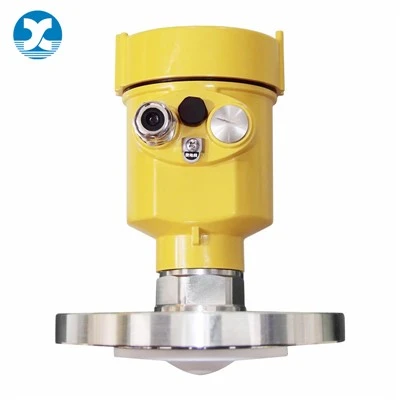
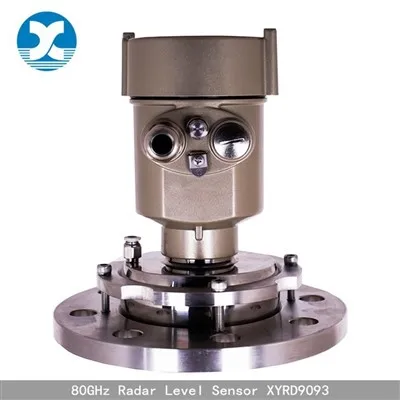
High-frequency radar level gauges use microwave-based measurement, a technology immune to humidity shifts, temperature variation, surface foam, and ambient dust. Compared to ultrasonic systems, radar offers far stronger interference resistance and more dependable continuous output, making it the ideal choice for demanding wastewater treatment applications.
In aeration basins, anaerobic tanks, and high-foam wastewater vessels where ultrasonic sensors frequently fail, radar maintains precise, uninterrupted level tracking. Its non-contact design eliminates medium adhesion and corrosion risks, drastically cutting routine maintenance workload. It also performs reliably on sealed chemical dosing tanks and high-humidity enclosed process vessels within treatment facilities.
While radar sensors carry a higher upfront cost than ultrasonic alternatives, their maintenance-free operation and extended service lifespan deliver superior long-term ROI for mid-size and large-scale water treatment plants.
3. Submersible Hydrostatic Level Transmitters (Contact, Deep Water Adaptation)
Submersible hydrostatic level transmitters determine liquid level by measuring real-time hydrostatic pressure exerted by the water column. The fully submersible probe captures pressure changes and converts them into standard linear level signals. This technology is uniquely suited for deep water wells, underground reservoirs, and deep sewage tanks that exceed the effective measuring range of ultrasonic and radar sensors.
These compact, high-accuracy transmitters support continuous long-term underwater operation. Models fitted with anti-clogging diaphragms and corrosion-resistant housing easily handle industrial wastewater with mild corrosive properties. Consistent field inspection and occasional diaphragm cleaning are required to prevent sludge accumulation from skewing measurement accuracy over time.
4. Magnetic Flap Level Gauges (On-Site Visual Monitoring)
Magnetic flap level gauges leverage magnetic coupling mechanics to display real-time liquid level via visible external color-coded flaps. They operate without external power and provide immediate local visual level indication. Most field installations pair these gauges with electronic transmitters to enable remote data transmission and centralized monitoring.
They are widely specified for small-to-medium sealed dosing tanks holding PAC, PAM, and acidic or alkaline treatment chemicals. The fully sealed construction prevents fluid leakage and complies with standard plant safety protocols. That said, the floating magnetic component is susceptible to sludge buildup, so these gauges are not recommended for high-suspension sewage tanks where fouling can jam internal mechanics.
5. Tuning Fork Level Switches (Point Safety Protection)
Tuning fork level switches are dedicated point-level safety devices designed for high-level overflow alarming and low-level pump dry-run protection. They detect level threshold changes by measuring shifts in probe vibration frequency. With no moving mechanical parts, they deliver exceptional reliability and extremely low failure rates.
Plant teams typically install tuning fork switches in collection pools, buffer tanks, and chemical dosing vessels. Paired with continuous level transmitters, they create redundant safety monitoring systems that mitigate overflow waste and equipment idle damage. Compatible with clean water, sewage, and low-viscosity treatment chemicals, these switches are a foundational safety component for automated water treatment controls.
Stage-Specific Level Gauge Matching Rules for Water Treatment
Each stage of water treatment features unique water quality characteristics, foam levels, and surface turbulence. Matching the right instrument to each process zone maximizes measurement stability while keeping capital and maintenance costs low.
Raw Water Intake & Reservoir Monitoring
Large open reservoirs and deep water intake zones rely primarily on submersible hydrostatic transmitters and ultrasonic level gauges. Both technologies offer wide measuring ranges and simple installation, perfectly supporting routine level tracking and water volume inventory calculations.
Sedimentation & Filtration Process
Sedimentation and filtration tanks feature stable water quality and minimal foam formation. Ultrasonic level gauges deliver reliable continuous level monitoring at the best possible price point, with minimal ongoing maintenance requirements.
Aeration & Anaerobic Wastewater Tanks
Aeration and anaerobic processes generate heavy surface foam and constant water turbulence. Standard ultrasonic sensors struggle with severe signal scattering in these conditions. High-frequency radar level gauges are the reliable, field-proven solution for consistent, uninterrupted level measurement.
Chemical Dosing Tank Monitoring
Sealed flocculant and disinfectant dosing tanks use magnetic flap level gauges or compact short-range radar sensors. Both adapt well to narrow, enclosed tank spaces and resist measurement drift caused by chemical evaporation and mild corrosion.
Key Selection Criteria for Water Treatment Level Gauges
Effective level instrument selection depends on holistic evaluation of site conditions, process control demands, and long-term maintenance costs. Smart specification prioritizes field adaptability over generic datasheet parameters or low upfront pricing.
Anti-Fouling and Anti-Interference Performance
Sludge and suspended solids are unavoidable in wastewater environments. Non-contact ultrasonic and radar sensors are preferred for these applications, as they eliminate direct medium contact and fouling buildup. When contact-style transmitters are necessary, always select units with anti-clogging diaphragms and integrated self-cleaning features.
IP Protection and Environmental Adaptability
Outdoor installations and high-humidity indoor environments require a minimum IP67 waterproof and dustproof rating to withstand rain exposure and persistent moisture condensation. Condensation resistance and automatic temperature compensation are essential standard features for long-term reliable operation in water treatment settings.
Signal Stability and Fluctuation Filtering
Transient water level fluctuation is inherent to continuous treatment processes. Quality level instruments include advanced signal filtering algorithms to suppress momentary data jitter. This ensures steady, trustworthy level signals for automated pump control and closed-loop process regulation.
Common Selection Mistakes to Avoid
Most persistent level measurement issues in water treatment plants stem from poor instrument application matching, not hardware defects. Specifying ultrasonic sensors for heavily foamed aeration tanks tops the list of common errors, resulting in chronic inaccuracy and constant manual recalibration. Overlooking IP ratings for outdoor sensors accelerates housing aging and water ingress failure. Additionally, relying solely on continuous transmitters without point-level safety switches leaves plants vulnerable to preventable overflow and dry-run equipment damage.
FAQ
What is the best level gauge for aeration wastewater tanks?
High-frequency non-contact radar level gauges are the optimal solution. They ignore foam agitation, surface turbulence, and vapor interference, delivering stable, repeatable measurements in aeration tank conditions that defeat ultrasonic technology.
Which level instrument is most cost-effective for clean water tanks?
Ultrasonic level gauges deliver the strongest cost-performance for clean water reservoirs, filter tanks, and finished water basins. Their tool-free installation, non-contact design, and minimal upkeep make them ideal for low-maintenance clean water monitoring.
Do water treatment tanks need both continuous and point level instruments?
Dual-instrument configuration is strongly recommended for critical process and storage tanks. Pairing continuous level transmitters with tuning fork point switches enables real-time process tuning while providing independent threshold safety protection, mitigating risks from single-device instrument failure.
Conclusion
Water treatment level gauge selection is strictly application-driven. No single instrument works universally across all process zones. Ultrasonic sensors excel in clean, low-interference water environments; radar systems handle harsh foamy, humid wastewater conditions; submersible transmitters serve deep-water monitoring needs; magnetic flap gauges suit sealed chemical dosing tanks; tuning fork switches deliver vital safety backup.
Proper instrument matching stabilizes automated treatment system operation, cuts equipment failure rates, reduces manual maintenance labor, and supports consistent, safe long-term plant operation for municipal and industrial water and wastewater projects.
If you need tailored instrument selection for your water treatment project - including model confirmation, range customization, and protection grade matching based on your site conditions - share your process parameters with our team. We provide fully optimized, cost-effective level measurement configurations for your specific application.
References
1. IEC 61517:2024. Industrial Process Measurement and Control – Level Measuring Instruments General Specification.
2. ISO 14598:2023. Water Quality – Monitoring and Measurement Instrumentation Requirements for Treatment Plants.
3. Sino-Inst Engineering Team. (2026). Level Measurement Technical Manual for Water & Wastewater Treatment.
4. International Water Association (IWA). (2025). Best Practices for Process Instrument Deployment in Municipal Water Treatment.
5. Vega Instruments. (2024). Field Application Guide for Level Sensors in Humid & Foaming Environments.