


With over 15 years in the industrial sensor export business, one question I get asked constantly by global buyers is: should I choose a radar level gauge or an ultrasonic level gauge?
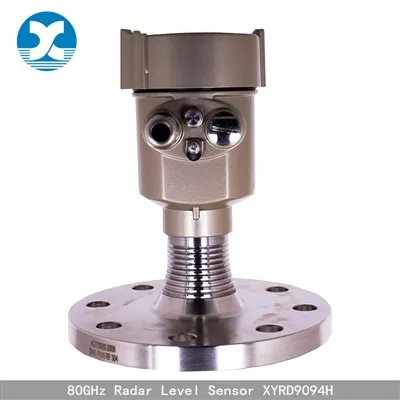

Both are popular non-contact level measuring devices widely used for tanks, silos, and storage vessels. On the surface, they serve the same purpose - detecting liquid or solid material levels without touching the medium. However, after dealing with countless on-site feedback and after-sales cases, I've seen many clients make wrong choices simply because they only compare prices.
The truth is, neither radar level gauge nor ultrasonic level gauge is universally perfect. The better option always depends on your working environment, accuracy needs, budget, and long-term maintenance plan. In this honest, practical guide, I will break down their differences based on real industrial usage, helping you avoid unnecessary purchase losses.
1. Working Principle: Simple Breakdown
To tell which sensor fits you better, it's necessary to understand their basic working logic. The core gap between radar and ultrasonic level gauges comes from their signal transmission medium.
1.1 How Does a Radar Level Gauge Work?
A radar level gauge transmits microwave electromagnetic waves from its antenna. These waves travel at the speed of light, bounce off the material surface, and reflect back to the sensor. The system calculates the level height by recording the signal feedback time.
The biggest advantage worth mentioning is that electromagnetic waves do not rely on air. This means the radar sensor can work stably even in vacuum, extreme temperatures, and fluctuating pressure conditions.
1.2 How Does an Ultrasonic Level Gauge Work?
An ultrasonic level gauge uses high-frequency sound waves for measurement. It emits sound pulses that hit the liquid or solid surface and generate echoes. The sensor then converts echo data into specific level values.
The obvious drawback here is that sound waves depend entirely on air. Any changes in temperature, dust density, or air flow will interfere with signal transmission, resulting in unstable reading data.
2. Accuracy & Measuring Range: On-site Performance
Accuracy and measuring range are the top concerns for industrial procurement. Based on my on-site installation experience, the performance gap between the two sensors is quite obvious.
2.1 Radar Level Gauge
Accuracy: ±1mm to ±5mm. High-frequency 80GHz radar models deliver far more stable precision for industrial production.
Measuring Range: It can support long-distance measurement up to 100 meters, suitable for tall silos and large storage tanks.
Stability: Steam, foam, and suspended dust barely affect radar signals. Many chemical and mining clients feedback that radar gauges keep accurate readings all year round.
2.2 Ultrasonic Level Gauge
Accuracy: Generally ±3mm to ±10mm. It is acceptable for ordinary water storage but not for precise production monitoring.
Measuring Range: Most ultrasonic sensors are limited within 15 meters. The signal weakens sharply over longer distances.
Stability: Temperature fluctuation is its biggest enemy. I have met many buyers whose ultrasonic sensors show data drift in summer and winter temperature changes.
Simply put, if you require precise and stable level data, the radar level gauge is undoubtedly the more reliable pick.
3. Environmental Adaptability: Harsh Site vs Regular Site
Industrial working conditions are never ideal. Dust, moisture, high temperature, and corrosive liquid are common in factories, which is why environment resistance matters so much.
3.1 Radar Level Gauge: Designed for Tough Conditions
Most industrial radar sensors are built for harsh working scenarios. It can withstand low temperature down to -40°C and high temperature up to 200°C, which covers most conventional industrial scenarios. Equipped with PTFE antenna, it can also resist weakly corrosive liquids.
Moreover, radar signals can penetrate steam and dense dust. For chemical reactors, mining powder silos, and oil storage tanks, radar is always the first choice.
3.2 Ultrasonic Level Gauge: For Mild & Clean Environments
The ultrasonic level gauge is more suitable for mild environments. High temperature, heavy steam, and floating foam will directly weaken sound waves and cause measurement failure.
From my sales experience, ultrasonic sensors are mostly applied in water treatment pools, open reservoirs, and small clean storage tanks. It performs well in these low-demand scenarios.
4. Installation & Maintenance Cost
Many buyers only focus on the unit price while ignoring later maintenance costs. In fact, maintenance is a key factor affecting total ownership cost.
4.1 Radar Level Gauge
Radar sensors require reasonable installation position; it is better to avoid internal tank structures such as agitators and inlet pipes. The good news is that it has no mechanical moving parts. Under normal use, you only need to clean the antenna occasionally. Its service life can reach 10-15 years.
4.2 Ultrasonic Level Gauge
Ultrasonic gauges feature simple installation with no complicated requirements. However, the probe is easy to age and adhere to dirt. Regular cleaning and replacement are necessary, leading to higher later maintenance costs. Its average service life is only 5-8 years.
5. Price & TCO Analysis
Budget is always an unavoidable topic. To make it easy to understand, I divide the cost into upfront cost and long-term usage cost.
5.1 Radar Level Gauge
The initial purchase cost is higher than ultrasonic sensors. But it has almost no maintenance cost and negligible failure rate. For long-term industrial projects, it effectively avoids production shutdown losses caused by measurement errors.
5.2 Ultrasonic Level Gauge
Low upfront price is its biggest selling point, perfect for buyers with a tight short-term budget. However, frequent probe replacement and unstable data will generate hidden costs in the long run.
6. Quick Selection Guide: Which One to Pick?
6.1 Choose Radar Level Gauge If You Have the Following Needs
- Working sites with dust, steam, high or low temperature
- Need high-precision measurement for liquid and solid materials
- Long measuring distance over 15 meters
- Expect low maintenance and long service life
- Common industries: Petrochemical, mining, power plant, food processing
6.2 Choose Ultrasonic Level Gauge In These Scenarios
- Indoor, clean, and constant-temperature working environment
- Low precision requirement and limited procurement budget
- Water tanks, irrigation systems, and small ordinary storage vessels
7. Final Conclusion
After years of exporting and testing these two industrial level sensors, my conclusion is straightforward.
Radar level gauges are reliable premium solutions for harsh industrial conditions. Despite the higher upfront cost, its stability and long service life bring better long-term return.
Ultrasonic level gauges are cost-effective basic sensors. It is ideal for simple, low-demand measurement scenarios where extreme conditions are not involved.
No matter which sensor you choose, always match the product performance to your on-site conditions. There is no best sensor, only the most suitable one.
FAQ
Q1: Can a radar level gauge measure solid materials?
Yes. Radar sensors work well for liquids, powders, and granular solids. It can adapt to uneven material surfaces in silos.
Q2: Can ultrasonic level gauges be used in vacuum tanks?
No. Since sound waves require air for transmission, ultrasonic sensors cannot work in vacuum environments. In this case, a radar level gauge is your only option.
Q3: What is the biggest disadvantage of radar level gauges?
The only obvious shortcoming is the higher initial purchase price. But for most industrial users, the low maintenance cost makes up for the price gap within several years.


