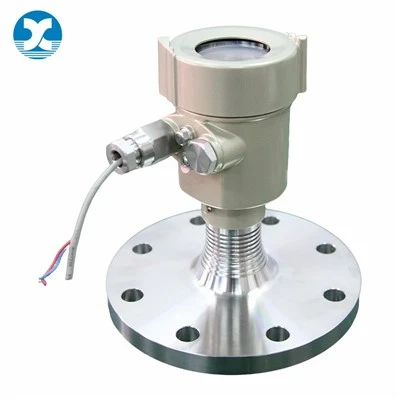
Most sourcing delays and on-site compliance issues with industrial level gauges are not caused by faulty hardware. They stem from incomplete, mismatched, or invalid certifications. This is a common pain point across global process industry projects.
Many overseas buyers rely on vague supplier claims like "fully certified" or "EU-compliant." But instrument compliance is never universal. A level gauge that works reliably for clean water monitoring can fail inspections entirely when deployed in hazardous chemical zones, high-pressure vessels, or sanitary food and pharmaceutical lines.
This guide cuts through generic standard listings. It breaks down exactly which certifications industrial level gauges require, sorted by industry application, operating environment, and target export region. Built for real project execution, it helps procurement and engineering teams avoid customs holds, on-site rework, and costly last-minute instrument replacements.
1. Why Level Gauge Certifications Make or Break Global Projects
Level gauges are critical field devices. They mount directly on process tanks and pressure vessels, feeding real-time data to automation controls, overflow protection systems, and inventory management workflows. Non-compliant units create two unavoidable risks: failed regulatory audits and latent operational hazards.
Cross-border customs checks, third-party FAT/SAT inspections, and local safety audits all require complete, traceable certification documentation. Missing or mismatched paperwork halts installations, holds shipments, and forces full batch replacement - hurting both project budgets and timelines.
2. Baseline Certifications for All Industrial Level Gauges
These core qualifications apply to every industrial-grade level gauge, regardless of industry or export market. They confirm stable manufacturing quality and credible test data, forming the basic screening standard for legitimate manufacturers.
2.1 ISO 9001 Quality System Certification
ISO 9001 confirms a manufacturer maintains consistent, standardized quality control across design, material inspection, production assembly, and final product testing. It guarantees stable batch-to-batch consistency - especially vital for bulk project procurement.
Note that ISO 9001 is a factory-level qualification, not a product-specific certificate. It cannot replace explosion-proof, pressure, or electrical safety documentation. Even so, it quickly filters out small workshops and unregulated assembly vendors with inconsistent quality output.
2.2 ILAC-Accredited Calibration Reports
Every industrial level gauge used for official monitoring requires traceable calibration records. Generic factory test data is rarely enough for formal project acceptance.
Calibration reports issued under ILAC-accredited lab standards document real-world accuracy, linearity, and repeatability performance. Most EPC projects and end-user audits mandate these files, particularly for inventory tracking and automated batching systems where measurement precision directly impacts process credibility.

3. EU CE Compliance: Mandatory Full Package Breakdown
CE marking is compulsory for instruments shipped to EU and EEA territories. However, a simple CE label does not equal full compliance. Different level gauge types require distinct directive combinations, and missing even one directive will fail official audits.
3.1 EMC Electromagnetic Compatibility
All electronic level instruments - including radar, ultrasonic, and capacitive transmitters - need solid EMC compliance. Industrial sites are packed with electrical noise from motors, VFDs, and switchgear. Without verified EMC performance, level readings drift, fluctuate randomly, or drop out intermittently, destabilizing entire control loops.
3.2 LVD Low Voltage Safety
LVD covers electrical safety for all powered field instruments. It standardizes insulation strength, leakage resistance, and short-circuit protection. Even 24VDC low-voltage gauges require LVD compliance to prevent field burnout and long-term electrical safety risks.
3.3 PED Pressure Equipment Compliance
Mechanical magnetic level gauges, sight glass indicators, and pressure-based level transmitters installed on pressurized tanks require valid PED certification. This standard verifies structural integrity, pressure resistance, and material reliability under continuous operating pressure. High-pressure process projects cannot pass final acceptance without formal PED documentation.
4. Explosion-Proof Certifications for Hazardous Areas
Chemical, petrochemical, solvent, and biogas sites contain flammable gas or dust atmospheres. Any field-mounted level gauge here needs dedicated explosion-proof certification to eliminate ignition risks from electrical sparks or high surface temperatures.
4.1 ATEX for European Hazardous Zones
ATEX is the baseline explosion-proof standard for EU industrial sites. It categorizes equipment by precise gas/dust zone ratings. A common buyer mistake is accepting generic ATEX certificates that do not match on-site Zone 0, 1, or 2 classifications. Mismatched ratings result in immediate site rejection.
4.2 IECEx for Global Cross-Border Projects
IECEx holds far wider international recognition than regional ATEX standards. It is accepted across the Middle East, Southeast Asia, Australia, and most African industrial zones. For buyers managing multi-country project portfolios, IECEx-certified instruments eliminate duplicate certification work and cut overall compliance costs.
5. Industry-Specific Specialized Certifications
Basic electrical and pressure safety only covers general industrial use. High-standard vertical sectors require additional targeted certifications to meet industry audit rules.
5.1 Sanitary Certification for Food & Pharma
Level gauges in direct contact with food, beverage, or pharmaceutical media need food-grade material certification and hygienic design validation. Crevice-free construction, polished stainless steel, and sanitary sealing must be fully documented. Standard industrial gauges fail GMP audits due to inherent contamination risks.
5.2 Regional Mandatory Compliance Standards
Different territories enforce unique certification rules. Shipments to Russia and the EAEU require EAC and EAC Ex approval. North American hazardous locations demand UL/CSA certification. Local Chinese projects require NEPSI explosion-proof documents. European certificates cannot replace these region-specific qualifications.
6. Real-World Project Case: Costly Certification Mismatch
A regional chemical project once sourced cost-effective radar level gauges for solvent storage tanks. The supplier provided standard CE paperwork but omitted zone-specific ATEX certification and critical temperature class documentation required for flammable fluid environments.
During pre-commissioning safety audits, inspectors flagged the incomplete certification package. The instruments were barred from installation. The project team was forced to reorder fully IECEx-compliant units, triggering shipment delays, unplanned secondary spending, and repeated site coordination.
This project established a simple, effective verification rule: never judge compliance by certificate availability alone. Always verify that zone ratings, temperature classes, and gas group specifications match exact site conditions before confirming orders.
7. Practical Buyer Verification Checklist
Use this streamlined checklist to eliminate compliance risks during supplier evaluation:
- Validate certificate status: Confirm issue dates, expiry dates, and accredited issuing bodies
- Match certificate scope: Ensure documents cover your exact model, wetted materials, and configuration
- Cross-check technical limits: Align pressure ratings, temperature classes, and zone grades with field requirements
- Require serial-number-specific calibration reports for every individual unit
- Collect the full compliance package before shipment to avoid customs and acceptance delays
8. Conclusion
Level gauge compliance is highly application-dependent. Water treatment systems only need basic quality and EMC validation. Chemical and petrochemical sites demand full explosion-proof, pressure, and electrical safety packages. Food and pharma lines require strict sanitary certification. Every export region adds localized compliance rules.
For global buyers, the biggest takeaway is to ignore generic "fully certified" marketing language. Instead, match your certification package to your exact site environment, industry standards, and target market. This is the most reliable way to avoid rework, replacement costs, and project downtime.
If you need help defining the exact certification set for your project, share your process medium, operating conditions, industry vertical, and destination market. Our technical team can deliver tailored compliance guidance and instrument selection support.
References
1. ISO 9001:2015, Quality Management Systems – Requirements
2. IEC 61508:2010, Functional Safety of Safety-Related Instrument Systems
3. 2014/30/EU (EMC Directive), Electromagnetic Compatibility Standards for Industrial Equipment
4. 2014/34/EU (ATEX Directive), Equipment for Explosive Atmospheres
5. 2014/68/EU (PED), Pressure Equipment Safety Directive
6. IECEx System Rules, International Explosion-Proof Certification Compliance Guidelines
7. ISA-77.00.01, Global Process Instrument Compliance Best Practices