Where It Fits - and Where It Doesn't
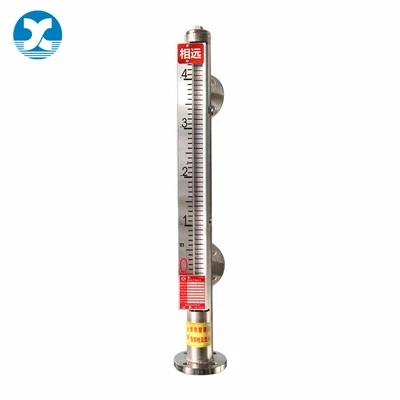
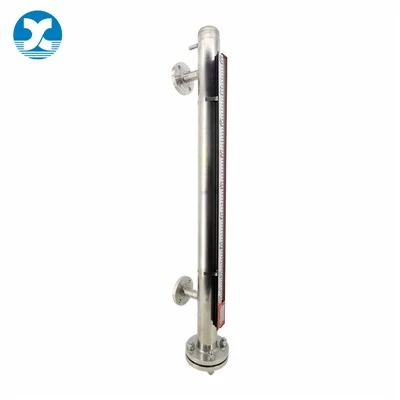
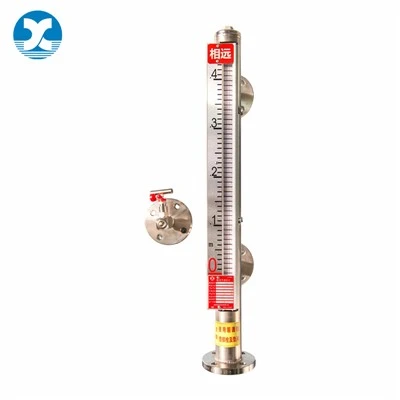
Think of this as the "daily-driver" version of a magnetic level instrument for cold service. Plants running chilled water loops, glycol circuits, or any non-corrosive fluid that simply sits below room temperature don't need - and shouldn't have to pay for - a fully jacketed, frost-proof cryogenic housing. That heavier construction is reserved for liquefied-gas tanks running down toward -100℃, where surface icing becomes a real problem.
This model skips the insulation jacket and anti-frost glass shield entirely. Because the gap between medium temperature and ambient air stays moderate across its rated range, condensation and frost buildup are a non-issue in normal operation - so the simplified housing isn't a compromise, it's a deliberate cost-saving choice for the conditions it's actually built for.
Bottom line: if your process fluid is cool but not cryogenic, and it won't attack stainless steel, this is the more economical, right-sized instrument for the job.
What Makes It Hold Up in the Cold
Cold-toughened welded body - 304 or 316L stainless steel, formulated to resist the brittleness that plagues ordinary gauges after months of thermal cycling. No cracking, no seam failure, no gradual deformation from repeated cool-down/warm-up cycles.
Float calibrated for shrinkage - as cold fluids contract slightly and density shifts, the float assembly (304SS, 316LSS, or a custom cold-rated grade) has been rebalanced so the reading doesn't drift with it.
Smooth-acting indicator flaps - the aluminum-alloy flap chain is tuned to keep flipping cleanly even as viscosity creeps up in cold fluid, so the display doesn't lag behind or stick partway through a rotation.
Full pressure envelope - rated from -0.1 MPa vacuum up to 16 MPa (Class 900), so it drops into pressurized cold loops and vacuum-assisted vessels alike without needing a different product line.
Broad fluid tolerance - handles medium down to 0.4 g/cm³ density and up to 10⁻⁴ m²/s viscosity, which comfortably spans the chilled-water and glycol-type circulating fluids used in most cooling systems.
Drop-in mounting - GB, HG and ANSI flange patterns are all available, plus a standard 1/2" drain port for routine condensate purging, with custom vent/drain layouts available on request.
Ready for remote monitoring - pairs with cold-rated magnetic switches, magnetic transmitters, or magnetostrictive transmitters (up to 3000mm) for tie-in to plant control systems.
|
Parameter |
Specification |
|
Applicable Media |
Non-corrosive industrial media working below ambient temperature, suitable for general sub-zero cooling and low-temperature circulating process fluids |
|
Main Chamber Material |
304 Stainless Steel, 316L Stainless Steel (custom low-temperature stainless steel optional) |
|
Float Material |
304SS, 316LSS, customized low-temperature stainless steel available |
|
Magnetic Flap Material |
Sealed flexible aluminum alloy profile, low-temperature resistant smooth flipping type |
|
Working Pressure |
-0.1 MPa ~ 16 MPa (Class 900) |
|
Working Temperature Range |
-40℃ ~ 60℃ (general industrial low-temperature service range) |
|
Medium Viscosity |
≤ 10⁻⁴ m²/s |
|
Minimum Medium Density |
≥ 0.4 g/cm³ |
|
Measuring Range |
300mm ~ 5500mm fully customizable |
|
Mounting Flange Standard |
GB, HG, ANSI and other international standard flanges, customizable |
|
Flange Material |
304 Stainless Steel, 316L Stainless Steel |
|
Drain Configuration |
Standard 1/2" internal thread drain valve, customized structure optional |
|
Vent Configuration |
Standard no vent port, customizable according to site requirements |
|
Optional Supporting Accessories |
Low-temperature magnetic level transmitter, magnetostrictive level transmitter (max 3000mm measuring length), magnetic level switch |
Typical Installations
- Plant Cooling Loops - chilled-water tanks, glycol buffer vessels, and recirculating cold-process storage where the instrument needs to survive years of on/off cycling.
- General Chemical Cold Steps - sub-zero reaction vessels and low-pressure holding tanks handling non-corrosive chilled media in fine-chemical lines.
- Cold Utility Rooms in Manufacturing - auxiliary cold-buffer tanks and process-cooling vessels supporting machining or assembly operations.
- Municipal & Environmental Cold Systems - cooling-circuit storage for water treatment and environmental equipment, where budget-conscious reliability matters more than deep-cryo performance.
Installation Tips
Plant Cooling Loops - chilled-water tanks, glycol buffer vessels, and recirculating cold-process storage where the instrument needs to survive years of on/off cycling.
General Chemical Cold Steps - sub-zero reaction vessels and low-pressure holding tanks handling non-corrosive chilled media in fine-chemical lines.
Cold Utility Rooms in Manufacturing - auxiliary cold-buffer tanks and process-cooling vessels supporting machining or assembly operations.
Municipal & Environmental Cold Systems - cooling-circuit storage for water treatment and environmental equipment, where budget-conscious reliability matters more than deep-cryo performance.
Questions We Get Often
How is this different from a cryogenic-rated gauge?
This unit is built around a -40℃ floor and a simple, uninsulated structure. A cryogenic gauge is a different product entirely - it adds a stainless jacket, insulation fill, and an anti-frost viewing shield to survive down toward -100℃, where frosting becomes unavoidable without that extra protection.
Do I need to worry about frost forming on this gauge?
Not under its intended operating range. The temperature gap between a -40℃-and-up fluid and the surrounding air isn't large enough to trigger meaningful frosting, so the uninsulated design holds up fine - and costs less than adding protection you don't need.
Will it survive a cooling system that cycles on and off constantly?
Yes - that's exactly the duty cycle it's engineered around. The toughened stainless construction is specifically formulated to resist fatigue cracking from repeated warm/cold transitions.
What remote signal options do I have?
Cold-rated limit switches, standard magnetic transmitters, or a magnetostrictive transmitter up to 3000mm - all calibrated to hold a stable signal through normal sub-zero swings.
Can I get a custom range or flange?
Yes, both level range and flange pattern (GB/HG/ANSI or others) are configurable to match your tank and nozzle layout.
Where does this instrument NOT belong?
Skip it for corrosive cold media, or for anything dropping below -40℃ into true cryogenic territory - those applications need the insulated, anti-frost cryogenic version instead.
Send us your operating temperature, fluid type, tank range and flange requirement, and our engineering team will put together a configuration and quote sized to your actual process - no need to pay for cryogenic features you won't use.
Hot Tags: low temperature magnetic level gauge|sub-zero process level indicator for general industrial cooling systems, China low temperature magnetic level gauge|sub-zero process level indicator for general industrial cooling systems manufacturers, suppliers, factory, digital level box, mechanical float level indicator, Side Mounted PP Magnetic Level Gauge, sonar tank level sensor, Top Mounted PP Magnetic Level Gauge, ultrasonic level probe