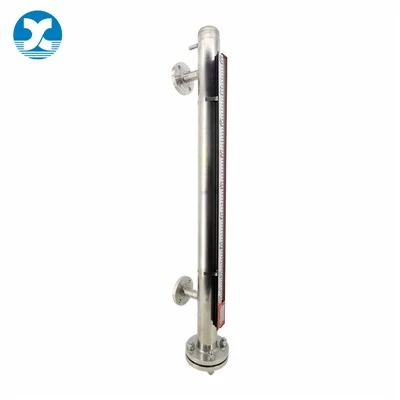
Why Choose Oil Water Interface Magnetic Level Gauge
General magnetic level instruments are only engineered to measure single-phase liquid height and lack the capacity to distinguish layered boundaries between two immiscible fluids. Within petroleum refining and chemical separation workflows, unclear oil-water stratification interfaces frequently lead to inconsistent separation precision, unstable end-product quality, and heavy reliance on manual site inspections.
Our Oil Water Interface Magnetic Level Gauge is a process-specialized measuring device tailored exclusively for dual-density liquid layered applications. Equipped with custom float buoyancy matching and dedicated interface identification logic, it sensitively captures subtle density gaps between oil and water media, fully resolving the industry limitation where standard level gauges fail to detect stratified boundaries.
This side-mounted interface monitor is widely deployed across core petroleum refining and fine chemical separation workflows, with its core function focused on tracking oil-water layer boundaries rather than basic single-liquid height readouts. Unlike universal magnetic level gauges with flexible mounting rules, this interface meter enforces rigid standardized layouts for middle flanges and dual flanges to completely eliminate layered interface measurement blind zones. Compatible with multi-functional signal expansion modules and a full series of heating accessories, it delivers stable performance amid fluctuating temperatures and medium pressures found in continuous refining production lines.
Boasting an industry-leading ultra-low density detection threshold as low as 0.1g/cm³ - far exceeding the measuring limit of conventional magnetic level gauges - this equipment accurately tracks layered boundaries of low-density light oil, heavy oil, and mixed oil-water media. It offers 304SS, 316L, and titanium alloy wetted component options to resist trace corrosive impurities in petrochemical fluids. The gauge seamlessly integrates with industrial PLC and DCS control systems to transmit real-time interface data, trigger high/low limit interlock alarms, and auto-adjust separation processes, elevating the automation and operational efficiency of oil-water separation production.
Unique Product Features & Process-Specific Advantages
- Exclusive Two-Phase Stratified Interface Identification Developed solely for immiscible oil-water dual-liquid environments, breaking the single-medium measurement limitation of standard level gauges. A custom differential buoyancy balance structure clearly differentiates low-density oil phases and high-density water phases, delivering continuous, intuitive interface positioning impossible for universal instruments.
- Ultra-Low Density Medium Compatibility Supports reliable detection for media with density down to 0.1g/cm³, drastically lowering the measurable density threshold of traditional magnetic level gauges. It accommodates nearly all low-density oil variants and mixed oil-water layered fluids in petrochemical production, fixing the common issue of undetectable light oil interfaces on conventional measuring equipment.
- Specialized Mounting Standards for Interface Detection Unlike ordinary gauges that allow arbitrary installation heights, this interface measuring instrument adheres to strict flange layout specifications. For single middle flange configurations, total liquid level must sit above the middle flange, while the actual interface control range cannot rise higher than the middle flange. For dual-flange installations, liquid levels must remain above the upper flange to ensure the stratified boundary stays within the effective detection range and prevent measurement errors.
- Comprehensive Process Condition Adaptability Covers a working pressure range from full vacuum up to 10MPa (Class 600), paired with a wide operating temperature window of -40℃ to 400℃. It maintains stable performance through long-duration high-temperature heating cycles and fluctuating process pressures in refining workshops, withstanding temperature and pressure shocks during uninterrupted separation production.
- Multi-Grade Corrosion Resistant Material Options A diverse lineup of wetted material solutions including 304SS, 316L stainless steel, and titanium alloy is available. Targeted material selection matches different oil compositions and trace corrosive substances in petrochemical media, preventing rust, structural deformation, and medium contamination to guarantee long-cycle stable interface detection.
- Consistent Readings for Low-Viscosity Layered Media Optimized for layered process fluids with a maximum viscosity of 10⁻⁴ m²/s. The design avoids float adhesion, stagnation, and delayed interface display caused by medium buildup, sustaining precise, steady interface positioning accuracy during extended cyclic separation operations.
- Expandable Intelligent Monitoring Functionality Interfaces seamlessly with magnetic control transmitters, magnetostrictive transmitters, and passive dry reed switches. It enables remote real-time interface data upload, high/low limit alarm output, and linked control of separation machinery, helping factories achieve unmanned, intelligent oil-water separation management.
- Multi-Mode Thermal Anti-Freezing Protection Three optional heating systems are provided: electric heating, steam heating, and hot water heating. These customized thermal protection assemblies resolve prevalent low-temperature production pain points including medium condensation, wax precipitation, and pipeline icing, delivering uninterrupted, precise interface detection year-round.
Technical Specifications
This dedicated two-phase interface magnetic level gauge features a custom layered measurement framework and process-tailored parameter configurations. All structural designs, material selections, and mounting benchmarks are engineered specifically for petrochemical oil-water separation scenarios, overcoming the performance constraints of standard single-liquid level gauges to deliver consistent, high-precision dual-medium interface monitoring. Full technical parameters are listed in the table below:
|
Parameter |
Specification |
|
Chamber Size |
57mm, 60.3mm outer diameter; wall thickness customized based on working pressure and temperature grade |
|
Wetted Materials |
304 Stainless Steel, 316L Stainless Steel, Titanium Alloy (customizable) |
|
Working Pressure |
-0.1MPa ~ 10MPa (Class 600) |
|
Operating Temperature |
-40℃ ~ 400℃ |
|
Minimum Medium Density |
≥ 0.1 g/cm³ (supports ultra-low density two-phase interface detection) |
|
Medium Viscosity |
≤ 10⁻⁴ m²/s |
|
Measuring Range |
300mm ~ 5500mm, fully customizable |
|
Mounting Flange |
Customized to match client specified international standards |
|
Drain Port |
Standard 1/2" internal thread drain valve; custom drain structures available on request |
|
Vent Port |
No standard vent port; vent fittings configurable for special working conditions |
|
Optional Supporting Accessories |
Magnetic control level transmitter, magnetostrictive level transmitter, passive dry reed switch; electric heating, steam heating, hot water heating anti-freezing assemblies |
Applications
Developed exclusively for two-phase liquid stratification and oil-water separation core processes, this interface-specific magnetic level gauge delivers unique detection performance unmatched by universal single-liquid level instruments. It serves a wide array of industrial operations reliant on accurate layered interface control to preserve production efficiency and product quality:
- Petroleum Refining Industry (Core Application) Deployed on crude oil settling tanks, oil-water separation vessels, and fractionation auxiliary tanks within refining workshops. It tracks dynamic real-time shifts in oil-water interfaces, effectively mitigating oil overflow and water contamination issues to stabilize separation precision and boost refined oil product qualification rates.
- Fine Chemical Stratification Processes Suitable for all chemical production stages requiring separation of immiscible dual-liquid layers. It supplies accurate boundary interface data for medium purification, layered ingredient separation, and process parameter adjustment to sustain stable, high-efficiency fine chemical manufacturing.
- Industrial Oily Wastewater Treatment & Oil Recovery Installed on oily sewage separation equipment and waste oil recovery systems for chemical and energy plants. The unit reliably locks oil-water layered boundaries to improve waste oil recycling efficiency, cut resource waste, and help facilities meet environmental wastewater discharge regulations.
- Energy Chemical Auxiliary Process Systems Matched with layered medium storage tanks and process separation vessels at energy chemical plants. It accommodates long-duration high-temperature, medium-pressure continuous production conditions to deliver stable automated control over two-phase layered fluids and ensure non-stop production line operation.
Frequently Asked Questions
Q1: What core distinctions separate interface-type gauges from ordinary magnetic level gauges?
A: The fundamental difference lies in measurement objectives and applicable scenarios. Standard magnetic level gauges only measure single-phase liquid height and cannot identify boundaries between two distinct liquid layers. This specialized oil-water interface gauge integrates a custom differential buoyancy structure and ultra-low density adaptation design, developed solely for dual-medium stratification workflows. As a process-specific instrument built for oil-water separation, it cannot be replaced by universal single-liquid level meters.
Q2: Why do interface gauges enforce strict flange position rules during installation?
A: Two-phase interface detection operates within fixed effective sensing intervals, a key contrast to the flexible mounting of ordinary level gauges. Standardized flange layouts fully eliminate blind zones for layered interface measurement, ensuring oil-water stratification boundaries always fall within valid detection ranges and preventing skewed interface data or complete detection failure from improper installation heights.
Q3: Can this gauge measure ultra-light, low-density oil media?
A: Yes. Its minimum measurable medium density reaches 0.1g/cm³, far below the detection threshold of conventional magnetic level gauges. It consistently identifies layered interfaces of ultra-light oil, thin oil, and mixed oil-water fluids, solving the long-standing petrochemical industry challenge of measuring low-density stratified media.
Q4: What anti-freezing heating solutions work for low-temperature separation processes?
A: We offer three targeted professional heating configurations: electric heating, steam heating, and hot water heating. These custom thermal protection structures prevent wax precipitation, fluid condensation, and pipeline freezing within oil media under low ambient temperatures, maintaining continuous precise interface monitoring for winter separation production.
Q5: Can this gauge enable intelligent automatic control for oil-water separation systems?
A: Absolutely. When paired with dedicated transmitters and passive magnetic switches, the gauge stably uploads real-time interface boundary data to PLC and DCS systems. This setup enables remote real-time monitoring, high/low limit alarms, and automatic linked equipment adjustments to achieve full intelligent control over oil-water separation workflows.
Q6: How to select optimal wetted materials for different separation media?
A: Cost-effective 304/316L stainless steel delivers reliable performance for regular pure oil-water layered media. For specialty oil products containing trace corrosive components and acidic impurities, titanium alloy wetted parts are recommended to enhance overall corrosion resistance and extend service life under complex separation operating conditions.
Precise two-phase interface positioning forms the foundational guarantee of stable separation efficiency and consistent finished product quality for petrochemical and chemical separation facilities. Unlike general single-liquid level measuring equipment, our dedicated Oil Water Interface Magnetic Level Gauge delivers exclusive layered measurement solutions tailored for industrial oil-water separation use cases.
Our technical team can design targeted custom configuration schemes based on your on-site working pressure, temperature, medium density, tank construction, and installation standards - including professional material matching, standardized flange layout planning, and supporting functional accessory combinations. Submit your full project operating parameters today to receive a customized industrial interface measurement solution and competitive bulk quotation.
Hot Tags: oil water interface magnetic level gauge | two-phase liquid stratification interface monitor, China oil water interface magnetic level gauge | two-phase liquid stratification interface monitor manufacturers, suppliers, factory, float level indicator, Side Mounted Lining PTFE Magnetic Level Gauge, Side Mounted PVDF Magnetic Level Gauge, Steam Jacketed Magnetic level gauge, Top Mounted Magnetic Level Gauge, Vacuum jacketed Magnetic level gauge