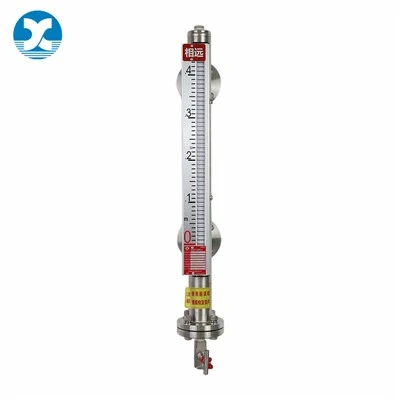
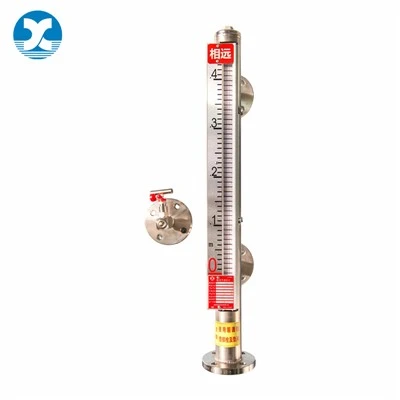
Why Choose PPH (Polypropylene Homopolymer) Magnetic Level Gauge
When the medium attacks metal, plastic is the answer - not a higher alloy
Our stainless steel, Hastelloy, Monel, and titanium gauges all solve corrosion problems by picking a better metal. PPH solves it differently: there's no metal in the wetted path at all. For media like concentrated sulfuric acid, hydrochloric acid, or liquid chlorine service where even Hastelloy shows attack over time, a fully polypropylene chamber and float sidesteps the metallurgy question entirely - there's no alloy to select because there's no metal to corrode.
Genuinely zero galvanic and pitting corrosion
Every metal alloy, no matter how resistant, still has a corrosion mechanism somewhere - pitting, crevice attack, stress corrosion cracking under the right chloride/temperature/stress combination. PPH doesn't have a galvanic corrosion mechanism at all. That matters most in mixed-acid or high-chloride service where metal selection becomes a genuine engineering judgment call rather than a straightforward spec.
Lightweight, easy to handle and install
PPH is a fraction of the weight of a stainless steel or titanium chamber of the same dimensions, which simplifies bracket loading, field handling, and installation on lighter-duty plastic or FRP tanks and piping systems that couldn't take the weight of a metal gauge in the first place.
A material choice with real limits
PPH is not a universal replacement for metal gauges. It tops out around 80°C and works within a lower pressure envelope (max 1.6MPa) than our metal product lines, which go up to 250 bar. If your process runs hotter or at higher pressure than PPH's rated envelope, a metal gauge - potentially Hastelloy or titanium depending on the chemistry - is still the right call. PPH earns its place specifically in the low-to-moderate pressure, moderate-temperature, highly corrosive service window that metal struggles with chemically but doesn't need to handle mechanically.
Key Features and Benefits
- Fully non-metallic wetted construction - chamber pipe and float both in PPH, eliminating galvanic corrosion and metal ion contamination risk in high-purity or highly reactive media
- Sealed aluminum-alloy magnetic flap indicator rail - the display components stay isolated from the corrosive medium; only the chamber and float are exposed to process fluid
- Dual pressure rating by configuration - up to 1.6MPa without a drain connection, or 1.0MPa when a drain port is fitted, letting you match the chamber configuration to your actual maintenance and pressure needs
- Stable performance under both positive and negative pressure, up to 80°C in either condition (negative-pressure temperature limit depends on the actual vacuum level - confirm your specific vacuum condition with us for exact ratings)
- Suitable for viscous media up to 100 mm²/s (10⁻⁴ m²/s) kinematic viscosity
- Contactless, spring-free magnetic switch option - no mechanical contact points or springs in the switch mechanism, reducing wear-related failure points in continuous duty
- Compatible with resistance-type and magnetostrictive level transmitters for local visual indication plus remote 4-20mA signal output
- Customizable mounting flange specified to match your existing piping standard and rating
Technical Specifications
Below are complete technical specifications of our PPH plastic magnetic level gauge, specially engineered for strongly corrosive chemical media such as liquid chlorine and concentrated sulfuric acid where metal alloys suffer rapid corrosion. All structural, material and performance parameters are listed for your accurate model selection and chemical compatibility verification.
|
Parameter |
Specification |
|
Mounting Form |
Side-mounted installation |
|
Measuring Range |
0–300 mm – 5000 mm |
|
Working Pressure |
Max. 1.0 MPa with drain connectionMax. 1.6 MPa without drain connection |
|
Working Temperature |
Max. 80°C under positive pressureMax. 80°C under negative pressure(Vacuum-condition limit depends on actual vacuum level - confirm with our team) |
|
Medium Density |
≥ 0.7 g/cm³ |
|
Medium Viscosity |
≤ 10⁻⁴ m²/s (≤ 100 mm²/s / 100 cSt) |
|
Typical Applications |
Liquid chlorine, sulfuric acid, and other strongly corrosive media(Confirm concentration, pressure and temperature against PPH chemical compatibility for your specific medium) |
|
Chamber Material |
PPH (Polypropylene Homopolymer) |
|
Float Material |
PPH (Polypropylene Homopolymer) |
|
Magnetic Flap Material |
Aluminum alloy profile, sealed type |
|
Mounting Flange |
Per customer requirement (size and standard customizable) |
|
Switch Option |
Contactless, spring-free magnetic switch (no mechanical contact points) |
|
Transmitter Output |
Resistance-type level transmitter; magneto |
Applications
The PPH Magnetic Level Gauge is specified where the process medium would attack standard stainless steel and, in some cases, is more economically handled with a non-metallic solution than by upgrading to an exotic alloy:
- Sulfuric acid storage and dosing systems, where concentration and temperature stay within PPH's compatibility and thermal limits
- Hydrochloric acid handling and storage tanks
- Chlor-alkali auxiliary systems and liquid chlorine service - subject to confirming chlorine concentration, phase, pressure, and temperature fall within PPH's rated envelope for your specific installation
- Wastewater treatment and dosing systems handling acidic or corrosive chemical streams
- Plastic (PP/PVC/FRP) tanks and piping systems where a lightweight, chemically matched gauge avoids introducing a metallic weak point into an otherwise all-plastic system
- Low-to-moderate pressure and temperature corrosive service where a metal gauge's pressure/temperature headroom isn't needed, but its corrosion resistance would otherwise be the deciding factor
Frequently Asked Questions
Q1: How does PPH compare to a titanium or Hastelloy gauge for corrosive service?
Titanium and Hastelloy solve corrosion with a resistant alloy but still have metal-specific failure modes (crevice corrosion, chloride stress cracking) under the wrong conditions. PPH has none of those mechanisms since there's no metal in the wetted path - but it trades that for a lower pressure and temperature ceiling (max 1.6MPa, 80°C) versus metal gauges rated to 250 bar and 400°C. The choice comes down to whether your process pressure and temperature fit inside PPH's envelope.
Q2: Is PPH suitable for liquid chlorine at any concentration and pressure?
Not universally - this depends on the specific concentration, phase (liquid vs. dissolved), pressure, and temperature of your chlorine service. Send us your actual process conditions and we'll confirm whether standard PPH construction is appropriate or whether a different material or design modification is needed.
Q3: Why does the pressure rating change depending on whether a drain connection is fitted?
The drain port is a penetration through the chamber wall, and removing material at that point reduces the chamber's pressure capacity slightly. Without a drain, the chamber holds its full 1.6MPa rating; with one fitted for maintenance convenience, the rating steps down to 1.0MPa. If your application needs the higher rating, we can discuss alternate drain arrangements.
Q4: Can this gauge measure interface between two liquids, like the metal versions?
The specification provided is for single-medium level measurement. If you need liquid-liquid interface measurement in a corrosive application, let us know - float sizing and chamber design would need to be reviewed against your specific density differential and chemistry.
Q5: What's the maximum measuring height for a single PPH chamber?
5000mm per section, with a minimum practical range of 300mm. This is shorter than our metal gauges' 5500mm single-section limit, reflecting PPH's lower structural rigidity compared to stainless steel or alloy pipe at longer unsupported spans.
Q6: Does the negative-pressure (vacuum) rating work the same as the positive-pressure rating?
Not exactly - the gauge is rated to 80°C under vacuum service, but the achievable vacuum level itself depends on your specific operating conditions rather than being a fixed number. Tell us your target vacuum level and temperature and we'll confirm suitability for your application.
Q7: What switch and transmitter options are available, and are they compatible with the corrosive service this gauge is built for?
Yes - the contactless, spring-free magnetic switch and both resistance-type and magnetostrictive transmitter options mount externally on the indicator rail, isolated from the process medium by the same sealed design that protects the visual display. They don't come into contact with the corrosive fluid inside the PPH chamber.
Q8: How do I know if I should choose PPH instead of a metal magnetic level gauge?
As a rule of thumb: if your medium is highly corrosive to standard stainless steel but your process pressure and temperature stay within roughly 1.6MPa and 80°C, PPH is often the more cost-effective and maintenance-free choice. If your process runs hotter, higher pressure, or needs a longer single-section measuring range, a metal gauge - stainless, Hastelloy, Monel, or titanium depending on the chemistry - is the better fit. Send us your medium, concentration, pressure, and temperature and we'll recommend the right material rather than defaulting to either option.
Confirm Your Process Conditions Before You Order
PPH's biggest advantage - zero galvanic corrosion - only holds up if the material is actually compatible with your exact process conditions. Concentration, temperature, pressure, and whether you're running positive or negative pressure all affect whether PPH is the right call versus a metal alternative. This is especially true for chlorine and mixed-acid service, where a small shift in concentration or temperature can change the answer.
Send us your medium, concentration, operating pressure and temperature, required measuring range, and whether you need a drain connection or switch/transmitter options - we'll confirm PPH suitability against your actual conditions and come back with a technical proposal and quotation, typically within 24 hours.
Contact us to discuss your PPH Magnetic Level Gauge requirements.
Hot Tags: pph (polypropylene homopolymer) magnetic level gauge, China pph (polypropylene homopolymer) magnetic level gauge manufacturers, suppliers, factory, diesel tank float gauge, level measurement, magnetic level gauge, non contact level measurement, Side Mounted PVC Magnetic Level Gauge, top mounted level indicator