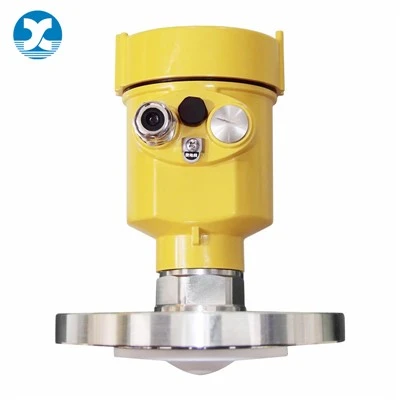
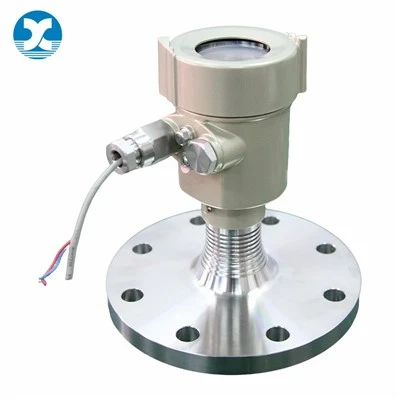
In industrial production, stable and accurate level measurement is the basis for smooth process operation. Nowadays, radar level gauges have gradually replaced traditional float and ultrasonic sensors in most heavy industries such as oil and gas, chemical manufacturing, food processing and sewage treatment. This is mainly because microwave radar signals are barely affected by extreme temperature, pressure, dust and steam. However, after contacting countless factory buyers and field engineers over the years, I find many end-users make wrong selections simply because they only focus on price.
There is no one-size-fits-all radar level gauge. A reasonable selection must combine actual working conditions and tank parameters. This article sorts out practical selection experience based on on-site application cases, helping you avoid unnecessary replacement costs and measurement failures.
Basic Knowledge You Need to Know
Almost all industrial radar level gauges work on the time-of-flight principle. The sensor emits microwave pulses, which bounce back after touching the material surface, and the system calculates the material level through signal feedback. In actual industrial scenarios, we mainly divide them into two types: non-contact radar and guided wave radar.
Non-contact radar is the mainstream choice for most conventional liquid and bulk solid storage tanks, with no contact between the antenna and the medium. Guided wave radar with probes is more suitable for materials with low dielectric constant and turbulent liquid surfaces, which is widely used for oil-water interface measurement.
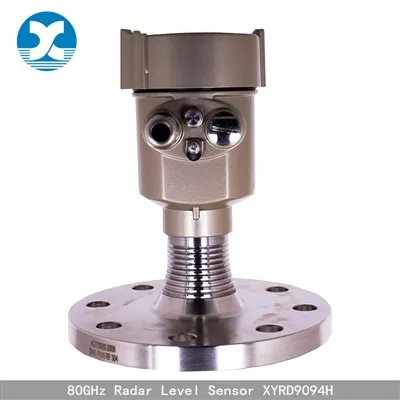
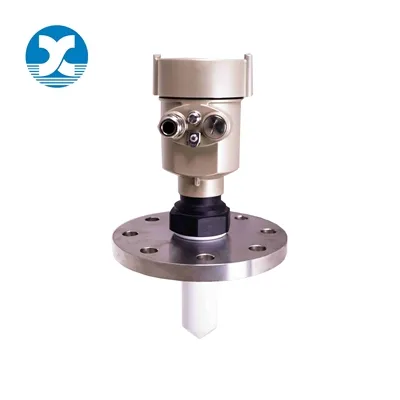
Start Selection With On-Site Process Conditions
Working condition is always the primary judging standard. For high-temperature and high-pressure reaction tanks, you need to pick reinforced models with pressure-resistant and high-temperature resistant shells. For corrosive chemical media, the wetted parts such as antenna and connection fittings must adopt 316L stainless steel, Hastelloy or PTFE materials to extend service life.
Besides, you need to judge the medium characteristics clearly. If the tank is accompanied by dense foam and heavy vapor, low-frequency radar is more recommended for better signal penetration. For dusty powder storage tanks, high-frequency radar with narrow beam can effectively reduce signal interference. As a simple judgment standard, non-contact radar is suitable for media with dielectric constant higher than 1.8, while guided wave radar can adapt to lower dielectric constant materials.
Radar Frequency & Antenna Type Selection
Frequency determines the measurement performance of the gauge. 6GHz low-frequency radar is applicable for large storage tanks over 30 meters and severe vapor environments. 26GHz radar is the most cost-effective general-purpose model, balancing measurement range and stability, which is the first choice for most conventional factories. For small tanks and complex tank structures, 80GHz high-frequency radar with narrow beam is better, featuring higher measurement accuracy.
Antenna types also cannot be ignored. Horn antennas are cost-effective and durable for daily use. Parabolic antennas apply to ultra-long distance measurement. Flush-mounted antennas are specially designed for sanitary industries to meet CIP cleaning requirements without dead corners.
Installation & System Matching Requirements
Many measurement errors are caused by improper installation. It is better to keep the antenna away from the tank wall and internal accessories such as agitators to prevent false echoes. In addition, you need to confirm the tank connection method in advance to select matched flange or thread interfaces.
For electrical configuration, most industrial radars adopt 24V DC power supply. Conventional 4-20mA HART signal meets basic monitoring demands, while Modbus and other protocols are suitable for intelligent factory system docking. Factories with flammable media must select explosion-proof certified instruments to meet safety production standards.
Final Purchase Suggestions
Before placing an order, confirm the maximum measuring range and reserve a 10% to 20% safety margin. Do not blindly pursue low prices; you need to comprehensively consider later maintenance costs and supplier after-sales support. For special working conditions, it is more reliable to send parameter lists to manufacturers for customized recommendations.
Conclusion
Choosing a suitable radar level gauge is not complicated, as long as you sort out working conditions, medium characteristics, installation environment and system matching demands. Reasonable selection can effectively reduce failure rate and maintenance cost. As an industrial measuring instrument, stability always comes first. It is worthwhile to invest moderately in high-quality products for long-term factory operation.If you have procurement needs for radar level gauges, please feel free to get in touch with us. We will recommend the most proper products tailored to your specific on-site working conditions.