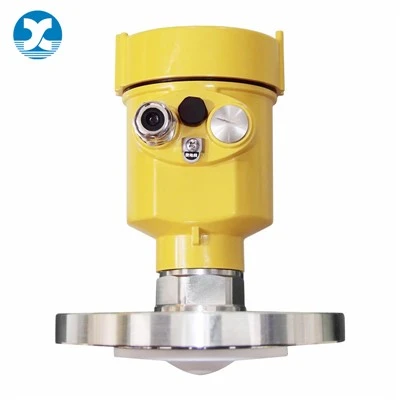
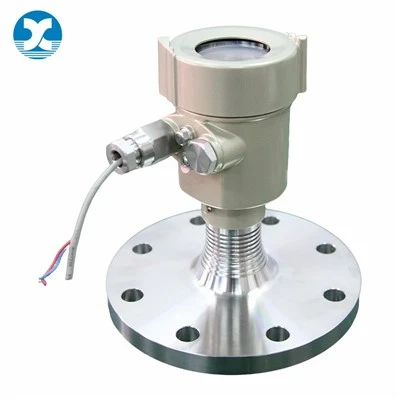
Level measurement is the process of determining the position of material (liquid or solid) within a container, tank, silo, or other vessel. It is crucial in many applications, helping to maintain process efficiency, ensure safety, and support inventory management, and is widely used in industries ranging from water treatment and food processing to oil and gas and chemical manufacturing.
Level Measurement Types
Float Switch
Working Principle: The float rises or falls with the material, mechanically triggering the switch.
Best Applications: Clean, low-viscosity liquids
Conductive Sensor
Working Principle: Uses electrodes to detect conductive liquids.
Best Applications: Water-based liquids
Vibration Sensor
Working Principle: The vibrating fork changes frequency or stops vibrating when covered by material.
Best Applications: Powders and fine solids
Choosing the Right Level Measurement Technology
Understanding the difference between contact and non-contact sensors is crucial when selecting a level measurement solution. Each has its advantages depending on the material type, environmental factors, and maintenance requirements.
Contact Level Sensors
Contact level sensors are devices that come into direct contact with the material being measured, making them ideal for measuring clean, stable liquids or solids that do not cause excessive wear on the sensor. Common types include float switches, conductive probes, and hydrostatic sensors. These technologies are often used for simple applications such as monitoring water or fuel levels due to their simplicity and effectiveness.
One of the main advantages of contact level sensors is their cost-effectiveness, as they typically require a lower initial investment. They can also provide high accuracy under suitable conditions and are well-suited for less complex systems due to their simple design. However, because they come into direct contact with the medium, these sensors may require more frequent maintenance. They may wear out faster and may struggle with corrosive, viscous, or fouling materials, all of which can affect their long-term performance.
Non-contact Level Sensors
Non-contact level sensors measure material levels without physical contact, relying instead on technologies such as ultrasonic, radar, or laser signals. This makes them ideal for challenging applications, especially those involving corrosive, viscous, or high-temperature materials, and environments with high cleanliness or safety requirements. They are designed to provide accurate readings even in sealed or pressurized containers and require virtually no maintenance.
The main advantages of non-contact sensors are their durability and low maintenance costs, as the absence of direct contact with the material significantly reduces wear. They are particularly suitable for harsh or hygienic environments where traditional contact sensors struggle. However, this high performance also means higher costs, and obstacles such as foam, dust, or vapor can sometimes affect their accuracy. Furthermore, these sensors require unobstructed signal paths to function properly, which can be a limiting factor in cluttered or complex tank installations.
Water and Wastewater Treatment
Level measurement plays a crucial role in water and wastewater management, from monitoring water levels in tanks and reservoirs to detecting sludge or foam buildup in clarifiers. Reliable level sensing also ensures efficient pump station control and helps prevent costly overflows, making it essential for maintaining safe, compliant, and efficient operations.
This submersible level transmitter is designed for the harsh environments common in water and wastewater treatment. It uses a piezoresistive sensing element encased in a 316 stainless steel housing to measure the height of a liquid relative to atmospheric pressure. Its robust design includes a large, clog-resistant stainless steel diaphragm seal to protect the sensor from damage by suspended solids, making it ideal for handling sludge, mud, and other complex media common in water and wastewater systems. Furthermore, this submersible level transmitter is equipped with dual surge arresters and surge protection, grounded to the housing, helping to minimize the impact of surges and grounding transients in exposed or outdoor installations.
Food and Beverage Industry
In the food and beverage industry, accurate liquid level measurement ensures the smooth operation of critical processes. It effectively controls the liquid levels in raw material storage tanks such as milk, syrup, and oils, and helps prevent overflows in mixing and stirring tanks. Liquid level sensors also play a crucial role in Clean In-Situ (CIP) systems, ensuring hygiene standards are met by accurately monitoring liquid levels during cleaning cycles. This level of control improves product quality, safety, and efficiency throughout the production process.
This series of photoelectric liquid level switches provides a simple and reliable method for detecting liquid levels in food and beverage processing systems. It uses infrared light and a prism to determine the presence of liquid, eliminating the need for any moving parts that could wear down or contaminate the process. When the prism is in the air, the light is reflected back to the sensor; when liquid covers the prism, the light is refracted into the liquid and cannot be detected. This change indicates the presence or absence of liquid. The switch is equipped with red and green LED indicators for clear local indication and is available in various materials such as 316 stainless steel, polysulfone, and PFA to meet different process requirements. Its compact size and ability to be installed horizontally or vertically make it adaptable to various installation environments.
Oil & Gas
Explosion-proof Float Switch
In the oil and gas industry, accurate level measurement is crucial for ensuring operational efficiency and safety. It plays a key role in tank metering at refineries and terminals, enabling accurate inventory management. Level sensors are also used to monitor separators and wellhead tanks, ensuring fluid separation and storage conditions meet requirements. Furthermore, these measurements are essential for pipeline leak detection, helping to prevent environmental hazards and costly interruptions. Effective level management is key to ensuring safe, compliant, and efficient operations across the industry.
Explosion-proof float switches are used to monitor levels in storage tanks and are a practical choice for oil and gas applications. They can control equipment such as pumps or valves based on the level, or trigger alarms. The switch operates based on a simple magnetic mechanism: as the float rises or falls with the liquid, it moves a magnet, triggering an internal fast-acting switch. This design avoids the use of bellows, springs, or seals, which are often common points of failure in harsh environments. Furthermore, the design of the float arm prevents it from getting stuck in a vertical position, thus improving reliability in typical oil and gas plants.
Pharmaceutical Industry
In the pharmaceutical industry, accurate level measurement is crucial for maintaining product consistency and safety. It helps manage precise levels in reactors and fermenters, ensuring optimal conditions for chemical reactions and fermentation processes. Additionally, level sensors are essential for ensuring level control in aseptic systems and batch mixing processes, helping to maintain stringent quality control and meet regulatory standards. These measurements contribute to reliable, efficient, and compliant production processes in the pharmaceutical industry.
Capacitive level switches are a practical choice for level detection in pharmaceutical environments where accuracy and material compatibility are paramount. Suitable for liquids, powders, and bulk materials, they are applicable to all stages of pharmaceutical processes. The switch uses capacitive sensing technology to detect material levels without moving parts, thus reducing maintenance. The parts in contact with the material are made of PVDF and 316 stainless steel, compatible with common cleaning and sterilization procedures. A weatherproof housing and a double-pole double-throw (DPDT) output make installation and integration more flexible.