1. Introduction
After decades of field instrument acceptance testing, project technical audit and on-site fault troubleshooting across hundreds of domestic and overseas chemical factories, I run into the same question from procurement and EHS engineers constantly: can ordinary radar level transmitters meet mandatory explosion-proof compliance standards inside hazardous chemical production workshops?
In my long-term work, I've witnessed plenty of regrettable procurement losses caused by misunderstanding explosion-proof attributes. Many purchasing staff assume all radar products come with inherent explosion-proof performance and pick inexpensive non-explosion-proof versions to cut initial budget. After goods arrive on site, equipment fails safety acceptance inspection by local regulatory departments, resulting in full cargo return, urgent supplementary procurement and delayed whole project construction schedule. These unnecessary extra expenses and construction stagnation can be entirely avoided through standardized pre-purchase specification confirmation.
It is essential to clarify one core industry fact first: explosion-proof is a targeted customized structural design rather than a default configuration of radar level transmitters. Products with formal ATEX or IECEx explosion-proof certificates are manufactured following strict international electrical specifications, while conventional general radar can only be deployed in non-hazardous instrument rooms and safe-area cooling water tanks.
This guide sorts out internationally recognized hazardous area classification standards, matches different radar explosion-proof grades with real chemical plant production scenarios, sums up high-frequency procurement traps accumulated from numerous project experience and delivers practical selection suggestions. The content is tailored for chemical plant procurement personnel to pick compliant radar smoothly and pass official safety audit without unexpected economic losses.

2. Why Chemical Production Zones Mandate Explosion-Proof Level Instruments
Chemical production sites are surrounded with inherent explosion risks brought by volatile solvents and powdered raw materials, which leads to strict hazardous area zoning formulated per global safety codes and sets rigid access thresholds for all field installed measuring instruments.
Common chemical raw materials such as methanol, ethanol and acetone volatilize easily to form flammable mixed gas once leaking into closed tank interiors or sealed production workshops. Various pesticide and resin powder can also form combustible dust clouds under specific concentration conditions. Any accidental electric spark generated from damaged instrument circuits will turn into ignition source and trigger serious explosion accidents.
Global safety management codes divide production areas into Class I flammable gas zone and Class II combustible dust zone according to medium characteristics. Production lines equipped with unqualified non-explosion-proof instruments face forced shutdown and rectification during routine official safety inspections.
Besides flammable medium risks, frequent ambient temperature variation and occasional liquid splashing in production workshops accelerate aging of internal electronic parts. Non-explosion-proof radar with exposed internal circuits tends to produce electric arcs after component aging, leaving long-term hidden safety troubles for continuous plant operation.
3. Three Core Radar Types Divided by Explosion-Proof Certification
Radar products are split into three clear categories based on explosion-proof structural design and third-party certification, each with definite applicable scenes inside chemical factories.
3.1 Intrinsically Safe Radar (Ex ia / Ex ib, IECEx & ATEX Certified)
Intrinsic safety design restricts maximum working voltage and circuit current no matter under normal running state or unexpected component fault, so the equipment cannot produce ignition spark even with internal short circuit. Ex ia stands for the highest explosion-proof level and is permitted for Zone 0 permanently hazardous locations including fully sealed solvent storage tanks. Ex ib certified products apply to Zone 1 areas with intermittent gas leakage such as reactor feeding and discharging sections. Most products of this type belong to guided wave radar, widely used for accurate oil-water interface measurement on small high-pressure reaction vessels.
3.2 Flameproof Enclosure Radar (Ex d Certified)
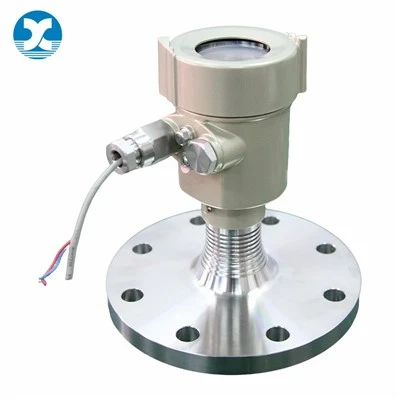
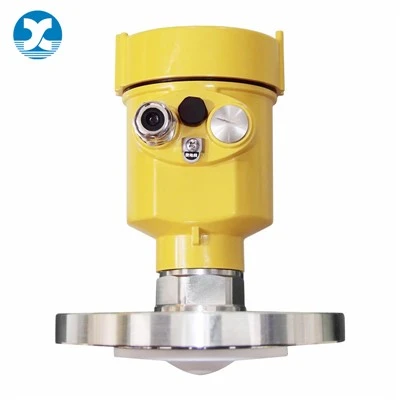
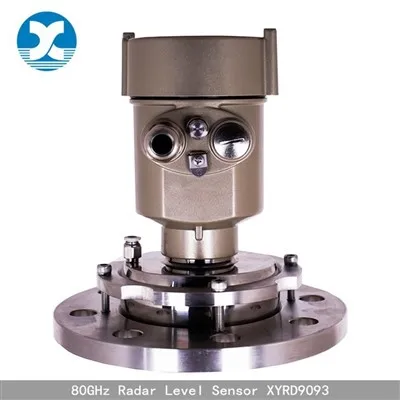
Flameproof radar adopts thick cast aluminum or stainless steel fully sealed shell structure. Even if internal circuit breakdown causes small-scale explosion inside the housing, the flame will be confined within the enclosure and cannot spread outside to ignite surrounding flammable gas. Such products are mostly 26GHz and 80GHz non-contact radar, commonly installed on Zone 1 and Zone 2 large chemical intermediate tank farms. Per international standard requirements, Ex d flameproof radar is forbidden to install inside Zone 0 continuous hazardous environments.
3.3 Non-Explosion-Proof General Radar
Conventional economical radar adopts open internal circuit design and ordinary plastic wiring connectors without any specialized explosion-proof structural treatment. Its application range is strictly limited to non-hazardous safe areas including workshop circulating cooling water tanks, open drainage pools and indoor monitoring equipment inside central control rooms. Installing such radar inside any classified hazardous production zone violates local safety supervision regulations.
4. Key Structural Parts Decide Radar Explosion Protection Performance
Four core component configurations directly determine the real explosion-proof performance of finished radar products. Many irregular manufacturers print formal explosion-proof logos on product nameplates but adopt inferior unqualified accessories to reduce production cost, resulting in complete invalidation of explosion-proof certification during third-party site acceptance.
The housing of qualified explosion-proof radar is made of thickened cast aluminum or 316 stainless steel with precise sealing assembly craft. Ordinary non-explosion-proof radar uses thin-wall die-cast aluminum with loose assembly gaps. Once internal circuit explodes accidentally, loose shell gaps will let flame leak into surrounding hazardous environment and bring huge safety hazards to whole production line.
Certified explosion-proof radar is matched with original factory brass or stainless steel explosion-proof cable glands. Ordinary products are equipped with cheap plastic threaded connectors. Loose gaps at wiring positions allow flammable gas inside workshop to permeate into instrument inner cavity and corrode internal circuits gradually.
Internal circuit layout has obvious differences between two grades of products. Explosion-proof radar is equipped with low-power intrinsic safety circuit with fixed voltage and current limitation design. General radar uses unrestricted conventional power circuit which easily generates high-energy ignition spark after short-circuit failure.
Formal explosion-proof products use flame retardant rubber and integrated compression sealing material for internal seal. Ordinary radar is fitted with common silicone gaskets prone to aging and shrinkage. After long-term operation, aging sealing parts cannot block volatile medium vapor effectively and further lead to internal circuit corrosion and unexpected equipment breakdown.
5. Scenario-Based Explosion-Proof Radar Selection for Typical Chemical Plants
Combined with decades of on-site commissioning and after-sales experience, targeted selection guidance for four common measuring points of chemical enterprises. Closed fully sealed solvent storage tanks belonging to Zone 0 hazardous area need Ex ia intrinsically safe guided wave radar equipped with 316L standard process flanges. Large open chemical intermediate tank farms falling under Zone 1 or Zone 2 zoning select Ex d flameproof 80GHz non-contact radar together with complete set of matched explosion-proof cable glands. Raw material silos storing combustible powder require Ex tD dust explosion certified radar specially designed for Class II dust hazardous working conditions. Circulating cooling water tanks arranged outside hazardous production workshops can choose regular non-explosion-proof standard radar to reasonably control project procurement cost.
6. Four Common Costly Procurement Mistakes for Explosion-Proof Radar
I have encountered four typical wrong purchasing behaviors repeatedly in decades of supporting chemical plant procurement, all of which will cause huge unnecessary economic loss for buyers.
The first mistake is judging explosion-proof qualification only according to printed Ex logo on product surface without checking corresponding traceable certification documents. Some counterfeit products paste fake explosion-proof marks without effective IECEx or ATEX certification, failing official safety inspection and leading to whole batch of goods unusable.
The second common error is arranging Ex d flameproof radar for Zone 0 permanent hazardous tank locations against international electrical standard clauses. Relevant specifications clearly prohibit Ex d model installation inside Zone 0 working environment.
Third, lots of purchasers mix up gas explosion-proof certification and dust explosion-proof certification range. Standard Ex d gas certified radar cannot be installed on combustible powder silos without independent Class II dust explosion certification.
Fourth, buyers only focus on explosion-proof grade while ignoring medium corrosion performance of production medium. Strong acid and alkaline raw materials will corrode flange and sealing parts rapidly and destroy original explosion-proof structure within several months even if products have complete formal certification.
7. On-Site Installation Rules to Keep Explosion Protection Valid
Any irregular field installation operation will void original factory explosion-proof certification, three core installation specifications must be strictly followed by construction and procurement teams.
Users can only adopt original factory matched explosion-proof cable glands for wiring construction. Random replacement with cheap ordinary plastic connectors will destroy shell tightness and invalidate all explosion-proof qualification of the whole equipment.
Never open radar housing under powered state inside hazardous zoning area. Random disassembly changes factory reserved flameproof matching clearance and makes explosion-proof certification lose legal effect.
Leave enough reserved space at wiring layout position to avoid long-term equipment vibration pulling cables loose and damaging sealing performance of cable glands.
8. Frequently Asked Questions (FAQ)
Q1: Does all explosion-proof radar work for Zone 0 hazardous chemical tanks? No. Only Ex ia intrinsically safe radar meets Zone 0 installation requirements; Ex d flameproof radar is restricted to Zone1 & Zone2 and forbidden for continuous Zone 0 sealed solvent vessels.
Q2: Can gas explosion-proof radar be directly installed on combustible dust silos? Not allowed. Dust explosion requires independent Ex tD certification targeted for Class II hazardous area; standard gas Ex d rating cannot cover dust explosion protection per IEC61241.
Q3: Is explosion-proof radar much higher priced than regular non-ex radar? Moderate price gap exists; Ex d non-contact radar costs around 20%~30% higher than general version, while Ex ia intrinsic safety guided wave has bigger premium due to customized circuit design. The extra small investment avoids large-scale equipment replacement and production shutdown loss later.
Q4: Will explosion-proof certification become invalid after antenna minor modification on site? Any unauthorized cutting, drilling or component replacement changes original factory explosion-proof structure and voids certification; all structural adjustment needs factory official technical confirmation.
9. Conclusion
Radar level transmitters do not come with universal explosion-proof capability by default. Effective explosion-proof performance relies on dedicated intrinsic safety or flameproof structural design plus complete third-party certification matching corresponding site hazardous zoning standards.
Chemical plant procurement teams need to confirm three core parameters before formal order placement including workshop hazard classification, medium corrosion property and required certification standard such as ATEX or IECEx. Keep away from uncertified low-cost counterfeit products to prevent safety acceptance failure and subsequent production halt losses. Reasonable model matching can effectively extend radar service cycle and reduce whole lifecycle equipment maintenance expense for production projects.
If you cannot confirm your workshop hazardous zoning standard or need certified explosion-proof radar specification matching your chemical plant working condition, get in touch with our professional technical team for customized quotation and parameter recommendation.
10. References
- Explosion-Proof Electrical Equipment Standard for Hazardous Locations, IEC 61241 & IEC 60079 International Standard
- Intrinsic Safety & Flameproof Radar Application Manual, International Society of Automation (ISA)
- ATEX Certified Radar Specification Guide, VEGA Grieshaber KG (2024)
- Chemical Plant Instrument Zoning Selection Handbook, Endress+Hauser Technical Document (2023)
- Global Chemical Factory Instrument Safety Acceptance Specification, Industrial Automation Industry Technical Report